Dark Nebulae Block Starlight, and Two Can Be Seen Without a Telescope
USD 21,57
Popular
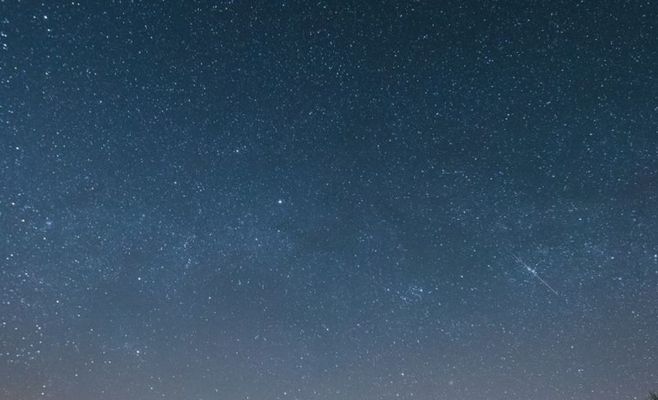
Some of the most striking features of the night sky are places where stars seem to be missing. According to EarthSky, these dark patches are dark nebulae, clouds of gas and dust thick enough to block the light of stars behind them. A few can be spotted with the naked eye from a dark site.
Here is what astronomers and observers should know about them, based on EarthSky's guide.
What exactly is a dark nebula?
A dark nebula, also called an absorption nebula, is a cloud of gas and dust in space that is dense enough to hide light from objects farther away. EarthSky says these clouds are mostly molecular hydrogen. They often mark places where material is gathering to form new stars.
American astronomer Edward Emerson Barnard compiled the first large catalog of these objects, listing 182 dark nebulae in 1919. EarthSky reports that hundreds more have been found and mapped in the Milky Way since then.
Which dark nebulae can be seen without a telescope?
The Great Rift, also known as the Dark Rift, is made up of dark nebulae. In northern summer, the Milky Way, our own galaxy seen edge-on, stretches across the sky as a starry band. EarthSky says that from a dark-sky site, careful viewers can see lanes of dust that seem to split the band lengthwise. Those lanes are the Great Rift.
The Coalsack is generally regarded as the easiest dark nebula to see, but only from the Southern Hemisphere. There it appears to the unaided eye as a dark, cloudy patch in the Milky Way, in the constellation Crux, the Southern Cross.
How do you find the Horsehead Nebula?
The Horsehead Nebula, also cataloged as Barnard 33, is named for its shape and lies in the direction of Orion. EarthSky advises starting at Orion's Belt, the line of three bright stars. The easternmost belt star is Alnitak, and the Horsehead sits just south of it.
Despite its fame, the Horsehead is hard for amateurs. EarthSky says it takes excellent seeing conditions, a large telescope and a filter. It is best placed in winter skies.
What are Bok globules?
Smaller, isolated dark nebulae have their own category, called Bok globules. EarthSky describes them as cool clouds of gas and dust that look like drops of black paint. Multiple star systems are usually forming inside them.
Dutch-American astronomer Bart Bok is credited with their discovery, but EarthSky notes he worked closely with astronomer Priscilla Fairfield, whom he married in 1929. The Royal Astronomical Society said it was “difficult and pointless to separate his achievements from hers.”
One example is Barnard 68, a cloud of molecular gas inside the Milky Way. It lies toward Ophiuchus at a distance of 500 light-years. Nearby in the same constellation is the Snake Nebula, or Barnard 72, an S-shaped dark nebula. EarthSky says the dark blobs below the Snake are Bok globules.
Do dark nebulae exist in other galaxies?
Yes. In distant galaxies, a dark dust lane can cut across part of a spiral arm or the central bulge. EarthSky points to the Black Eye Galaxy, or M64, nicknamed the Evil Eye galaxy. This spiral has broad swaths of light-absorbing dust and lies toward the constellation Coma Berenices, 17 million light-years away.
What this means for stargazers
For casual observers, the practical points are about timing, location and equipment. The Great Rift can be seen without any equipment in northern summer, but EarthSky specifies a dark-sky site. The Coalsack requires a view from the Southern Hemisphere. The Horsehead is a winter target that calls for a large telescope, a filter and very good conditions.
The guide also offers a way of looking at the sky. Dark patches are not empty gaps. They are dense clouds, and EarthSky notes that many are places where new stars are taking shape.
Read next
Webb Telescope Finds Dense Star Clusters That May Have Birthed Black Hole Seeds
A ‘Ghost’ Cloud in the Carina Nebula Turns Out to Be a Busy Star Nursery
Black Hole Jets Light Up Gas Far Beyond a Galaxy’s Stars, Study Finds
Around Prague, based on reporting by EarthSky