Four Planets Line Up in the Pre-Dawn Sky This November: How to See Them
USD 22,10
Popular
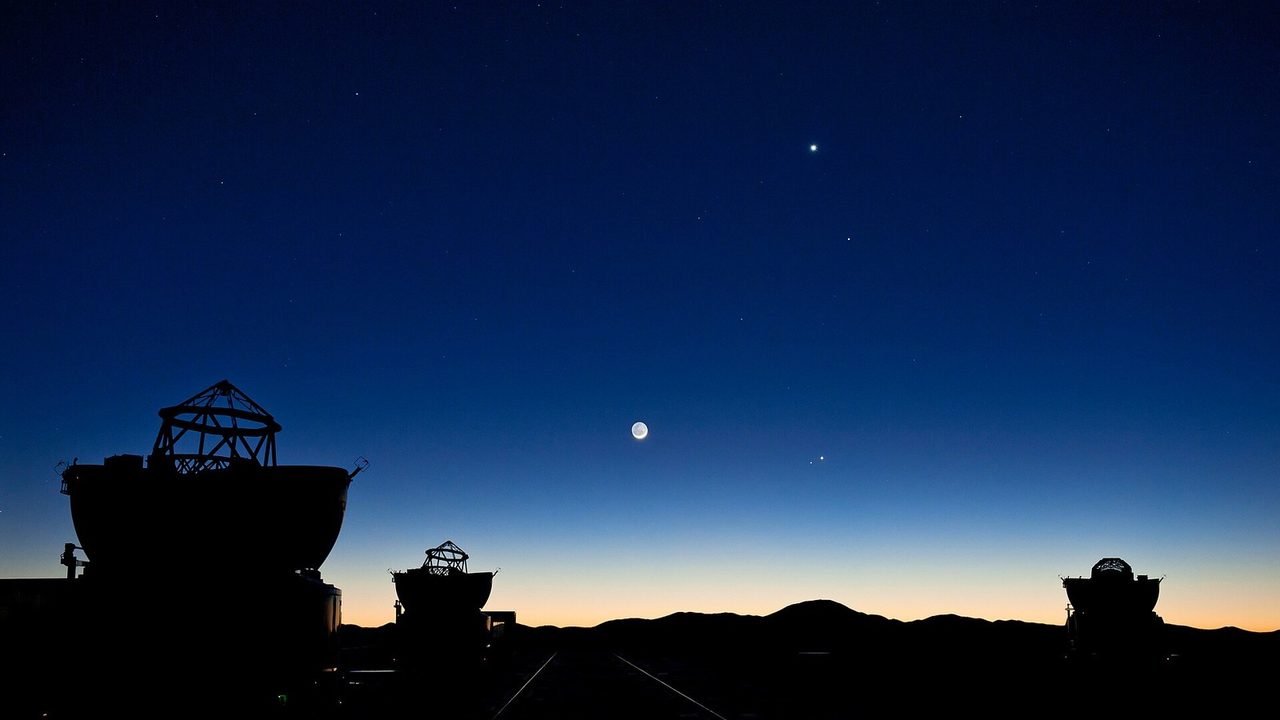
Four planets are strung out in a diagonal line across the pre-dawn sky this month, and all of them can be seen without a telescope. The BBC reports that Mercury, Venus, Mars and Jupiter will be visible to the naked eye in the south-eastern to eastern sky throughout November.
The lineup will be especially striking on Monday, Nov. 16, when Mars and Jupiter appear exceptionally close together, according to Royal Museums Greenwich.
Where to look and when
The best window for seeing the whole group is roughly 45 to 60 minutes before sunrise.
Later in the month, from Nov. 24, a full Moon will join the planets in the morning sky. The BBC says it is the first of a run of four supermoons.
A guide to each planet in the parade
Mercury is the hardest to spot. As the closest planet to the Sun and the smallest in the solar system, it is permanently locked in solar glare, the BBC explains. It shows up only in twilight, never in a fully dark sky, and it will be dim and close to the horizon. The BBC suggests a wide-open sky with a flat horizon, looking to the south-east.
Venus sits above Mercury and toward the right, and it is the easy one. It is the brightest object in the night sky after the Moon, because it reflects more sunlight back into space than any other major planet. It is also usually the closest planet to Earth in its orbit, at times a mere 24 million miles away, and is similar in size. Venus climbs higher than Mercury and is visible earlier in the hours before sunrise.
One tip from the BBC: the bright star Spica will be close to Venus, so do not confuse the two. Stars twinkle, while planets glow steadily.
The Mars and Jupiter close pass
Mars and Jupiter will look very close to each other on Nov. 15 and 16. Mars is currently high in the eastern sky, with Jupiter below it but appearing brighter. Gideon Bendavid-Walker, an astronomer at the Royal Observatory Greenwich, said they will be separated by just 1.2 degrees, roughly the width of a finger held at arm's length.
The pair will also appear near the bright star Regulus, and the trio may even look like a triple star, the BBC reports.
Bonus planets for binocular and telescope users
With binoculars or a telescope, a few more planets come into reach this month. At a similar time before sunrise, Uranus will be setting in the west. Saturn and Neptune will be visible for a time in the evening sky rather than the morning one.
What this means for stargazers this weekend
You do not need special equipment for the main show, only an early start, a clear eastern horizon and a little patience while your eyes adjust. Because the parade lasts all month, a cloudy morning does not mean missing out.
The BBC's weather outlook is for the United Kingdom. It says Saturday night will turn progressively more cloudy and windy, with rain moving eastward and a chance of early frost under clearer skies in the south and east. Sunday night is forecast to be drier as the day's rain and hill snow clear, though wintry showers are expected in northern Scotland, with the odd shower around north-west facing coasts. Otherwise the night looks mostly clear and dry, apart from the odd mist or fog patch.
Read next
November Sky Guide: Leonids, Mars Meets Jupiter and a Voyager 1 Milestone
Venus Blazes in the Dawn Sky, 25 Times Brighter Than Sirius at Peak
A Hot Jupiter Vanished From View After Seven Years. A Hidden Planet Did It
Around Prague, based on reporting by BBC News
Cover photo: G.Hüdepohl ( atacamaphoto.com )/ESO / Wikimedia Commons, CC BY 4.0, cropped