November Sky Guide: Leonids, Mars Meets Jupiter and a Voyager 1 Milestone
USD 21,80
Popular
November brings three meteor showers, a close meeting of Mars and Jupiter and a supermoon, according to a skywatching guide from NASA's Jet Propulsion Laboratory. The Leonids, expected to peak on the night of Nov. 17, are the main event, and none of the sights requires a telescope.
Far from Earth, NASA's Voyager 1 is also reaching a distance of one light-day, which the agency says makes it the first human-made object to get that far.
When are the meteor showers?
NASA says the Southern Taurids peaked around Nov. 5, and the Northern Taurids follow around Nov. 12. Neither is a busy shower, with about five meteors per hour in ideal conditions. NASA notes, however, that the Taurids sometimes produce fireballs, meteors bright enough to stand out sharply against the sky.
The Leonids come next. NASA points to the early hours of Nov. 17 and 18, after the Moon has set, as the best window, with up to about 15 meteors per hour under ideal conditions. Actual counts will usually be lower, the agency says. The BBC puts the figure at 10-15 per hour and says the shower runs until Nov. 30, peaking on the night of Nov. 17.
Where do the Leonids come from?
The BBC reports that the shower is made of dust shed by Comet 55P/Tempel-Tuttle as it travels around the Sun. The particles hit Earth's atmosphere at up to 44 miles per second, which the BBC says makes Leonids the fastest meteors in the sky. They appear to radiate from near the head of the constellation Leo, so that is the best area to watch, though meteors can show up anywhere overhead.
What is happening with Mars and Jupiter?
On Nov. 15 and 16, the two planets will sit about 1.2 degrees apart in the southeastern sky before sunrise. NASA says that is slightly more than the width of two full Moons side by side. Jupiter is the brighter one, and Mars has a reddish tint. Both are visible to the unaided eye.
The closeness is a line-of-sight effect. NASA stresses that the planets remain separated by enormous distances in space. Watching on several mornings will show them drifting closer, then moving apart again.
What is the Voyager 1 light-day milestone?
A light-day is the distance light covers in 24 hours. Radio signals travel at light speed, so NASA says a message from Earth now takes a full day to reach Voyager 1. Even if the spacecraft replied instantly, the round trip would take about 48 hours.
Voyager 1 is heading in the general direction of the constellation Ophiuchus, though it is far too distant to see. NASA plans to mark the milestone on Nov. 17 with an event called Shine Bright for Voyager's Light-Day.
What does this mean for skywatchers?
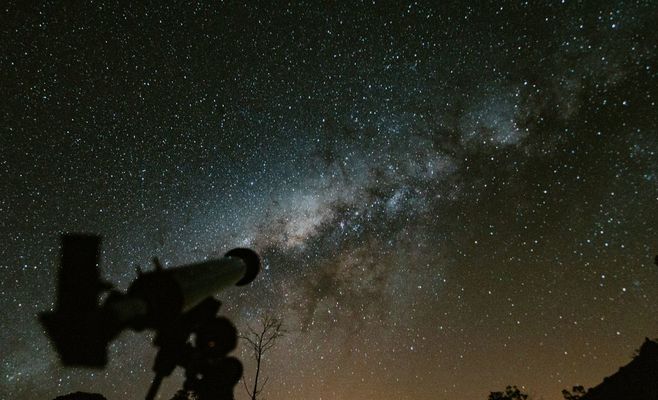
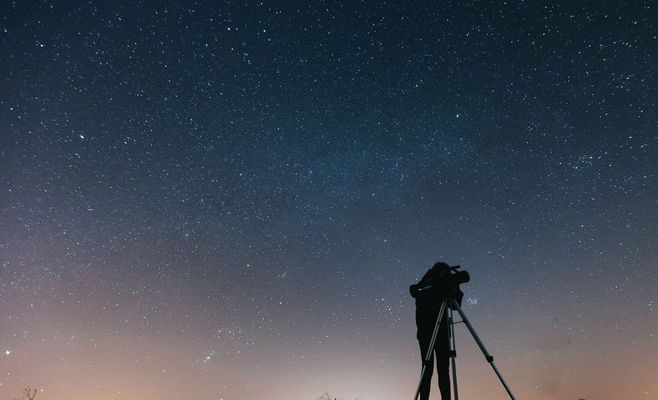
Most of November's highlights need no equipment, only dark skies and patience. Both NASA and the BBC advise going somewhere away from city and street lights. They say to give your eyes 20 to 30 minutes to adjust, and NASA recommends watching a wide part of the sky instead of one small spot. The BBC adds that an open area gives the best view.
The Moon is also on viewers' side for the Leonids. The BBC says it will be below the horizon around midnight near the peak, so less moonlight will wash out fainter meteors. The month ends on Nov. 24 with a full supermoon, the first of three in a row, NASA says.
What is the weather outlook?
For readers in the U.K., the BBC says the opening weekend of the Leonid shower looks mixed. Skies will often be dry, but it expects heavy cloud in many areas and perhaps some light rain or drizzle. At the time of its forecast, the best chances of clear skies on Friday and Saturday nights were in southern and western England and Wales. Northern England, Northern Ireland and Scotland looked cloudier.
More of the country is likely to be clear by Sunday night, the BBC says, though fog could form where skies stay clear for long. Overnight temperatures will fall into single figures, with a touch of frost possible in a few places. The BBC suggests dressing warmly. It also says conditions look particularly good around the mid-November peak.
Read next
Voyager 1 Is About to Be a Full Light-Day From the Sun, on Nov. 18
What the Orionid Meteor Shower Peak Means for Your Night Sky Plans
Taurid Meteors Peak Nov. 4-5, With Fireballs Brighter Than Venus
Around Prague, based on reporting by ScienceDaily, BBC News