Plant-Based Coating Could Replace Plastic Lining in Paper Coffee Cups
USD 22,01
Popular
Researchers at the University of Waterloo in Canada have developed a coating made entirely from plant cellulose that can stand in for the polyethylene lining found inside paper coffee cups, ScienceAlert reported. The team says it could make such packaging easier to recycle, but it is still a laboratory result and not yet a product.
The work was published this year in the journal ACS Sustainable Chemistry & Engineering. Cellulose is the material that forms the cell walls of plants.
Why it matters for everyday cups and containers
Plastic-lined cups and food containers are cheap, hold up to heat and keep liquids from soaking through, which is why they are so common. The same lining makes them harder to recycle, according to ScienceAlert, and the plastic can last in the environment for centuries, breaking into microplastics rather than vanishing.
That shedding also happens in the cup itself. ScienceAlert said plastic liners release tiny particles into drinks, especially at temperatures approaching 60 degrees Celsius (140 degrees Fahrenheit). Shirley Tang, the study's senior author and a materials chemist who leads the Tang Nanotechnology Lab at Waterloo, told the outlet she was most surprised by how easily some plastic liners shed particles.
In the team's abrasion tests, the new coating stayed largely intact under the same conditions, according to the report.
How the coating is made
The researchers built the coating from two ingredients. Cellulose acetate makes up most of it, and cellulose nanocrystals add strength. Both bond directly with the paper through hydrogen bonds, so no chemical glue is needed.
Those bonds also form a tight network that fills the pores in paper. The result is a seal that blocks water, grease and gas, ScienceAlert reported.
What the tests showed
- In a five-day immersion test, the coating held up against several harsh solvents, including dichloromethane, sodium hydroxide and hydrochloric acid.
- Strength testing found the coated paper was toughest when the nanocrystals made up 3 percent of the coating's weight.
- Compared with uncoated paper, the coating cut oxygen transmission by more than an order of magnitude, meaning over ten times, which helps keep contents fresh.
- Tang said the coating also withstood boiling water and food oils, so she sees uses beyond coffee cups.
The team developed and tested the coating on ordinary brown paper towels, which are thin and absorb water quickly. The coating turned them into durable water-repellent sheets, which suggests the approach is not limited to thick, sturdy cups.
Thinner paper, possibly lower costs
Sayan Ganguly, a materials scientist at the lab and the paper's first author, said the coating made it possible to use much thinner paper while keeping the durability that drink containers need. He said that could reduce the material needed to make cups and lower costs, and that the savings could eventually reach consumers.
What happens next
The researchers note that food-safety tests and regulatory evaluations must be completed before this coating, or similar ones, can be approved for commercial use. Tang described the finding as a “research-stage result” and said the timing of any commercialization is uncertain.
For now, then, the cups most people use will keep their plastic linings. The study shows that a plant-based alternative can perform well in laboratory tests, but it does not show that it is ready for stores or cafés.
Read next
A Clogged Membrane Separates Crude Oil Without Heat, Study Finds
Euclid Telescope Maps More Than 900m Galaxies and 15,000 Cosmic Lenses
Rare Elite Shoe and Slave-Trade Rings Found on Danish Ship Sunk After Mutiny
Around Prague, based on reporting by ScienceAlert
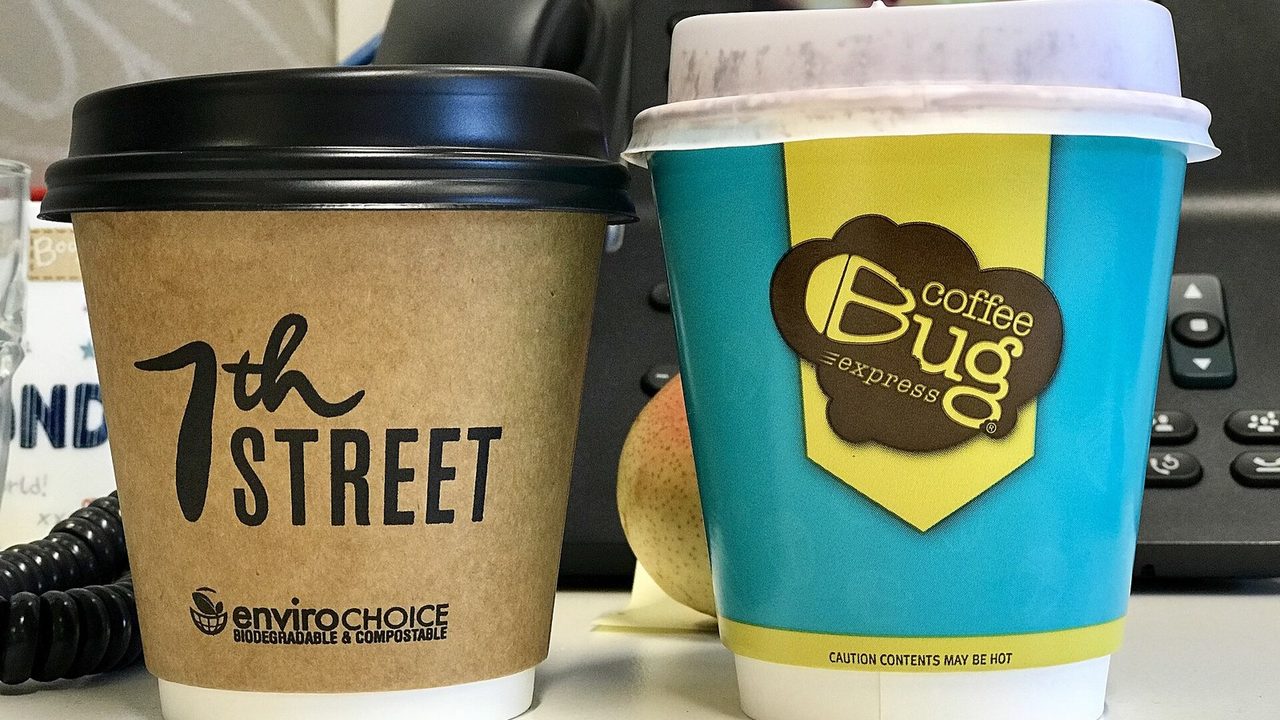
Cover photo: Kgbo / Wikimedia Commons, CC BY-SA 4.0, cropped