Starship Heads to Orbit Nov. 13 With 26 Starlink Satellites You Might See
USD 22,01
Popular
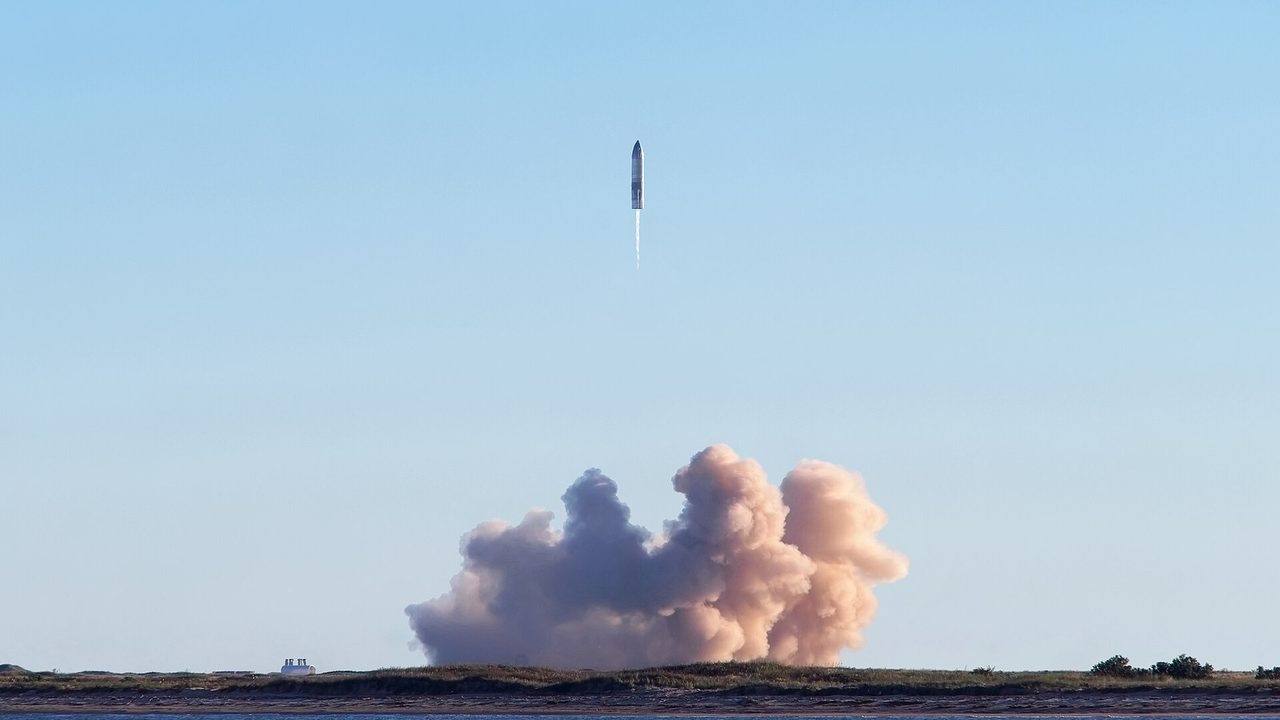
SpaceX is aiming to launch its Starship megarocket on its 15th flight test as soon as Friday, Nov. 13, and the mission may give people across much of the United States something to look up for. Space.com reported that the upper stage, called Ship, will circle Earth about 14 times over 22 hours while it releases 26 Starlink V3 satellites.
The launch window opens at 5:45 p.m. EST and lasts 75 minutes. Here is what viewers can expect, according to Space.com and the experts it spoke with.
When and where does Starship launch?
Starship will lift off from SpaceX's Starbase site in South Texas. When the window opens, local time there is 4:45 p.m., about an hour before sunset, so the launch should happen in daylight and could look especially dramatic to people nearby, Space.com said.
Robert Massey, deputy executive director at the Royal Astronomical Society, told Space.com that the rocket will head toward the southeast. That means the best views of the launch itself will be from Texas and the states along the Gulf of Mexico. Observers there could see the exhaust plume, which he nicknamed the “jellyfish,” and the sky gets darker for people farther east.
What is supposed to happen during the flight?
If everything goes to plan, the Super Heavy booster will push Ship through the densest part of the atmosphere and then return to Starbase for a powered landing. The booster is to be caught by the “chopstick” arms of the launch tower.
Ship will continue into orbit, deploy the 26 Starlink V3 satellites and later come back to Starbase for its own catch attempt, according to Space.com.
Will Ship be visible in the night sky?
Experts told Space.com it should be. Ship is about 171 feet (52 meters) tall, which makes it a good target for skywatchers. Professor James Osborn of Durham University said it will certainly be visible in twilight and should be very bright, far brighter than the Starlink satellites because of its size. He cautioned that predicting exactly where and when is trickier.
The best chances come in the 90 minutes right after sunset on Nov. 13 and again before sunrise on Nov. 14. At those times the spacecraft catches sunlight on either side of Earth's shadow while drifting through the twilight sky.
Space.com skywatching columnist Joe Rao said Ship should look like a bright, fast-moving star, similar to the International Space Station and potentially even brighter, depending on its orientation. The Starlink V3 satellites are much smaller and might range from 2nd to 4th magnitude. In astronomy, a lower magnitude number means a brighter object.
Viewers will probably first see a string of bright, evenly spaced lights, with Ship most likely the brightest. Rao said the Starlink train should fall farther behind Ship as the mission goes on and stretch out. Osborn noted that a lack of publicly available data makes it hard to forecast exact appearance times.
Where in the U.S. can people look?
Massey said that during its 14 orbits the spacecraft stays between 30.5 degrees north and south of the equator, so it is best seen between those latitudes. It will appear lower in the sky as far as 40 north and south, which he described as pretty much the whole of the contiguous U.S.
Rao said that where Ship makes a high arc overhead, it should be visible for at least a few minutes. Because it orbits at a lower altitude than the space station, 170 miles (275 km), it will probably seem to move somewhat faster.
What this means for skywatchers
For most Americans, the practical takeaway is that no telescope should be needed. Ship and its satellites can be seen with the naked eye during twilight, but timing depends on your location and on public tracking data that experts say is limited. The launch itself is only expected to be visible in the Gulf Coast region.
Space.com pointed to several websites for tracking Ship and the new Starlink satellites after launch: Heavens-Above, Star Dash, Orbital Radar and Find Starlink. The outlet also invited readers who photograph Starship to send in their images.
What happens next?
The Nov. 13 date is described as the earliest possible launch, so plans could shift. If Starship flies as planned, the first satellite-spotting chances start that evening and run until sunrise on Nov. 14.
Read next
SpaceX Sends 27 More Starlink Satellites Into Orbit on a Halloween Launch
SpaceX Plans First Full Starship Recovery With Back-to-Back Catches on Nov. 13
SpaceX Sends 27 More Starlink Satellites Up as Falcon 9 Launches Grow Less Frequent
Around Prague, based on reporting by Space.com
Cover photo: Forest Katsch / Wikimedia Commons, CC BY-SA 4.0, cropped