Science & Space By

SpaceX Sends 27 More Starlink Satellites Into Orbit on a Halloween Launch
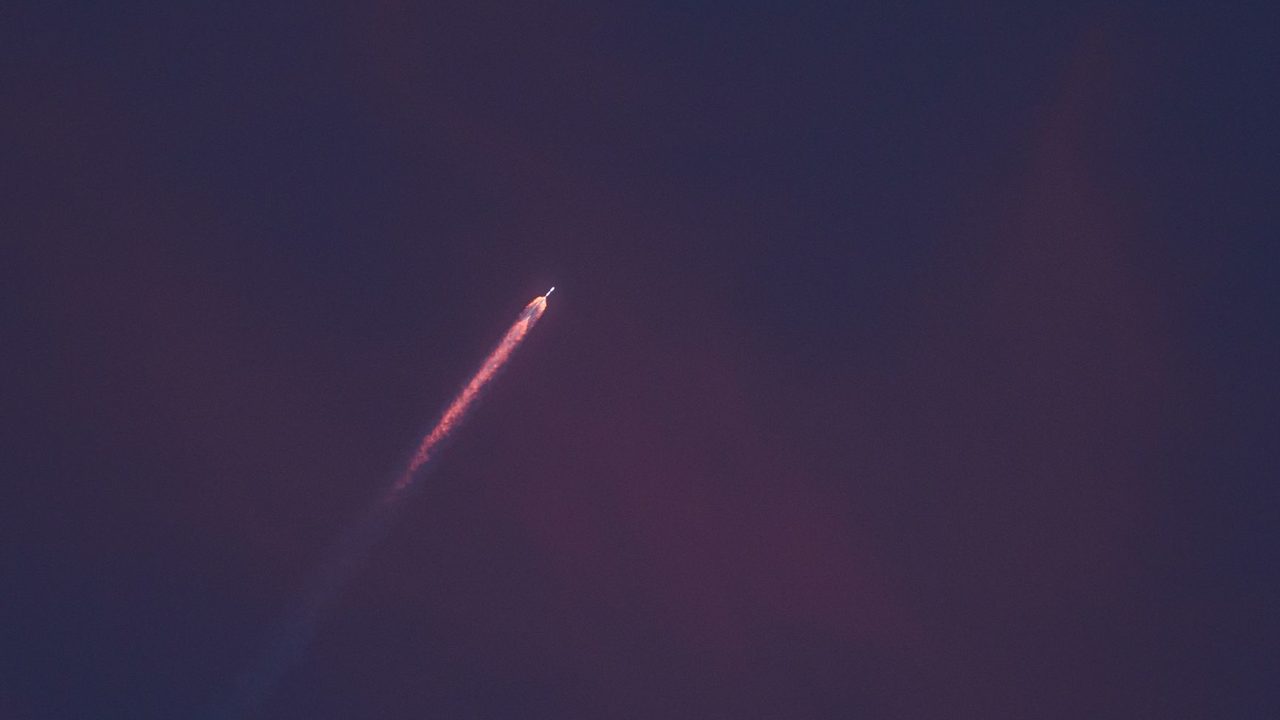
SpaceX started Halloween with a launch from California. A Falcon 9 rocket carrying 27 Starlink internet satellites lifted off from Vandenberg Space Force Base on Oct. 31, Space.com reported, and the satellites were released into low Earth orbit about an hour later.

The rocket's first stage returned to Earth as planned, landing on a drone ship in the Pacific Ocean. The launch adds to what is already by far the largest satellite network ever assembled, according to Space.com.

How the Starlink launch unfolded

According to Space.com, the Falcon 9 left the pad at 12:04 a.m. EDT on Oct. 31. That was 9:04 p.m. on Oct. 30 local time in California. The rocket's upper stage did its job, deploying the 27 satellites about 62 minutes after liftoff.

The first stage came back about 8.5 minutes after launch. It touched down on the drone ship named “Of Course I Still Love You,” which was stationed in the Pacific. Landing the booster on a ship at sea is what allows SpaceX to fly the same hardware again.

A well-traveled booster

This was the 18th flight for this particular booster, designated B1093. For comparison, Space.com noted that the record for a SpaceX first stage is 37 flights, set this past August by the booster B1067. Reusing boosters this many times is a central part of how the company keeps up its launch pace.

Where the Starlink network stands

The 27 new satellites join more than 11,000 spacecraft in the Starlink megaconstellation, Space.com reported. Starlink is SpaceX's internet service, and the satellites orbit relatively close to the planet in low Earth orbit.

The Oct. 31 mission was the 118th Falcon 9 flight of 2026 so far, according to Space.com. More than 70% of those missions have been devoted to building out the Starlink network. In other words, most of the company's workhorse rocket's flights this year have been about adding to this one constellation.

Why it matters for people who use or watch satellite internet

For most people, the practical meaning of a launch like this is behind the scenes. Each batch of satellites adds to a network that delivers internet service from orbit, and a steady stream of launches shows that the company can keep sending new spacecraft up at a rapid rate. Space.com did not describe any change to service as a result of this particular mission, so there is no direct impact for customers to point to from this launch alone.

The flight also shows how routine orbital launches have become for SpaceX. A first stage on its 18th trip, a landing at sea and a deployment about an hour after liftoff were all described as going to plan, with no problems reported.

Other SpaceX rockets this year

The Falcon 9 is not the company's only rocket. Space.com said SpaceX has also launched its Falcon Heavy and Starship rockets three times apiece this year. Falcon Heavy is an operational vehicle, while Starship remains in the test-flight phase.

What happens next

SpaceX is currently gearing up for another Starship launch, which is expected to take place sometime in November, according to Space.com. No more specific date was given, so the timing could still change.

Around Prague, based on reporting by Space.com
Share: Telegram WhatsApp

More science news

Spacecraft Sent to Inspect NASA’s Asteroid Crash Site Now Sees Both Space Rocks
The Hera spacecraft, a mission led by the European Space Agency (ESA), has sent back its first image showing the asteroids Didymos and Dimorphos as two separate objects instead of a single dot, accord
Robot Dog Guided by Lab-Grown Neurons Finds Its Way to a Target on a Map
Scientists at Cortical Labs in Australia have fitted a robotic dog with lab-grown neurons that steer it toward a target on a simple map, according to ScienceAlert. The outlet described the cells as hu
Chernobyl’s Stray Dogs Show Signs of Selection, Not Radiation Damage
Dogs living around the Chernobyl nuclear power plant are genetically distinct from dogs just a few miles away, and a new study suggests the reason may be natural selection rather than radiation-induce
Could a Spinning Black Hole Split in Two? Physicists Run the Numbers
Black holes are known for merging, not breaking apart. But a team of physicists has calculated that, under the right conditions, a black hole could split into two, according to Universe Today. The ide
Sealed Pompeii Wardrobe Yields a Child’s Charm Necklace and a Tiny Perfume Bottle
Archaeologists in Pompeii have opened a wooden wardrobe that stayed sealed for almost 2,000 years and found everyday belongings inside, including makeup tools, a perfume bottle, coins and a child’s ne
Two Different Gamma-Ray Bursts Struck Four Minutes Apart, and Nobody Can Fully Explain Why
Astronomers have reported a pair of gamma-ray bursts that does not match anything seen or predicted before: a short burst and a long burst, separated by only four minutes. According to ScienceAlert, t

Related news

The Hera spacecraft, a mission led by the European Space Agency (ESA), has sent back its first image showing the asteroids Didymos and Dimorphos as two separate objects instead of a single dot, according to Universe Today. Hera is following
Scientists at Cortical Labs in Australia have fitted a robotic dog with lab-grown neurons that steer it toward a target on a simple map, according to ScienceAlert. The outlet described the cells as human brain cells in its headline. The wor
Dogs living around the Chernobyl nuclear power plant are genetically distinct from dogs just a few miles away, and a new study suggests the reason may be natural selection rather than radiation-induced mutations, ScienceAlert reported. The
Black holes are known for merging, not breaking apart. But a team of physicists has calculated that, under the right conditions, a black hole could split into two, according to Universe Today. The idea is purely theoretical, and no one has
Archaeologists in Pompeii have opened a wooden wardrobe that stayed sealed for almost 2,000 years and found everyday belongings inside, including makeup tools, a perfume bottle, coins and a child’s necklace, The Guardian reported. The wardr
Astronomers have reported a pair of gamma-ray bursts that does not match anything seen or predicted before: a short burst and a long burst, separated by only four minutes. According to ScienceAlert, the finding, described in a paper in Natu
NASA says that on Nov. 18, 2026, Voyager 1 will pass a new distance milestone: one light-day from the Sun, at 16.1 billion miles. The date falls 49 years after the spacecraft’s launch, according to the agency’s November Night Sky Notes. The
Halloween has deep roots in folklore, but according to EarthSky, its heart is astronomical. The holiday on Oct. 31 is a cross-quarter day, a point on the calendar that falls roughly midway between an equinox and a solstice, and so it is tie
One of the sky’s spookiest sights comes with the Halloween season: the Witch Head Nebula, a huge but extremely dim cloud of gas and dust that sits beside the constellation Orion. According to EarthSky, Orion climbs over the eastern horizon
The Vera C. Rubin Observatory in Chile has spotted a distant object that could become the sixth officially recognized dwarf planet in the solar system. Temporarily designated 2026 ED138, it orbits beyond Neptune and Pluto and may be among t
Scientists have long known that cooler temperatures extend life in many animals. A new study in the journal Nature suggests part of the reason is an active chemical signal that starts in muscle, according to ScienceAlert. The work was done
A wispy, ghost-like cloud drifting on its own inside the Carina Nebula is not a haunting at all. According to Universe Today, astronomers who studied it with NASA's Chandra X-ray Observatory and the James Webb Space Telescope found that it