Tour de France in Czechia: hosting the start costs from 550m crowns
USD 21,59
Popular
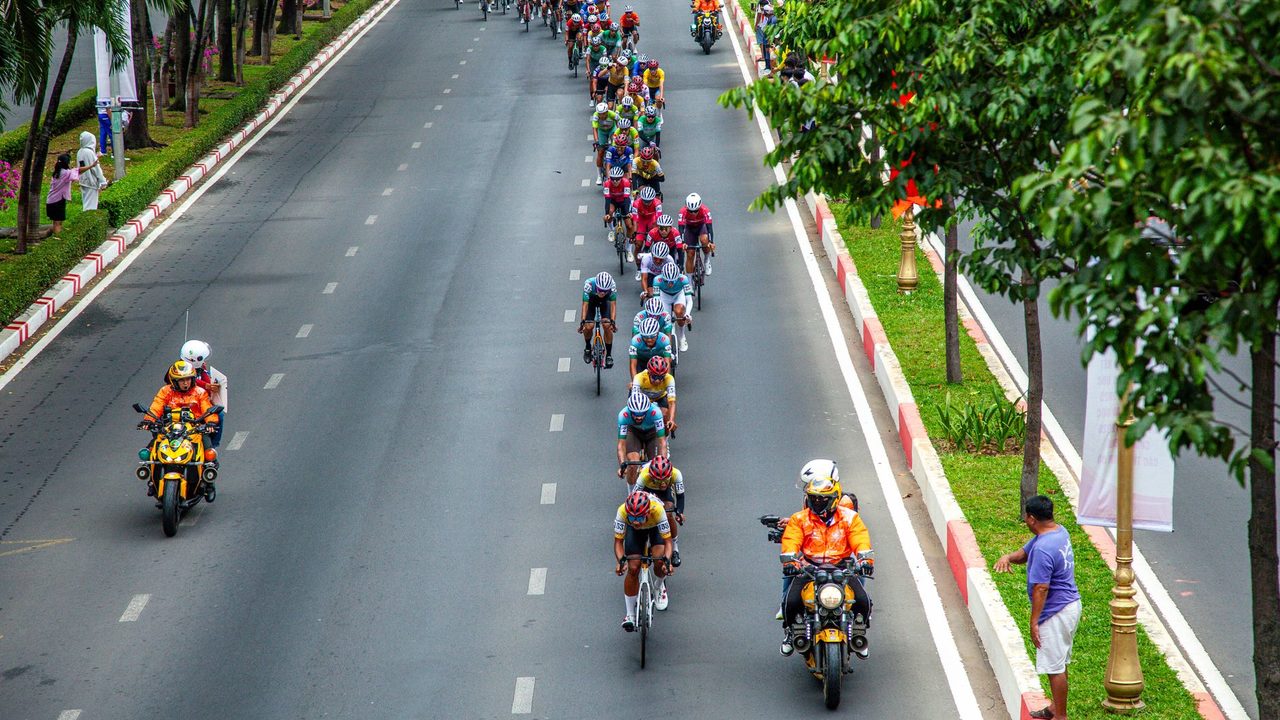
Czechia is seriously bidding to host the opening three stages of the Tour de France, the Grand Départ. According to the working group, the minimum investment will be around 550 million crowns, rising to as much as 750 million if the country is actively promoted abroad. The final word rests with the government.
On Thursday, the race organisers will present the route of the 2027 Tour in detail. Race director Christian Prudhomme has already flown by helicopter over the planned routes in the Central Bohemian and South Bohemian regions and was pleased with what he saw, though he voiced slight concern about whether the regions have enough accommodation for the whole racing “armada”. At the end of June the organisers handed the Czech side their detailed requirements, so the costs can now be calculated.
What the budget is made of
As Přemysl Novák, head of the Czech amateur race L’Étape and one of the working group’s leaders, explains, the estimate has three parts: the licence and preparation, mandatory organisational costs (about half a billion crowns) and promoting the country abroad. It is the third item that causes the fiercest debate: it could cost anywhere from 50 to 250 million crowns.
The working group includes Sports Minister Boris Šťastný, National Sports Agency head Karel Kovář, South Bohemian governor Martin Kuba, Prague sports councillor Antonín Klekanda, former cyclist Roman Kreuziger, cycling federation vice-president Robert Kolář and Czech Tourism director Tereza Hofmanová. Central Bohemian governor Petra Pecková is also taking part in the talks.
Will the race pay off
The government has studies of the race’s impact in Italy, Denmark and Bilbao in Spain, where the Tour has started in recent years: in every case the investment came back at least tenfold. “We need to change our perspective: this is not a one-off payment but an investment,” says Novák. According to him, the Tour is broadcast in almost 200 countries, helps tourism and shows the world that Czechia is not only Prague but also South Bohemia and the Šumava mountains.
The route sees hundreds of thousands of spectators, and about 30 percent of those at the start are foreigners who came for the race. The Tour caravan brings around 4,500 people who need accommodation, so a significant part of the licence fee returns straight to the local economy. Repaired roads will be another benefit.
Who will pay and who the rivals are
Roughly half of the sum is to be covered by state subsidies via the National Sports Agency, with the rest split between Prague and the Central and South Bohemian regions. South Bohemia will pay the most, as two stages will be held there: one starting in Tábor, the other heading to Lake Lipno and the Šumava mountains. Private business takes only a limited part in the financing, since the Tour has global sponsors; local partners could appear in the fan zones and, by Novák’s estimate, bring in a few dozen percent of the budget. The company PPF has already paid for the inspection helicopter, and Škoda Auto, the race’s general partner, publicly supports the bid.
If the government gives the green light, Czechia will officially compete for the 2029 start or for later years. “I can’t say whether 2029 specifically is realistic,” Novák admits. The main rivals are Slovenia, whose interest has waned after the March elections, and Germany. Czechia has secured the support of politicians from different camps and is betting on safety and Czechs’ enthusiasm for cycling: this year more than six thousand amateurs took part in two L’Étape races in the country. The question now is whether that will appeal to the French organisers.
Around Prague guide on the topic: 8 лучших мест для купания под Прагой: озёра, карьеры и пляжи в часе езды от столицы
Around Prague, based on reporting by sport.cz