Bipartisan Senators Urge Trump to Drop Plan to Buy Russian Diesel
USD 21,75
Popular
Six U.S. senators from both parties are demanding that President Donald Trump's administration abandon a plan to buy diesel from Russia, arguing it violates federal law and would help finance Moscow's war in Ukraine. Energy experts quoted by the Associated Press and ABC News say the deal is also unlikely to bring down prices at the pump.
The senators released their statement Sunday, calling on the administration to "immediately reverse course." Four are Republicans and two are Democrats.
What Trump announced
Trump said on social media Friday that he had reached a deal with Russian President Vladimir Putin during a phone call. According to his post, Russia would right away send more than 300,000 tons of diesel to the American and global market. Another 500,000 tons would follow in November, and 1 million tons "immediately thereafter."
Trump wrote that Russia would then deliver an additional 3 million tons within a short period of time. The announcement surprised lawmakers, the AP reported.
What the senators say
The Republican signers are Susan Collins of Maine, Lisa Murkowski of Alaska, Thom Tillis of North Carolina and John Curtis of Utah. The Democrats are Jeanne Shaheen of New Hampshire and Richard Blumenthal of Connecticut.
They said the administration did not consult Congress and did not submit an explanation to justify the decision, as a statute requires. They also pointed out that Congress explicitly banned Russian energy imports in 2022 so the United States would not help fund the war. In their view, allowing Russian diesel into the country runs directly against that law, and they said the U.S. should not give Putin a financial lifeline while Russia continues to kill Ukrainian civilians.
Tillis said on NBC's "Meet the Press" that there is a legitimate argument the president would not be following the law if the administration goes ahead. He said Congress had been clear that Russia is the aggressor and that Moscow could end the war by pulling back from territory it occupies.
How the administration's allies responded
Sen. John Barrasso, a Wyoming Republican, was asked on CBS's "Face the Nation" whether the move would violate U.S. law. He did not directly address the legal question. He said Trump is focused on lowering energy costs and has to make tough decisions.
Barrasso also described the arrangement as another source of leverage the president could use against Putin in pursuit of a long-term solution. He encouraged Trump to enforce the sanctions law Congress passed last month.
The sanctions law in the background
Trump's announcement came only a few weeks after Congress passed legislation directing him to impose substantial tariffs on the top importers of Russian oil or natural gas. The law makes an exception for countries that import less than 15% of Russia's natural gas exports and have taken significant steps to cut those imports. The goal, according to the AP, was to reduce the money Russia earns from oil and gas sales that pays for its war against Ukraine.
Why it matters for fuel prices and sanctions
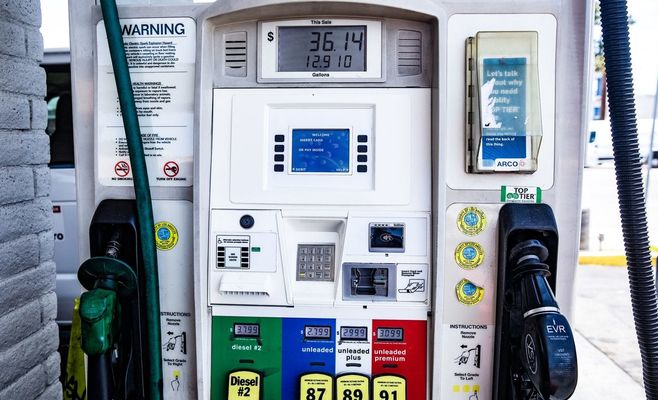
The plan was presented as a way to ease high fuel costs. Experts told the AP it is unlikely to make a dent in prices at the pump. Richard Nephew, a senior research scholar at Columbia University's Center on Global Energy Policy, noted that the total amount of diesel appears to be less than what the United States uses in a day.
Nephew argued that Russia and Iran may gain more from the arrangement than the United States. In his assessment, Iran would read it as a sign of continued pressure on Washington, while Russia would see it as a large hole in the sanctions regime.
The AP reported that Trump has recently tried to blame record U.S. diesel prices on Ukraine rather than on the U.S.-led war in Iran, which has pushed up world energy prices.
For drivers, truckers and businesses that depend on diesel, the dispute leaves open whether the plan will proceed at all. It also tests how Congress's sanctions and import restrictions apply when the president moves toward Russia on energy. The senators say the law is clear, while Trump's defenders say the president is weighing competing priorities. The sources do not say whether the administration plans to change course.
Source: ABC News