A Roman Coffin at Westminster Abbey May Have Held a Saxon Abbot
USD 22,26
Popular
A puzzle that has lingered for more than 150 years at Westminster Abbey may be close to an answer. According to ScienceDaily, new research suggests the skeleton found inside a Roman stone coffin at the abbey was a medieval abbot, not the Roman-era Londoner named on the coffin.
The findings are published in the peer-reviewed Journal of the British Archaeological Association by Professor Warwick Rodwell, the abbey’s consultant archaeologist. He narrows the possible identities to two men who once led the abbey.
A coffin with two different stories
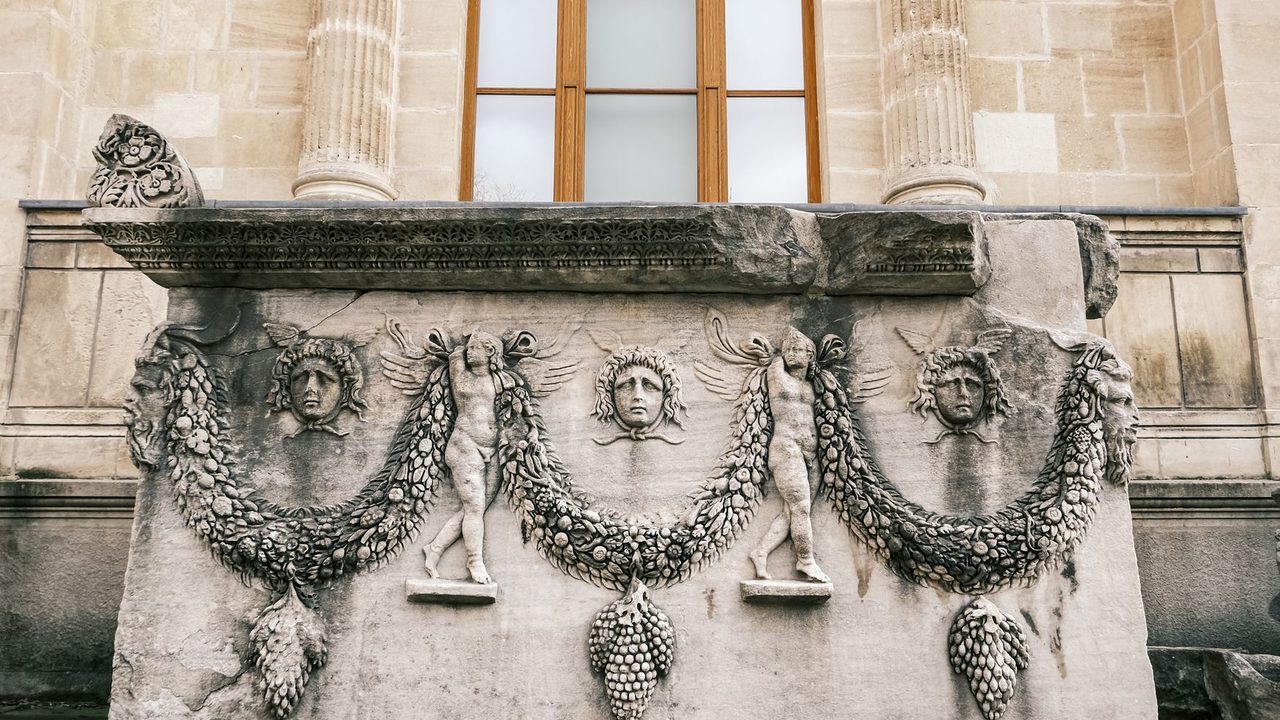
The limestone sarcophagus was formally excavated in 1869. An inscription names Valerius Amandinus, a wealthy Briton who lived in London sometime between 300 and 400 AD. But a large Latin cross carved into the lid dates to roughly the 10th or 11th century, which suggests the person inside lived hundreds of years after the coffin was made.
Rodwell’s explanation is that the Roman coffin was reused. The man’s wooden coffin was placed inside the stone one, and the lid was reworked with the cross. In his view, an unusually fine sarcophagus points to someone of high status, which fits an abbot.
The two leading candidates
Rodwell identifies Aelfwig, an abbot who died around 1020, as the strongest candidate. At that time the abbey was a Benedictine monastery, and Aelfwig had served there as a monk before becoming abbot. The other possibility is Wulnoth, who succeeded Aelfwig and died in 1049. Both men are believed to have been buried at the abbey.
Rodwell says there are two viable contenders. The birth dates of both men are unknown, but either would fit if the abbot was in his early twenties when appointed and close to fifty when he died. He adds that Aelfwig already being a monk of Westminster might favor him.
What the new tests found
The latest work draws on several investigations over the years. In 2009, Channel 4’s Time Team examined the original sacristy of King Henry III on the north side of the abbey. The same area was the site of an accidental find in 1820, when workers hit the Roman coffin and broke its lid into six pieces. The damage was repaired around 1869.
A more recent excavation of the sacristy by Pre-Construct Archaeology, completed in 2025, supported construction of the King Charles III Sacristy, a new facility at the abbey due to open the following year. As part of that project, human bone specialist James Young Langthorne examined the skeleton again.
His analysis indicated a man aged between 35 and 49 who stood about 5 feet 9 inches tall. That differs from an assessment made in the 1800s, which described a “robust young man” no older than 30 and about 5 feet 7 inches tall.
A bone sample was also sent to the Scottish Universities Environmental Research Centre for radiocarbon dating. It returned a date range of 987 to 1052 AD, which falls in the late Saxon period. That range lines up with the deaths of both Aelfwig and Wulnoth. Rodwell says it confirms the coffin was reused, and its lid remodeled, in the late Saxon period.
A skeleton thought to be missing
For years, researchers believed the skeleton had been lost. In 2016, the sarcophagus was taken to a conservation studio, where Pre-Construct Archaeology researchers removed the lid and found an almost complete skeleton still inside.
Rodwell also describes a “remarkable new discovery” inside the coffin: the rectangular outline of a long-vanished structure, preserved by a white residue of lime.
Why it matters
For visitors and history fans, the result turns an object long labeled with a Roman name into a rare physical link to the abbey’s Saxon past, roughly 1,000 years ago. It also shows how a skeleton written off as missing, and an old coffin with a confusing inscription, can yield new answers when modern methods such as radiocarbon dating and a fresh bone examination are applied.
The identification is not final. Rodwell names two possible abbots and does not claim certainty, and the dating range covers both men’s deaths. The new age and height estimates also show how earlier assessments can be revised by a closer look.
Around Prague, based on reporting by ScienceDaily