Can Anthropic's Record IPO Calm AI Bubble Fears? What Investors Are Weighing
USD 22,23
Popular
Anthropic's record-setting stock market debut is being watched as a test of whether the artificial intelligence boom still has momentum. The company said on Wednesday it sold more than 956 million shares at $83 each, raising around $79.4 billion, according to NPR. That tops the $75 billion that SpaceX raised in its IPO earlier this year.
The BBC framed the listing as a question for the whole industry: can it ease worries that an AI bubble is close to bursting, or will it be remembered as the last gasp of a boom?
A record raise in a nervous market
NPR reported that the offering beat Anthropic's original plan of 825 million shares at $70 to $78 each, and that it was oversubscribed despite concern about an AI bubble and volatile tech stocks. With shares sold by some existing stockholders, the total came to more than $81.3 billion. NPR noted that Anthropic is a financial supporter of NPR. Shares will begin trading Thursday on the Nasdaq under the ticker ANT.
The BBC said Anthropic has predicted revenue of $52 billion in 2026 and $135 billion in 2027, according to analyst estimates, and was aiming for a valuation of an estimated $1.4 trillion before pricing.
Why the bubble worry exists
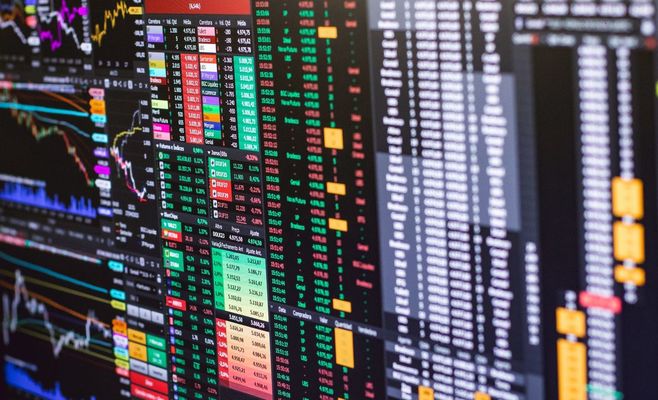
The BBC reported that investors who were once fully committed to AI are now hedging. Some argue AI prices will fall as the technology spreads, and others worry that much of the investment is tech giants putting money into each other.
Shares in firms that supply computing power, such as CoreWeave and Nebius, have lost half their value, the BBC said. Nvidia's shares are down 30% from their peak, a fall of $2 trillion in value, and the company is no longer the world's most valuable. Nvidia CEO Jensen Huang resigned last week, leaving investors looking for a new champion for the AI boom, according to the BBC.
New York University professor emeritus Gary Marcus, speaking earlier this year, argued that AI is in a financial bubble. He said language models are useful and here to stay, but that the economics do not add up and that competition drives prices down.
What is different about Anthropic
Analyst Fiona Cincotta told the BBC the IPO is important because it is the first chance for public investors to buy a pure AI play. Earlier offerings involved other parts of the ecosystem, such as chips and data centers.
The BBC also flagged risks in the company's numbers. Around a quarter of its revenue comes from a handful of customers, including Google and Amazon, and two-thirds comes from the United States. It also has agreements to buy or lease hundreds of billions of dollars worth of chips and computing power from firms such as Broadcom, Google and Amazon. Many of those firms are also investors in Anthropic and major customers.
At an event last week, CEO Dario Amodei told JPMorgan Chase's Jamie Dimon that his guiding principle is to “never let your company be worth a single dollar more than it's worth.”
Why it matters beyond Wall Street
The BBC said public doubts about AI are not limited to investors. A backlash over jobs that could be replaced and the energy and water used by data centers became a factor in the recent U.S. midterm elections. Many areas have passed moratoriums on data center development, and many candidates seen as too close to big tech found that a liability.
Whether users will pay enough to justify the trillions being spent on chips, data centers, energy and staff remains the central question, the BBC said. The IPO price is the first public verdict on how investors answer it.