Starship Booster Skips Tower Catch as SpaceX Readies First Ship Catch
USD 22,10
Popular
SpaceX launched its 15th Starship test flight from South Texas on Friday, Nov. 13, but the first half of its double-catch plan did not work out. According to CBS News, a technical problem led flight controllers to send the Super Heavy booster to a splashdown in the Gulf instead of back to the launch tower's mechanical arms.
The upper stage, known as Ship 42, kept flying. SpaceX still plans the first-ever tower catch of a Starship upper stage on Saturday, Nov. 14, about 22.5 hours after liftoff, if the vehicle looks healthy enough to try it.
Flight 15 by the numbers
- 5:47 p.m. EST: liftoff time reported by CBS News from the Starbase site on the Texas Gulf Coast. The planned launch window was 75 minutes long.
- Three: the number of earlier test flights on which SpaceX caught a Super Heavy booster with the tower arms, according to CBS News and the BBC.
- 26: upgraded Starlink V3 satellites that Ship 42 is due to release, the second such batch to reach orbit, according to Space.com.
- 14: orbits of Earth planned before the ship returns, per Space.com, the BBC and Technology.org.
- 22.5 hours: the planned time from launch to the ship catch attempt, according to Space.com.
- 10,000: Starship missions per year that Elon Musk has said SpaceX wants to fly by 2030, Space.com reported.
What went wrong with the booster
CBS News reported that the booster separated about two minutes and 20 seconds after liftoff, then flipped around and fired engines to reverse course toward the launch site. A little more than six minutes into the flight, controllers ordered a diversion to the Gulf because of what the network described as a technical problem, without naming the cause.
Long-range cameras showed the 236-foot-tall booster descending slowly, wrapped in steam, before leftover propellants ignited in a fireball, CBS reported. The flight plan always included a splashdown option in case a safe catch was not possible.
The setback matters because the booster catch had been the part of the plan SpaceX had done before. Super Heavy has been caught three times, and the BBC noted that a successful double catch would be the first full recovery of a rocket that has been to space.
How the ship's return is supposed to work
The ship, which stands 171 feet tall, followed a path that kept it safe for an ocean splashdown while controllers checked its health, CBS said. After an 18-minute coast, a single Raptor engine fired for 10 seconds to push it into its planned orbit, and no issues were found. The first of the 26 satellites was then expected to be released about eight and a half minutes later.
The ship's catch depends on a final check on Saturday. About an hour after that check, a single Raptor is expected to fire at 3:21 p.m. to lower the far side of the orbit into the atmosphere, starting a 56-minute belly-first reentry, CBS reported. SpaceX says the ship can steer with its four control flaps and will make small turns to pass over sparsely populated parts of northern Mexico and southern Texas.
Near the pad, the ship is to fire three Raptors to flip upright, shut one down, and slow to a near stop with a single engine between the tower arms, which then close on it. If anything looks wrong, SpaceX says controllers can end the reentry early by tumbling the vehicle so it breaks up in the atmosphere before reaching land, or send it into the Gulf. Pre-cleared Pacific splashdown areas near Hawaii and off Chile are also available during the orbital phase, according to SpaceX.
Where the reports differ
Technology.org, writing before liftoff, said the launch was still pending regulatory approval, while CBS News later reported the rocket had flown. Technology.org also listed contingency splashdown areas in the Indian Ocean, the Pacific Ocean and the Gulf of America, while CBS quoted SpaceX naming only Pacific areas for the orbital phase plus a Gulf option late in reentry. The sources do not explain the difference.
Technology.org added that the ship would fly at roughly 275 kilometers (170 miles), and that residents of Cameron County may hear one or more sonic booms during the return.
What the company and outside voices say
Musk said on SpaceX's third-quarter earnings call on Oct. 20 that the company would attempt to catch both the booster and the ship, and he rated success as more likely than not, according to Technology.org and Space.com. SpaceX President Gwynne Shotwell said the company expected its Federal Aviation Administration license to cover a return to the launch site and tower catch for both stages.
Malcolm Macdonald, president of the Royal Aeronautical Society, told the BBC that a double catch would be visually spectacular, but that "full reusability has the potential to fundamentally change the economics of accessing space." He added that one successful flight would not prove the model.
SpaceX calls a fully reusable rocket "the holy grail of rocketry," CBS reported, saying it would let a vehicle fly again rapidly.
Why it matters beyond one test flight
The BBC reported that landing a booster from SpaceX's Falcon 9 rocket first happened in 2015, and that Falcon 9 now flies more than a hundred times a year, which has sharply cut launch costs. Technology.org noted that the Falcon 9 upper stage is still thrown away on every flight, while Starship aims to recover both stages. SpaceX says bringing both back to the launch mount would greatly cut the time needed for inspection, refurbishment and reflight.
That matters to NASA. According to the BBC and CBS, SpaceX is under contract to turn Starship into a lander for astronauts, with a Moon landing targeted for 2028. NASA Administrator Jared Isaacman has said the U.S. is in a race with China, which plans to land on the Moon by 2030, the BBC reported. Technology.org said filling a lander in orbit takes many tanker flights, which only a rocket that turns around quickly can fly on a useful schedule.
NASA is also hedging. CBS reported the agency says it is open to using Blue Origin's Blue Moon Mark 2 lander depending on which spacecraft is ready first. The BBC said Blue Origin's own return to flight has slipped to early 2027 after a rocket exploded and destroyed its Florida launchpad this year. Both landers play a role in Artemis III, planned for summer 2027, the BBC said, and Starship's development has been slower than SpaceX intended.
What happens next
The key moment is Saturday afternoon, Nov. 14. SpaceX will attempt the ship catch only if all systems look good, according to Space.com; otherwise it will divert to a splashdown. If the catch works, it would be the first time a Starship upper stage has come back to its launch pad for possible refurbishment and relaunch, CBS reported. Until now, the upper stage has ended its flights with ocean splashdowns, and it first reached orbit on Flight 14 on Sept. 28.
Frequently asked questions
Did SpaceX catch the Starship booster on Flight 15?
No. CBS News reported that a technical problem led controllers to divert the booster to a Gulf splashdown, where it ended in a fireball.
When will SpaceX try to catch the Starship upper stage?
The attempt is planned for Saturday afternoon, Nov. 14, about 22.5 hours after launch, and only if all systems on the ship look good.
What happens if the ship cannot be caught?
SpaceX says controllers can end the flight early, including by splashdown in pre-cleared areas or by breaking the vehicle up in the atmosphere before it reaches land.
Why does a Starship catch matter?
SpaceX says catching both stages would sharply reduce the time needed to inspect and refly them, which is central to its plans and to NASA's Moon landing schedule.
Read next
SpaceX Fires All 33 Engines on Starship Booster Before Next Launch
SpaceX Plans First Full Starship Recovery With Back-to-Back Catches on Nov. 13
SpaceX's Starship Push Could Leave NASA Without a Ride to the ISS
Around Prague, based on reporting by Space, Technology Org, BBC News, CBS News
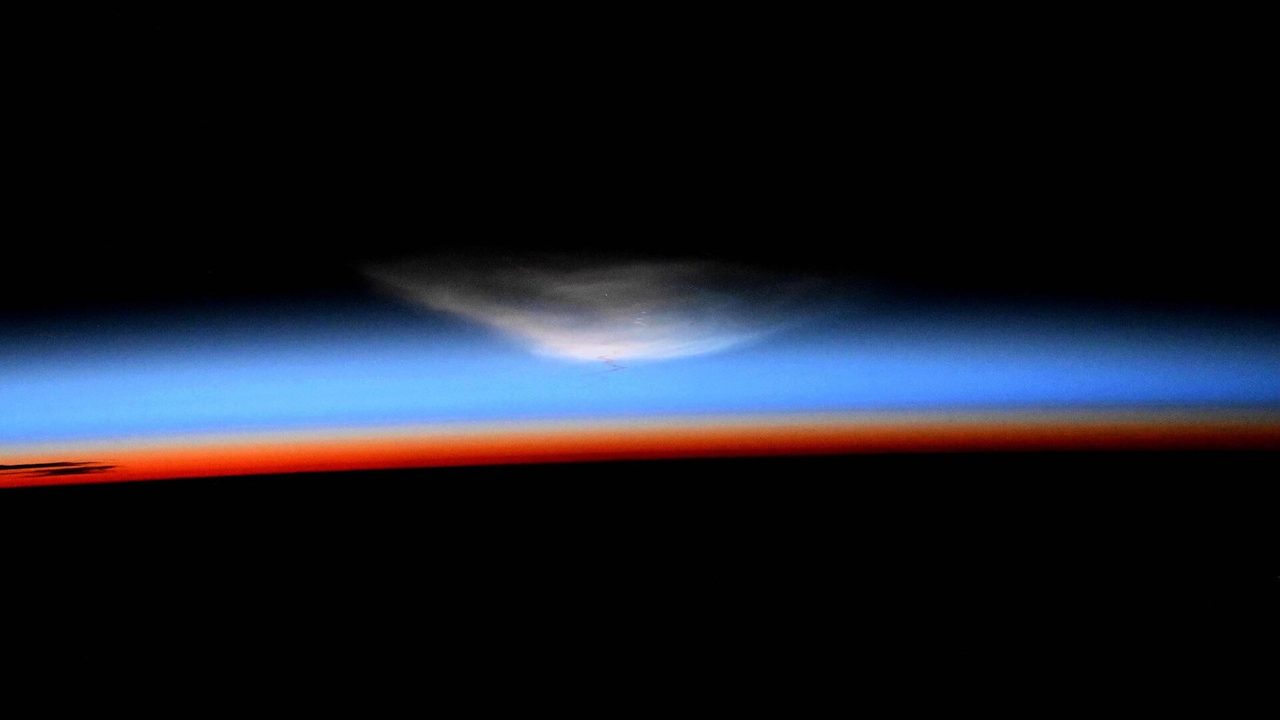
Cover photo: NASA/JSC/Don Pettit / Wikimedia Commons (public domain)