Science & Space By

SpaceX Fires All 33 Engines on Starship Booster Before Next Launch
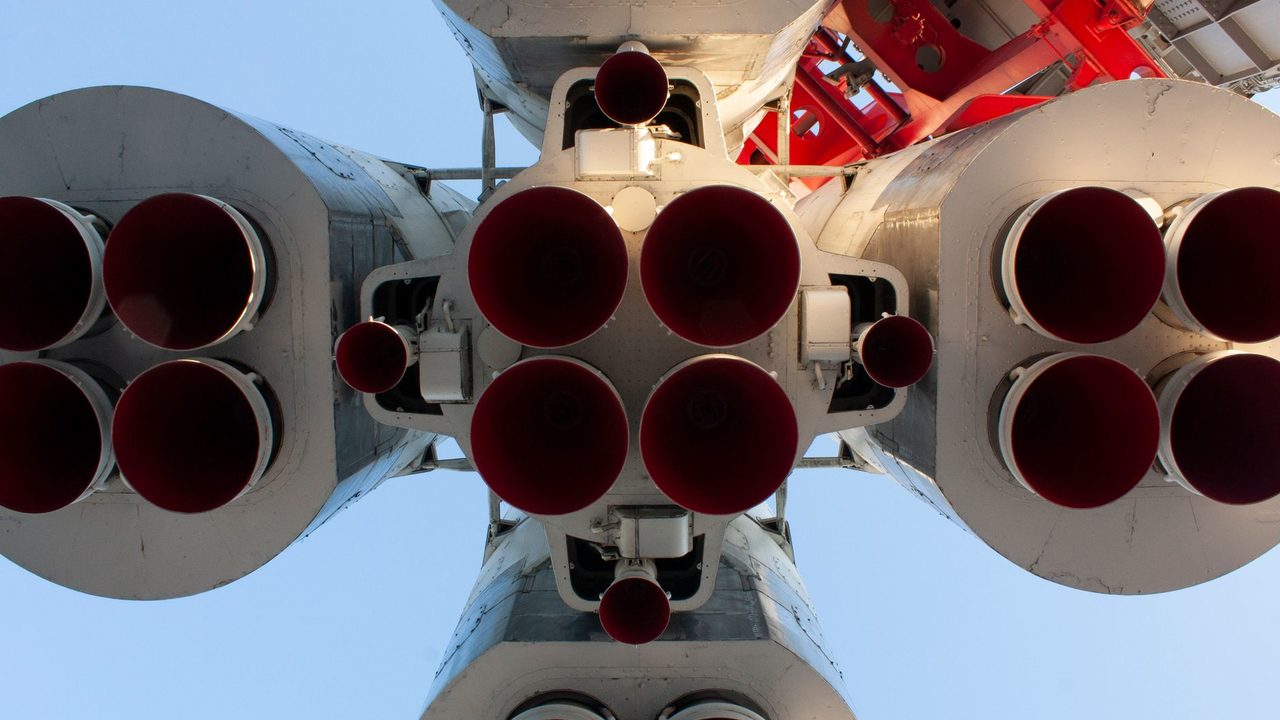
SpaceX has fired all 33 engines on the booster for its next Starship test flight, the first big check in a series of preparations for Flight 15. Space.com reported that the Super Heavy booster, known as Booster 22, ran its Raptor 3 engines for about 15 seconds in a static test on Sunday, Oct. 25.

The company called it a full-duration static fire in a post on X. The booster stayed on the ground during the test. Engineers use such burns to confirm that the engines and systems work before the rocket is cleared for launch.

What still has to happen before Flight 15

According to Space.com, the booster will be mated with the Flight 15 upper stage, Ship 42, ahead of launch. First, though, the ship has its own work to do. Ship 42 is due to complete a series of tests, including a static engine fire and final systems checks.

SpaceX has not officially confirmed what Flight 15 will carry. Space.com said it could be another batch of Starlink V3 satellites. Judging by recent Starship campaigns, Space.com reported, liftoff could come in mid-to-late November.

The catch attempt

The most closely watched goal of the flight is a landing technique. SpaceX CEO Elon Musk has said the company will try the first launch tower catch of a ship upper stage on Flight 15. If it works, Space.com wrote, it would be a significant step toward the company's goal of making Starship fully reusable.

SpaceX says its confidence in catching both the booster and the ship has grown this year. The company has flown Starship three times so far in 2026.

What Flight 14 showed

The most recent flight, Flight 14 on Sept. 28, reached orbit for the first time. It also deployed 26 next-generation Starlink V3 satellites, which Space.com described as the first operational payloads Starship has delivered to orbit. Those satellites are too big to fit aboard the company's workhorse Falcon 9 rocket.

The flight did not go entirely to plan. An upper-stage Raptor engine shut down early during ascent, and SpaceX cut the planned 10-hour mission short. The ship still made a controlled reentry and splashed down in the Pacific Ocean about three hours after liftoff.

Why it matters beyond Starlink

Upgrading SpaceX's global satellite network with the faster V3 satellites is a major reason the company is pushing to bring Starship into regular service, according to Space.com. Because the satellites do not fit on the Falcon 9, Starship is the vehicle that can carry them.

The rocket also matters to NASA. Under the Artemis program, the agency has contracted SpaceX to develop a modified Ship upper stage that can land astronauts on the surface of the moon. NASA recently updated the timeline of milestones SpaceX must reach with Starship before a lunar lander version can qualify to carry crews.

A significant demonstration mission is due next summer on Artemis III. Space.com reported that this mission will launch astronauts to Earth orbit aboard NASA's Orion spacecraft, which will dock with both lunar lander vehicles over about two weeks. Besides Starship, NASA contracted Blue Origin's Blue Moon spacecraft as another lander.

SpaceX is also working toward an uncrewed lunar landing demonstration ahead of Artemis IV, NASA's planned return of astronauts to the moon, targeted for 2028. Which lander will fly that mission has not been decided, and SpaceX and Blue Origin are both still competing for the first crewed Artemis landing.

What comes next

Beyond Flight 15, SpaceX hopes to reach more milestones before the end of 2026. They include Starship's first launch from Florida and, potentially, the first re-flight of an upgraded V3 Super Heavy booster. For now, the Booster 22 static fire starts the countdown of tests that lead to the next launch.

Around Prague, based on reporting by Space.com

Share: Telegram WhatsApp

More science news

Haaland Points to Long-Term Contract as Man City Appeal Heads Toward December Hearing
Manchester City striker Erling Haaland has played down talk that an ongoing appeals process could affect his future at the club. He said he signed a long-term contract in 2024, according to the London
Sour Taste Makes Taste Buds Release Serotonin That Mutes Sweet and Bitter Signals
Sour-sensing cells in the taste bud release the chemical serotonin, which quiets neighboring cells that detect other tastes, according to a new study in mice, Scientific American reported. The finding
Astronomers Watch a Giant Planet Vanish From View as a Hidden Sibling Tugs on It
For the first time, astronomers have followed a giant exoplanet as it gradually dropped out of view from Earth. The planet, TOI-2535b, had vanished by March 2026, according to ScienceAlert, which repo
Gold Steamship Sunk in 1857 Was Found With Math, Then Fought Over in Court
The SS Central America, a wooden steamship that sank in a hurricane off South Carolina in 1857, is now remembered less for the 425 people who died than for its gold and the courtroom fights that follo
Voyager 1 Is About to Be One Light-Day From Earth, More Than 16 Billion Miles Away
NASA's Voyager 1 is set to reach a distance of one light-day from Earth on Wednesday, NPR reported. The spacecraft is already the farthest anything humans have launched into space, and the agency is m
Vulcan Rocket Loses 40 Amazon Internet Satellites 10 Minutes After Liftoff
United Launch Alliance's Vulcan rocket failed to reach orbit Sunday, Nov. 15, losing all 40 Amazon Leo internet satellites it was carrying. The company said an anomaly struck about 10 minutes after li

Related news

Sour-sensing cells in the taste bud release the chemical serotonin, which quiets neighboring cells that detect other tastes, according to a new study in mice, Scientific American reported. The finding suggests that taste buds do more than r
For the first time, astronomers have followed a giant exoplanet as it gradually dropped out of view from Earth. The planet, TOI-2535b, had vanished by March 2026, according to ScienceAlert, which reported on a paper in The Astrophysical Jou
The SS Central America, a wooden steamship that sank in a hurricane off South Carolina in 1857, is now remembered less for the 425 people who died than for its gold and the courtroom fights that followed its discovery, Popular Science repor
NASA's Voyager 1 is set to reach a distance of one light-day from Earth on Wednesday, NPR reported. The spacecraft is already the farthest anything humans have launched into space, and the agency is marking the milestone with a public event
United Launch Alliance's Vulcan rocket failed to reach orbit Sunday, Nov. 15, losing all 40 Amazon Leo internet satellites it was carrying. The company said an anomaly struck about 10 minutes after liftoff from Cape Canaveral Space Force St
NASA's Voyager 1, already the most distant human-made object, reaches a new marker on Nov. 18: it will be one light-day from Earth, so far away that light needs 24 hours to cross the gap, according to Live Science. NASA says the spacecraft
A sock that squeezes the ball of the foot can make walking slightly less tiring, according to a new study from the University of Texas at Austin. ScienceAlert reported that the socks stiffened the foot's arch and lowered the body's energy u
A 28-year-old man from the northeastern United States has spent two years seeing his pet cat's features in the faces of people he meets, according to ScienceAlert, which covered a case report in the journal Cortex. The episodes began after
A gas giant about 1,000 light-years from Earth has slipped out of sight while astronomers were watching it. According to EarthSky, the planet, TOI-2535 b, did not really go anywhere: the gravity of another, unseen planet has tilted its orbi
Astronomers say a star system nicknamed the Blaze Star is very likely to erupt soon, but none can say exactly when. According to Space.com, skywatchers have waited about two years for the nova, and when it comes it will make a faint, normal
Scientists may have an explanation for one of the oddest features of Uranus and Neptune: their lopsided magnetic fields. According to ScienceDaily, new computer simulations suggest that the way the planets’ deep interiors conduct electricit
A faint, little-noticed comet flared up twice this summer, and researchers now say they know why. According to Space.com, sunlight warmed ice below the surface of comet 220P/McNaught, the ice turned to gas, and the escaping gas tore through