Supreme Court Will Hear Fight Over Whether DOGE Must Follow Public Records Law
USD 21,79
Popular
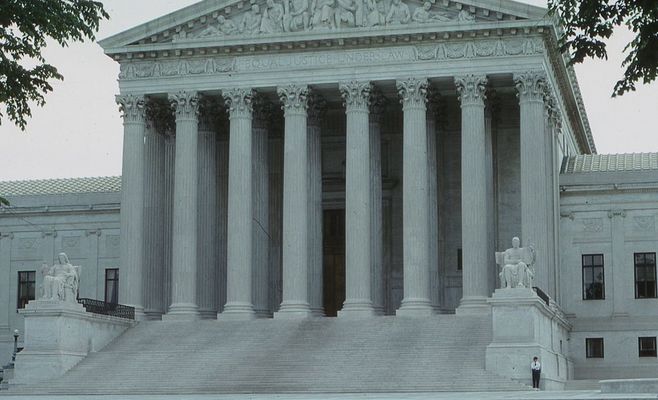
The Supreme Court on Tuesday agreed to hear a dispute over whether the Department of Government Efficiency, known as DOGE, is covered by the Freedom of Information Act. The case could determine whether a watchdog group can obtain records about the cost-cutting task force before any court has decided if the law applies to it, according to CBS News.
The case is called U.S. DOGE Service v. U.S. District Court for the District of Columbia. CBS News reported that arguments will likely take place in early 2027, with a decision expected by that summer.
How a records request became a Supreme Court case
The dispute began with a FOIA request that Citizens for Responsibility and Ethics in Washington, or CREW, filed in early 2025. The group asked for information about DOGE, including its organizational chart and financial disclosures.
The Trump administration declined to process the request. It argued that DOGE is not subject to FOIA because it sits inside the Executive Office of the President and serves purely as an advisory body. CREW sued, asking a court to declare that DOGE is covered by the law and must respond.
A judge then let CREW gather limited information about DOGE's structure and the scope of its authority. The judge also allowed a deposition of DOGE Administrator Amy Gleason. The goal was to help answer a threshold question: whether DOGE is an advisory panel outside FOIA or an agency covered by it.
The earlier trip to the high court
The administration tried to halt that fact-finding and filed an emergency appeal with the Supreme Court. In a 6-3 decision, the justices objected to some of the material DOGE had been ordered to provide, particularly items that would require the government to reveal the content of internal executive branch recommendations and whether they were followed.
The court said that separation-of-powers concerns call for “judicial deference and restraint” when discovery involves internal executive branch communications, CBS News reported. It sent the case back and told the U.S. Court of Appeals for the D.C. Circuit to take appropriate action to narrow the district court's order.
Back in the lower courts, CREW dropped some categories of records. It kept requests for information on DOGE's structure, its directives to cancel federal contracts and fire government workers, and examples of DOGE exercising substantial independent authority, such as gaining access to sensitive systems. The D.C. Circuit let that narrower information-gathering go forward, finding it consistent with the Supreme Court's order.
The administration's argument
The administration appealed again. It argues that if the process continues, CREW would receive much of what it wants through its FOIA requests before a court has ruled on whether DOGE is covered at all.
Solicitor General D. John Sauer wrote in a filing that the appeals court's decision intrudes on the autonomy and confidentiality of presidential advisers. He also said it invites burdensome discovery litigation, including the Gleason deposition. Sauer argued that the ruling threatens to burden future administrations with FOIA suits designed to use discovery against advisers in the Executive Office.
Why it matters for public access to government information
The outcome will affect how much the public can learn about DOGE's structure and activities through public records law. DOGE was created soon after President Trump began his second term, and CBS News reported that, under Elon Musk's leadership, it placed team members across executive branch agencies. It was behind efforts to shrink the federal workforce and cut contracts worth billions of dollars, and it helped shut down agencies such as the U.S. Institute of Peace and the U.S. Agency for International Development.
CBS News also reported that DOGE drew concern for trying to access sensitive databases at the Internal Revenue Service, the Social Security Administration and the Office of Personnel Management. Whether FOIA reaches an entity like DOGE could determine whether records about such activities are open to requests from journalists, researchers and watchdog groups.
The case also raises a broader question the administration has flagged: how far courts may go in examining the work of advisers inside the Executive Office of the President.
What happens next
The justices are expected to hear arguments in early 2027 and rule by summer. Until then, the dispute over how much information CREW can collect, and whether DOGE is an agency under FOIA, remains unresolved.
Source: CBS News