Coalition of the willing drills in Poland for Ukraine mission
USD 21,80
Popular
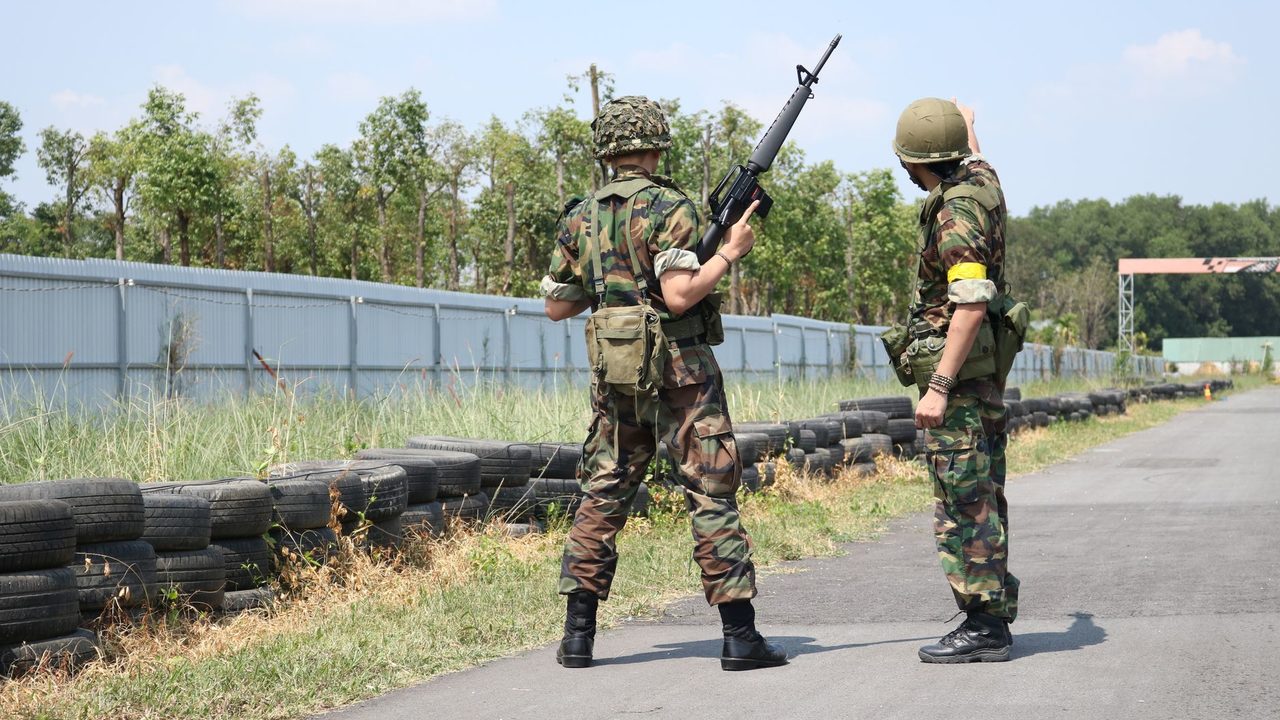
From 9 to 22 November, the town of Nowa Dęba in south-eastern Poland will host the Koalicja 26.2 military exercise, with around 2,800 soldiers from 11 countries joining roughly 2,000 Polish troops. It is the first time the “coalition of the willing” has moved from political statements to practical preparation for a peacekeeping mission that could begin in Ukraine once the war ends.
What the exercise will test
According to the Polish Ministry of Defence, cited by the newspaper Rzeczpospolita, the exercise will be the “culmination of months of planning” and will show how quickly the participating countries can mobilise and assemble a force to support Ukraine after the war. British Lieutenant General Tom Bateman, commander of the Multinational Force Ukraine (MNF-U), called the manoeuvres an important step towards turning political commitments into real operational readiness.
The British and the French will play the leading roles. The core contingent will come from the United Kingdom, France and Poland, while Germany, Spain, Sweden, Estonia, Lithuania, the Netherlands and Belgium will also send units. Troops will rehearse operations on land, at sea and in the air. The UK, for example, will send two Typhoon fighters and a Voyager tanker aircraft to simulate protecting civilian flights once Ukrainian airspace reopens.
Turkey will not be present on site but has committed to lead the maritime operation, whose ultimate goal is to clear mines from the waters and resume commercial shipping in the Black Sea.
UK Defence Secretary Wes Streeting said: “This is not a hypothetical plan. These are real military units, ready to help Ukraine as soon as the fighting stops.”
What the mission could look like
The force would not be part of NATO. Under the Paris Declaration of 6 January 2026, it could be deployed at the request of the Ukrainian government after hostilities end. Its tasks would include training Ukrainian troops, helping rebuild Ukraine’s armed forces and securing air and maritime traffic.
The Polish Ministry of Defence stresses in a press release that such a force would have no peacekeeping or ceasefire-monitoring duties and would remain independent of NATO structures. MNF-U commander Bateman confirmed this as well.
Russia has already voiced its opposition to foreign troops being stationed in Ukraine: last year President Vladimir Putin declared that they would become “legitimate targets”. The rules of engagement would allow the troops to return fire, for example if attacked by Russian drones, but any action would be strictly defensive. “We will of course defend our units against any aggression,” a British army source told The Guardian.
Why it is all happening outside NATO
The main reason is a desire to avoid being drawn directly into a conflict with Russia: Putin has cited opposition to NATO enlargement among his justifications for the full-scale invasion of Ukraine. In addition, decisions in NATO require full consensus among all members, which could cause problems with, for example, Hungary or Turkey.
The United States will not take part in the exercise: President Donald Trump has previously backed away from a commitment to send troops to Ukraine. Since his return to the White House, there has been growing talk of a weakening transatlantic alliance, fuelled by US attempts to acquire Greenland and by tariffs. European countries therefore want to prepare their units to operate without direct American military support, while also reducing their dependence on American technology, in particular Starlink satellite communications from Elon Musk’s SpaceX. “We do not depend on American systems,” an unnamed source replied when The Guardian asked whether the multinational force would rely on Starlink.
How the peace talks are going
The next round of talks is scheduled for 10 and 11 November in Abu Dhabi, with representatives of Russia, Ukraine and the US taking part, Trump’s special envoy Steve Witkoff said. The agenda covers security guarantees for post-war Ukraine, de-escalation and humanitarian issues.
The White House has also said that Russian and Ukrainian representatives will meet on Thursday as well, at the residence of American presidents, at the initiative of First Lady Melania Trump, who is expected to speak about a truce in Ukraine’s Oleshky. Kyiv will be represented by MP and negotiator David Arakhamia and ombudsman Dmytro Lubinets, Moscow by Putin’s special envoy Kirill Dmitriev and ombudsman Tatyana Moskalkova.
The main obstacle remains the sides’ differing visions of a peace deal. The Kremlin demands that Ukraine hand over even those parts of Donbas that the Russian army has so far been unable to fully occupy. Kyiv insists on halting the fighting along the current front line and on firm security guarantees that would prevent a repeat of Russian aggression, and it also rejects any limit on the size of its army and the demand for neutrality.
Around Prague, based on reporting by seznamzpravy.cz