Science & Space By

A Mineral Never Seen on Mars Turned Up in a Meteorite Fragment Smaller Than a Poppy Seed
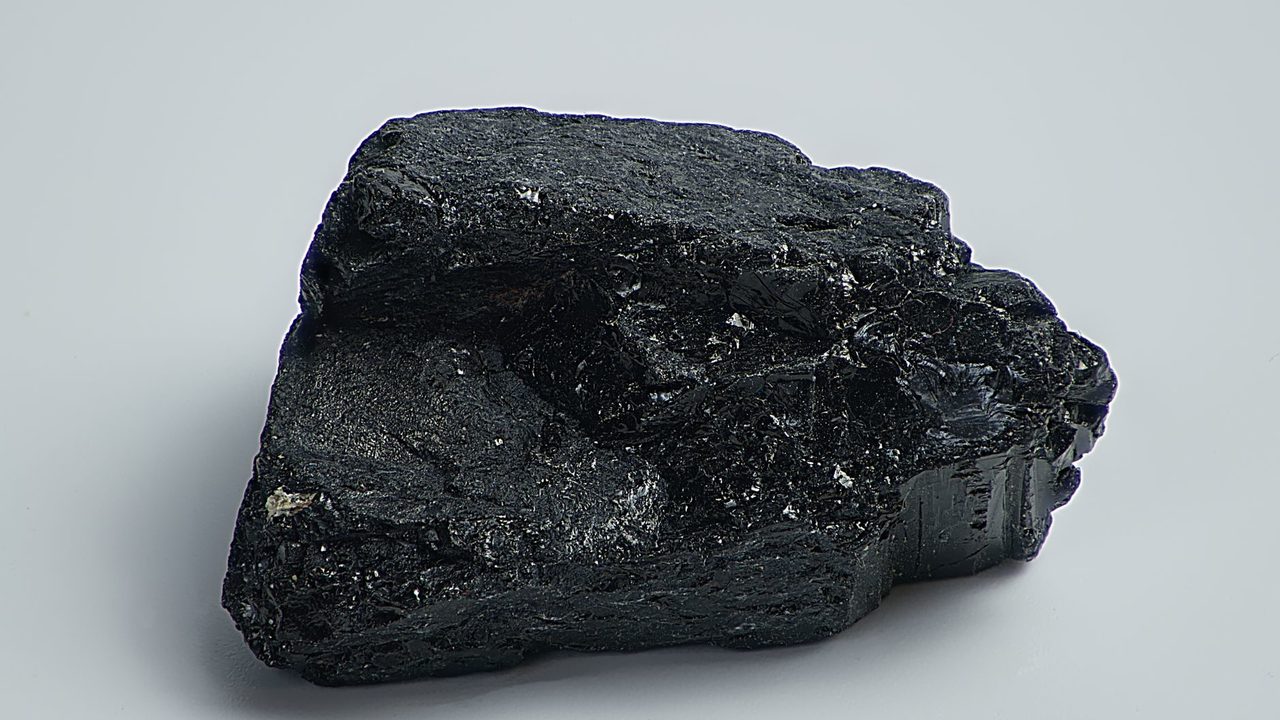
Scientists have found garnet in a Martian meteorite, according to ScienceAlert, and it is the first time the mineral has turned up in any Martian sample. The few grains sit inside a rock fragment roughly 0.8 by 0.5 millimeters across, smaller than a poppy seed, and they raise a puzzle: nobody has identified the conditions on Mars that would make garnet.

The findings are detailed in Geochemical Perspectives Letters.

How researchers nearly missed it

The grains are andradite, an iron-rich type of garnet that looks nothing like the deep red gemstone most people picture. It tends to be yellowish-green and resembles other minerals common in meteorites, so it does not stand out.

Planetary geologist Tanya Kizovski of Brock University in Canada said her team first took the spot for pyroxene, a very common mineral, before deciding to look again. She described the chemistry as a bit odd. Follow-up analyses confirmed it was andradite.

The meteorite behind the find

The rock is called NWA 8171 and is held in the Royal Ontario Museum's collection. It is one of 18 fragments from the same Martian meteorite fall. The best known of them is a piece nicknamed Black Beauty, catalogued as NWA 7034.

It is a basaltic breccia, a rock that forms when magma cools and hardens around other blobs of mineral. ScienceAlert compared it to a fruitcake, with basalt as the cake and the other minerals as the fruit and nuts.

Why a few grains of garnet matter

On Earth, garnet often forms under intense heat, pressure or chemical alteration. Garnets also keep detailed records of the temperature and pressure they formed under. They can be used to date those conditions, and they often contain traces of other minerals that reveal the chemistry of their surroundings.

The team does not yet know what that setting looked like. One possibility is an unusual type of magma not previously found on Mars. Another is metamorphism, where heat, pressure or hot fluids transform existing rock. Kizovski said that on Mars the needed heat and pressure could have come from a meteorite impact, from magma rising into the crust, or from both.

What this means for the study of Mars

Kizovski said the discovery will expand knowledge of the geologic processes possible on Mars and could offer clues to how the planet changed over its history. James Darling, a planetary scientist at the University of Portsmouth in the UK, said the findings add a striking new dimension to understanding Martian geology.

The result is not settled. The researchers cannot yet rule out that the garnet formed somewhere other than Mars. Because NWA 8171 is a breccia that combines several kinds of material, the fragment could in theory have landed on Mars and been folded into the rock later, even though some of its chemistry looks Martian.

What happens next

The next step is to measure isotope ratios in the mineral. If they match those in other Martian minerals, that would indicate the garnet formed on Mars, which would shed new light on the planet's deep geological history.

Around Prague, based on reporting by ScienceAlert
Share: Telegram WhatsApp

More science news

Green Fireball Over Michigan on Thanksgiving Eve: What We Know
A bright meteor crossed the sky over Michigan on Wednesday, Nov. 25, at about 7:40 p.m. ET, and a federal weather satellite recorded the flash, according to Primetimer, which cited local reports and T
NASA's Europa Clipper Swings Past Earth Dec. 3 on Its Way to Jupiter's Icy Moon
NASA's Europa Clipper is about to make a final pass by Earth. On Dec. 3, the spacecraft will use a gravity assist to pick up speed without spending fuel, then continue toward Jupiter, Universe Today r
A Male Orca May Have Lived Past 65. Bomb Fallout in His Teeth Gave It Away
A male orca that washed up in Scotland may be the oldest male of his species ever recorded. Radioactive residue from mid-century atomic weapons tests, locked into his teeth, points to a life of more t
Astronomers Spot Vaporized Rock Around a Baby Star 1500 Light-Years Away
Astronomers have detected titanium oxide in gas form around a young, massive star for the first time, Universe Today reported. The find gives a rare look at the earliest stage of a solar system, befor
Could Quantum Gravity Blur Cause and Effect? Physicists Show It Might Fuzz the Light Cone
Quantum fluctuations of gravity could blur the line between events that can influence each other and those that cannot, according to a mathematical study by physicists Giordano Cintia, Federico Piazza
Moon Rocks From China Show How Four Giant Impacts Carved Its Largest Crater
Rock samples from China's Chang'e-6 mission, combined with data from the earlier Chang'e-4 mission, have produced a timeline of the impacts that shaped the South Pole-Aitken (SPA) basin, one of the la

Related news

A bright meteor crossed the sky over Michigan on Wednesday, Nov. 25, at about 7:40 p.m. ET, and a federal weather satellite recorded the flash, according to Primetimer, which cited local reports and The Saline Post. Residents across the sta
NASA's Europa Clipper is about to make a final pass by Earth. On Dec. 3, the spacecraft will use a gravity assist to pick up speed without spending fuel, then continue toward Jupiter, Universe Today reported. The flyby is also a dress rehea
A male orca that washed up in Scotland may be the oldest male of his species ever recorded. Radioactive residue from mid-century atomic weapons tests, locked into his teeth, points to a life of more than 65 years, Live Science reported. The
Astronomers have detected titanium oxide in gas form around a young, massive star for the first time, Universe Today reported. The find gives a rare look at the earliest stage of a solar system, before any planets or asteroids have formed.
Quantum fluctuations of gravity could blur the line between events that can influence each other and those that cannot, according to a mathematical study by physicists Giordano Cintia, Federico Piazza and Samuel Ramos of the Center for Theo
Rock samples from China's Chang'e-6 mission, combined with data from the earlier Chang'e-4 mission, have produced a timeline of the impacts that shaped the South Pole-Aitken (SPA) basin, one of the largest, oldest and deepest craters on the
Astronauts on the International Space Station will mark Thanksgiving with a mix of classic dishes and plants grown in orbit, Space.com reported. NASA astronaut Anil Menon plans to build his holiday meal around greens that he and his crewmat
A fossil scorpion that lived around 415 million years ago may be the largest ever to have existed. ScienceAlert reported that a new analysis of British fossils identifies the animal, named Praearcturus gigas, as a predator that stretched pa
The Euclid space telescope has found the most distant and ancient quasar ever seen, Space.com reported. It is a blazing beacon powered by a supermassive black hole with 360 million times the mass of the sun. The black hole is seen as it was
Popular Science reported that the same warming could shrink the suitable land for several other birds of prey. The research was led by Connor Panter, a researcher at the University of Nottingham’s School of Geography. It is a reminder that
The European Space Agency's Hera spacecraft has reached the asteroid that NASA hit on purpose four years ago, and its first images show a crater roughly the size of a sports stadium, ScienceAlert reported. The scar stretches across the enti
Engineers could use the Moon’s own terrain as a radiation shield for a future nuclear reactor, according to a new paper from researchers at Los Alamos, NASA Glenn, Oak Ridge, Idaho National Lab and Lockheed Martin, as reported by Universe T