Ukraine claims it liberated 200 sq km of land near Kharkiv
USD 22,26
Popular
Ukrainian forces have carried out an operation called “Bear Trap” in the north of the Kharkiv region and claim to have liberated about 200 square kilometres and 14 settlements near Velykyi Burluk, which lies roughly 80 kilometres east of Kharkiv. The BBC Ukrainian service reports this. Russia denies losing any villages, while independent analysts say the figure is inflated.
How the offensive unfolded
The counteroffensive began on 20 September, with fighters from the 475th Assault Regiment and a drone unit taking part. The goal was to eliminate a salient near the village of Vilchuvatka. Over the summer, Russian forces had advanced in the area and planned an operation of their own, called “Bear Corner”, which was meant to catch the enemy in a pincer movement.
In mid-October, Russian General Staff chief Valery Gerasimov announced that the operation had been successfully completed: 461 sq km and 28 villages were said to be under Russian control, with about 2,000 Ukrainian troops supposedly trapped in a “cauldron”. Kyiv immediately rejected the claim and said there had been no encirclement.
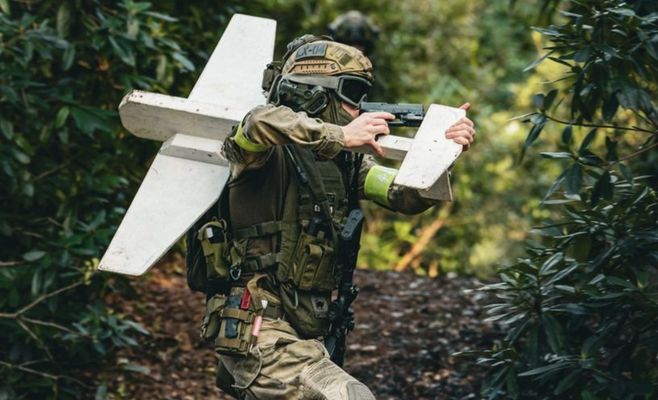
During its own operation, Ukrainian forces first subjected Dovhenke, Zarubynka and Vilchuvatka to heavy shelling. They used heavy equipment, including T-80 and Abrams tanks and Bradley infantry fighting vehicles, to force the enemy to redeploy reinforcements. A concentrated attack by Fire Point drones then followed in Vilchuvatka, succeeded by an infantry assault.
What independent sources confirm
Ukrainian analyst Kostiantyn Mashovets reported on 22 November that Ukrainian units advancing from Velykyi Burluk along two flanks had linked up at Artelne, between the villages of Ustynivka and Olkhovatka. As recently as 20 November, Artelne was held by Russian units.
The independent OSINT channel Playfra believes the claim of 200 sq km is exaggerated: the list of liberated villages includes places that Russian troops had only entered in small groups, such as Chorne, Prykolotne and Kupyne. The analysts believe Dovhenke and Zarubynka have been liberated, but are unsure about Vilchuvatka. Playfra does confirm that the situation in the area has been stable for a month and that Russian forces are not attacking. However, this analysis was published before Mashovets’s remarks, which suggest the operation reached the Russian border itself.
What Russia says
The Russian side has published several clips of flag-raisings to show that it still controls the villages of Khrypuny, Volokhivka and Anosyne. According to the Institute for the Study of War, however, this footage is old.
Immediately after the Ukrainian announcement, Moscow began talking up its own successes. On Sunday, Russia’s Defence Ministry announced the capture of the village of Sosnovyi Bor, while the TASS agency reported the destruction of three pontoon bridges near the Travianske reservoir, which, according to the agency, will complicate supplies to Ukrainian units north and east of Kharkiv. To the southeast of Velykyi Burluk, Russian forces launched a mechanised counterattack on Kolodiazne, according to a report from the “West” group of forces, but Ukrainian drones stopped it.
Sumy region: claims without confirmation
Ukrainian forces have also claimed an advance in the north of the Sumy region, near the Russian border, where the villages of Yablunivka, Oleksiivka and Varachyne have supposedly been liberated. Moscow denies this, and the Institute for the Study of War has no data confirming a Ukrainian advance. According to Russian sources, Ukrainian units are trying to break through to the area south of Yunakivka.
Around Prague, based on reporting by novinky.cz