Brazil Reports Lowest Amazon Deforestation on Record Days Before Runoff
USD 21,62
Popular
Brazil's government said Friday that deforestation in the Amazon has dropped to its lowest level since satellite records began in 1988. Official data showed 3,335 square kilometers (1,300 square miles) of forest were lost from August 2025 to July 2026, a 41.8% fall from the previous year, according to The Guardian and the BBC.
The announcement comes nine days before a presidential runoff in which the rainforest's future is a central issue. President Luiz Inácio Lula da Silva faces Sen. Flávio Bolsonaro, and the two candidates offer sharply different approaches to protecting the forest, the Associated Press reported.
How Brazil got here: key dates
- 1988: Brazil's satellite measurements of Amazon deforestation begin. The new figure is the lowest in that series, The Guardian reported, based on the Prodes data from Brazil's National Institute for Space Research.
- 2004: During Lula's first administration, Brazil launches the Action Plan for the Prevention and Control of Deforestation in the Legal Amazon, known as PPCDAm, according to the AP.
- 2019 to 2022: Under President Jair Bolsonaro, the plan is shelved. The AP reported that Amazon deforestation rose by about 60%, with more than 45,000 square kilometers (17,400 square miles) cleared, citing official data. The BBC said forest loss was nearly 60% higher than in the previous four years and noted that Bolsonaro promoted mining on Indigenous lands while resources to protect the forest were cut. The Guardian gave a slightly different period, 2019 to 2023.
- January 2023: Lula begins a third, non-consecutive term and revives the plan. He brings back the environmental officials who designed it, including Marina Silva and João Paulo Capobianco, the AP reported.
- Oct. 4: Brazilians vote in the first round of national elections. Flávio Bolsonaro received 47% and Lula 45%, according to the AP.
- Oct. 25: Lula and Flávio Bolsonaro meet in the runoff. The BBC said polls suggest a neck-and-neck race.
What changed on the ground
The government says deforestation has fallen 71% since 2023, according to the AP. The Guardian, citing the same institute's data, reported a 71.2% slowdown from 2022 levels and attributed it largely to stronger enforcement and state investment in environmental agencies.
The AP described the plan's four pillars: stronger monitoring and enforcement, a sustainable economy, management of protected areas and undesignated public forests, and regulations and financial incentives. Measures included restoring sanctions for illegal clearing detected by satellite. The AP said that practice is seen as the most effective tool and had been halted under Bolsonaro. The government also proposed barring properties with illegal deforestation from receiving bank loans.
The Guardian reported that Pará, Mato Grosso and Amazonas had the largest shares of Amazon deforestation this year, though each saw declines of more than 45%. Roraima was the state where the problem grew, by 0.4%.
The BBC reported that deforestation also fell in the Cerrado, Brazil's savanna region, by 23.8%. The Guardian put the Cerrado total at 5,516 square kilometers, its lowest since 2001.
Capobianco, now the environment minister, called the decline in Amazon deforestation “absolutely stratospheric,” the BBC reported. Márcio Astrini of the Climate Observatory, a network of environmental groups, said the results show that protecting forests need not hold back Brazil's economy, noting that agriculture has set production and export records as deforestation fell.
Why it matters beyond Brazil
Deforestation and other land-use changes are Brazil's largest sources of greenhouse gas emissions, the AP reported. The Amazon stores vast amounts of carbon dioxide and generates atmospheric moisture that helps regulate weather far beyond South America. The BBC noted that 60% of the rainforest lies in Brazil.
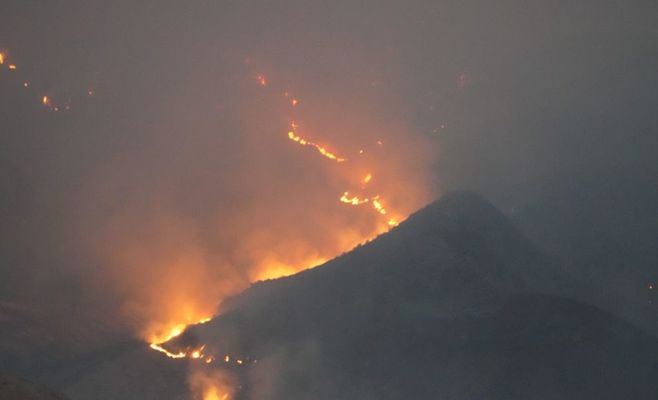
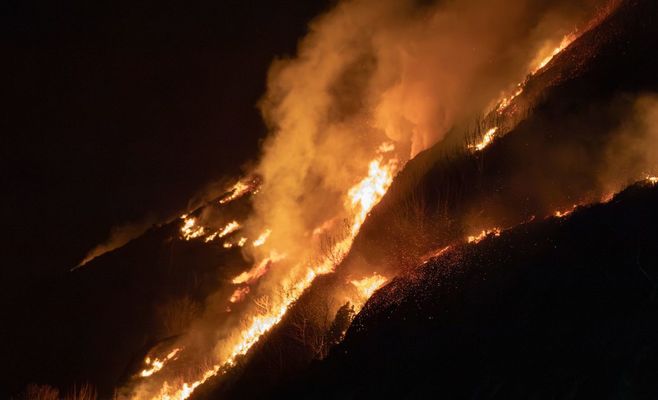
Progress is not secure, according to the AP. Degradation from wildfires, logging and drought affects about 40% of the Amazon and has outpaced clear-cutting in recent years. A strong El Niño could bring hotter, drier conditions in 2026 and 2027 that fuel fires. Fire counts were near historic lows this year but have tripled since Oct. 4, and authorities are investigating whether some fires were set deliberately for political reasons.
What the two candidates promise
Lula has pledged zero net deforestation by 2030, with restoration offsetting all forest loss, legal or illegal, the AP reported. In a post on X on Friday he restated a goal of zero illegal deforestation by 2030, according to the BBC.
Flávio Bolsonaro has pledged to end illegal deforestation by 2029, the AP said. His campaign said he defends the environment and those who preserve standing forests and clean rivers. He has called for modernizing environmental laws, which many environmentalists interpret as weakening them, the AP reported. The BBC said he is expected to continue his father's policies but has pledged to fight organized crime in the Amazon.
Silva, the former environment minister, called the drop a historic achievement and said the election outcome will be crucial to sustaining it. She accused the Bolsonaro family of denying the climate problem. Astrini said the country will decide whether it moves toward ending deforestation or toward ending the forest, The Guardian reported.
What happens next
Voters decide the presidency in the Oct. 25 runoff. Authorities are continuing to investigate the recent surge in fires.
Sources: ABC News, The Guardian, BBC News