Eisenkot Accuses Netanyahu of Racist Campaign as Arab Parties Hold 19 Seats
USD 22,10
Popular
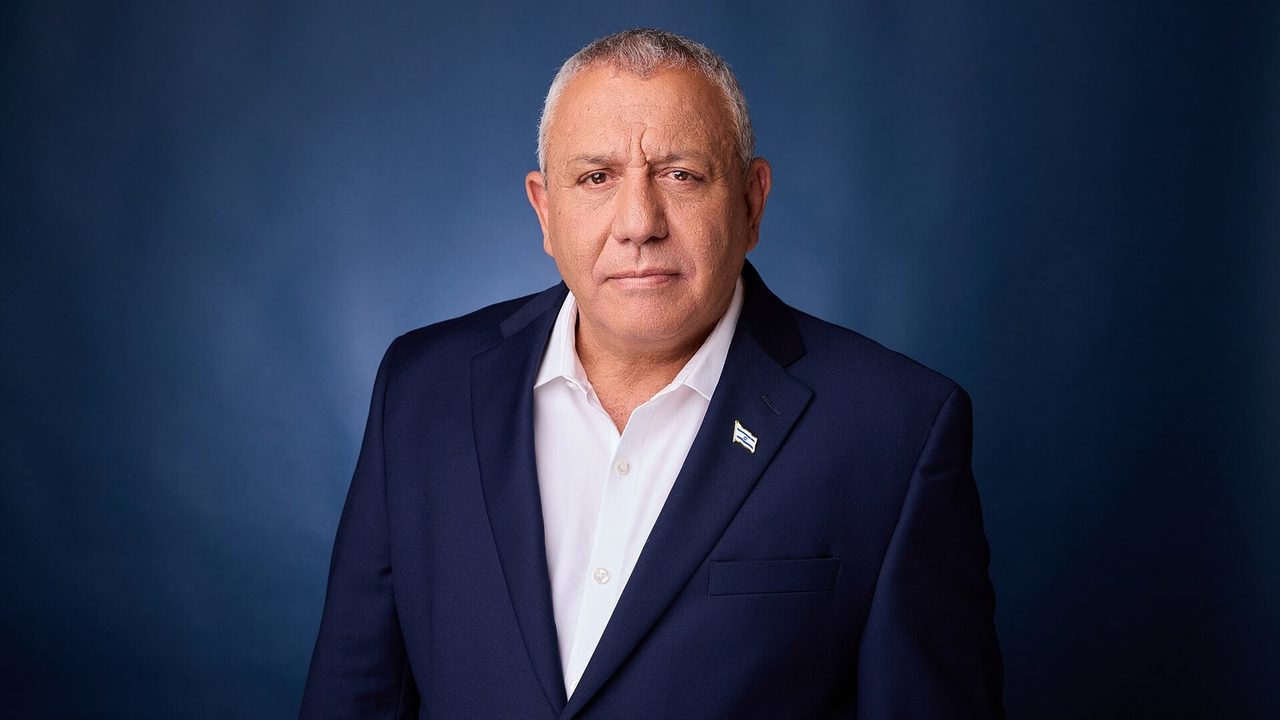
Israeli opposition leader Gadi Eisenkot accused caretaker Prime Minister Benjamin Netanyahu on Friday of fueling a racist campaign against the country's Arab citizens, who could prove decisive in the effort to form the next government. Eisenkot, who has been tasked with building a coalition, wrote on X that Netanyahu and those around him had pushed the campaign for political reasons.
The statement is a rare case of a prominent Jewish political leader defending Arab Israelis so strongly, the Guardian reported.
The numbers behind the standoff
- 48 seats: won by Eisenkot's four-party alliance in the Oct. 27 election, according to Al Jazeera.
- 53 seats: won by Netanyahu's right-wing and religious bloc. Neither side reached the 61 seats needed for a majority in the 120-seat parliament.
- 19 seats: a record for Arab-led parties, which together represent Palestinian citizens of Israel. The Guardian said the two Arab-majority parties, Ra'am and the Joint List, hold nearly a sixth of parliament.
- 67 seats: the size of the bloc Eisenkot would have if the Arab-led parties joined him, but he has ruled that out, Al Jazeera reported.
- 61 seats: exactly what he would reach with the two ultra-Orthodox parties, United Torah Judaism and Shas.
- 28 days: the time Eisenkot has to form a government, with a possible 14-day extension, the Guardian reported.
What Eisenkot said
Eisenkot said Arab citizens make up 21% of the population, according to Al Jazeera, and are part of the Israeli story. The Guardian put their share at more than 20%. He said trying to marginalize them or smear them as a group is an anti-state act, and that a prime minister serves all citizens, including those who did not vote for him.
He said it is legitimate to disagree with Arab party representatives, even to feel deep revulsion toward some of them, but that he would not allow an entire community to be slandered.
What Netanyahu and his allies have said
Netanyahu and his allies have repeatedly criticized Arab party leaders for refusing to call Hamas a terror group after its Oct. 7, 2023, attack on Israel. All of those leaders have condemned the attack, in which Arab Israelis were also among the dead, the Guardian reported.
Netanyahu has also repeatedly alleged electoral fraud by Arab-majority parties. Israel's electoral authorities have rejected those claims, and Al Jazeera described the allegations as unproven.
In a speech, Netanyahu complained that the two Arab lists would not recognize Israel as a Jewish state, though the Guardian noted that Ra'am leader Mansour Abbas has done so in the past. Netanyahu also claimed they wanted either an Islamic state or a nationalist Palestinian state. At the same ceremony, National Security Minister Itamar Ben Gvir heckled Joint List leader Yousef Jabareen during his oath of allegiance, accusing him of pledging allegiance to Hamas, the Guardian reported.
Why it matters: the coalition math
Arab-led parties have endorsed Eisenkot to replace Netanyahu. President Isaac Herzog tasked Eisenkot with forming a government on Sunday after a majority of parties, including the two Arab lists, recommended him.
The arithmetic is tight. Without the Arab-led parties, Eisenkot would need both ultra-Orthodox parties to reach 61 seats. The Guardian reported that one of his rightwing allies, Avigdor Lieberman, has said he will leave the coalition if Arab Israelis are part of it. For Israel's Arab citizens, the dispute is about more than coalition politics: it concerns whether their elected representatives are treated as legitimate partners in government.
Eisenkot said he wants to carry out his mandate as soon as possible and called it a grave mistake not to do so, according to Al Jazeera. He also said he was open to including Netanyahu in his coalition earlier in the week.
What happens next
If Eisenkot fails to form a government within 28 days, he may request a 14-day extension. If he still falls short, the mandate would pass to another lawmaker, most likely Netanyahu, according to the Guardian.
Read next
Israel Vote Leaves Netanyahu Bloc Short of a Majority as Arab Parties Gain
Israel's President Gives Eisenkot 28 Days to Form Government, Not Netanyahu
Israel's Election Puts Arab Parties at the Center of a Coalition Standoff
Around Prague, based on reporting by Al Jazeera, The Guardian
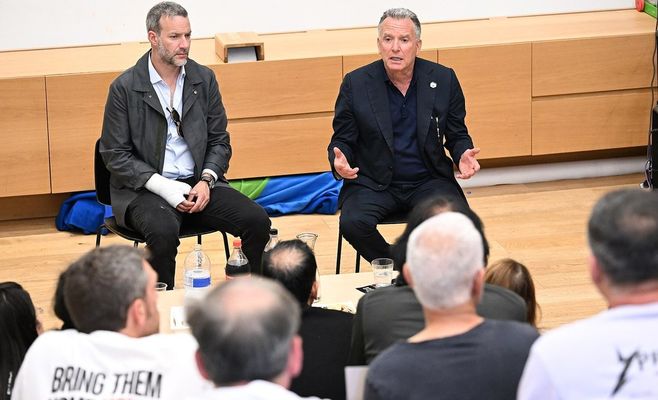
Cover photo: יהב טרודלר (Yahav Trudler - Yahav Studio) / Wikimedia Commons, CC BY-SA 3.0, cropped