Indian Opposition Marches on Supreme Court Over Voter Rolls and Election Chief
USD 21,81
Popular
India's opposition parties marched to the Supreme Court in Delhi on Monday to demand the resignation of Chief Election Commissioner Gyanesh Kumar, who they accuse of overseeing manipulated voter rolls. The march followed a weekend in which police detained thousands of protesters, and it is one of the most visible tests yet for Prime Minister Narendra Modi's government.
The Election Commission and Modi's Bharatiya Janata Party (BJP) both reject the allegation, according to the BBC. Al Jazeera reported that the commission has denied wrongdoing.
What the opposition is demanding
Opposition parties say a revision of India's electoral rolls under Kumar has been used to benefit the BJP. Al Jazeera, citing media reports, said the revision led to more than 133 million names being removed from the lists. Critics say minorities, particularly Muslims, were disproportionately affected. The Election Commission says the aim was to remove duplicate, deceased and fraudulent entries.
Congress lawmaker Rahul Gandhi, the leader of the opposition in the lower house of Parliament, called on opposition parties, civil society groups and others to join the march. The BBC reported that several thousand people gathered on Barakhamba Road, where the march began, and that supporters chanted Gandhi's name as his bus arrived. Gandhi and Congress President Mallikarjun Kharge also wrote to Chief Justice Surya Kant outlining their concerns about Kumar's alleged conduct and the roll revision.
The Chief Justice declines a meeting
Opposition lawmakers had wanted to hand a memorandum to Kant. The BBC reported that he declined the meeting, citing "certain reasons" that he did not spell out. Media reports citing his letter say some of the issues were already pending before the court. The BBC has not seen the letter.
Kant told reporters that every citizen has the right to approach the court and that it would hear their concerns. Gandhi said the Chief Justice had asked the opposition to file a petition, which the parties plan to do at the end of the march.
A weekend of mass detentions
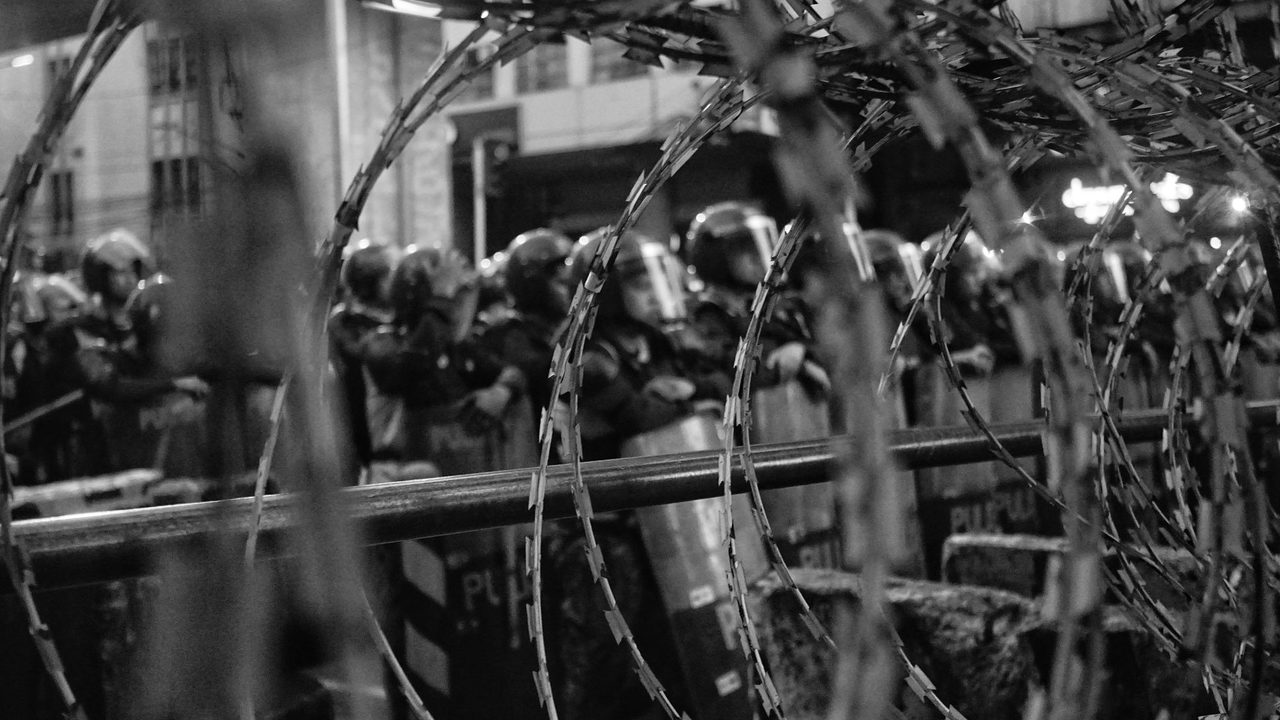
The Cockroach Janata Party (CJP), a youth-led pressure group that is not a registered political party, had called a march to Jantar Mantar, Delhi's best-known protest site, on Saturday. The BBC reported that authorities imposed sweeping restrictions: trains were cancelled, dozens of metro stations were shut, and tens of thousands of police and paramilitary personnel were deployed. Thousands of people were detained.
The BBC said the CJP's leaders, founder Abhijeet Dipke and co-convenors Saurav Das and Ashutosh Ranka, were detained as their plane landed in Delhi and were released a day later. Dipke has gone home for his grandmother's funeral. Das and Ranka said the protests would continue and that they would ask police for a new date.
Both outlets reported that journalists were among those detained. Reporters Without Borders condemned the detention of at least 16 Indian journalists, saying that "Covering events of public interest is not a crime." The BBC said video and photos show police dragging people, including women, into buses, and that it captured footage of a police officer slapping a detainee inside a bus. Delhi Police did not respond to the BBC's questions about the use of force. CPI(M) lawmaker John Brittas said police manhandled and assaulted him on Sunday, according to Al Jazeera.
How the government's side has responded
BJP President Nitin Nabin accused the opposition and the CJP of trying to destabilize India "at the behest of foreign forces." He did not say which forces he meant, according to the BBC. Gandhi, for his part, said young protesters who came peacefully had been beaten. He also challenged Home Minister Amit Shah in a post on X, saying the opposition would not be intimidated by more police.
Why it matters for people in Delhi and beyond
For residents of the capital, the protests have meant barricades, traffic restrictions and closed or restricted metro stations for a third straight day, according to Al Jazeera. Authorities also limited entry and exit at some key stations, the BBC reported.
More broadly, the dispute concerns the accuracy of the voter lists in the world's most populous nation, and whether people who say they were wrongly removed can be heard. Al Jazeera described the demonstrations as one of the most significant political challenges for Modi in his 12 years in power. The CJP, which has millions of social media followers, previously led a protest over the summer that ended with the federal education minister's resignation, the BBC said.
What happens next
The opposition says it will file a petition with the Supreme Court at the end of Monday's march. The CJP says it will keep protesting until Kumar steps down and will seek a new protest date from police.
Sources: BBC News, Al Jazeera