NASA climate animations show Earth turning red as ice melts
USD 22,28
Popular
NASA has released three animations showing how Earth's climate has changed: the planet's temperature is rising, there is ever more carbon dioxide in the atmosphere, and Arctic ice keeps shrinking. According to NASA's Goddard Institute for Space Studies, 2025 was 1.19 °C warmer than the 1951–1980 average, tying with 2023.
A map where blue gives way to red
The first animation begins in 1880 and looks mostly white and blue at first. White marks temperatures at the 1951–1980 average, blue means below it, and red means above it. From around the end of the 20th century the red spreads, and in recent years it covers almost the entire planet. The warmest year since measurements began is still 2024.
Carbon dioxide: growth and the planet's “breathing”
The second animation shows CO₂ concentrations, which have been measured since September 2002 by the AIRS instrument on the Aqua satellite. Over two decades the map shifts from pale yellow to orange-red, while the figure on the timeline climbs from just under 380 to 419 ppm (CO₂ molecules per million molecules of air). The colors also “pulse” every year: plants in the Northern Hemisphere absorb carbon dioxide in spring, and when the growing season ends, levels rise again. These swings are stronger in the north because most of the planet's land is concentrated there.
The World Meteorological Organization (WMO) reported on October 27 that the average concentration of CO₂ in the atmosphere reached 426.8 ppm in 2025 — 53 percent more than in 1750, before the Industrial Revolution. In a single year the figure rose by 2.8 ppm, above the average of the past decade.
Other greenhouse gases also hit records: there is 2.7 times more methane in the air than before the Industrial Revolution, and nitrous oxide is up by about a quarter. The WMO report notes that it measures how much gas has accumulated in the atmosphere, not how much was emitted over the year. This year, the organization estimates, a strong El Niño could push concentrations even higher.
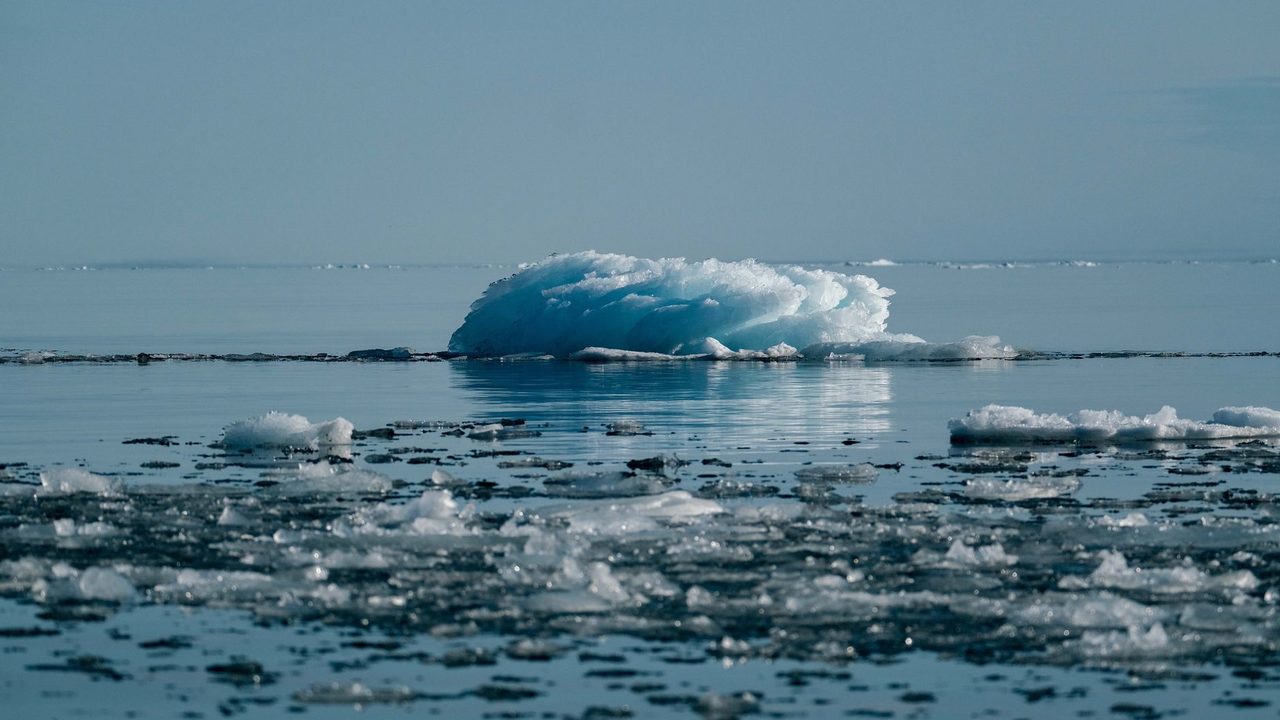
Arctic ice has shrunk by almost half
The final animation shows Arctic sea ice at the end of summer, when its extent is at a minimum. In the late 1970s and early 1980s it covered 6.5–7 million square kilometers at this time of year, while in 2024 it covered only about 3.7 million. The least ice was recorded in 2012, just under three million square kilometers.
According to the US agency NOAA, the Arctic is warming more than twice as fast as the rest of the planet, and the period from October 2024 to September 2025 was the warmest there since 1900.
Around Prague, based on reporting by seznamzpravy.cz