CSG's David Hour: Europe's rearmament lags behind the war threat
USD 21,59
Popular
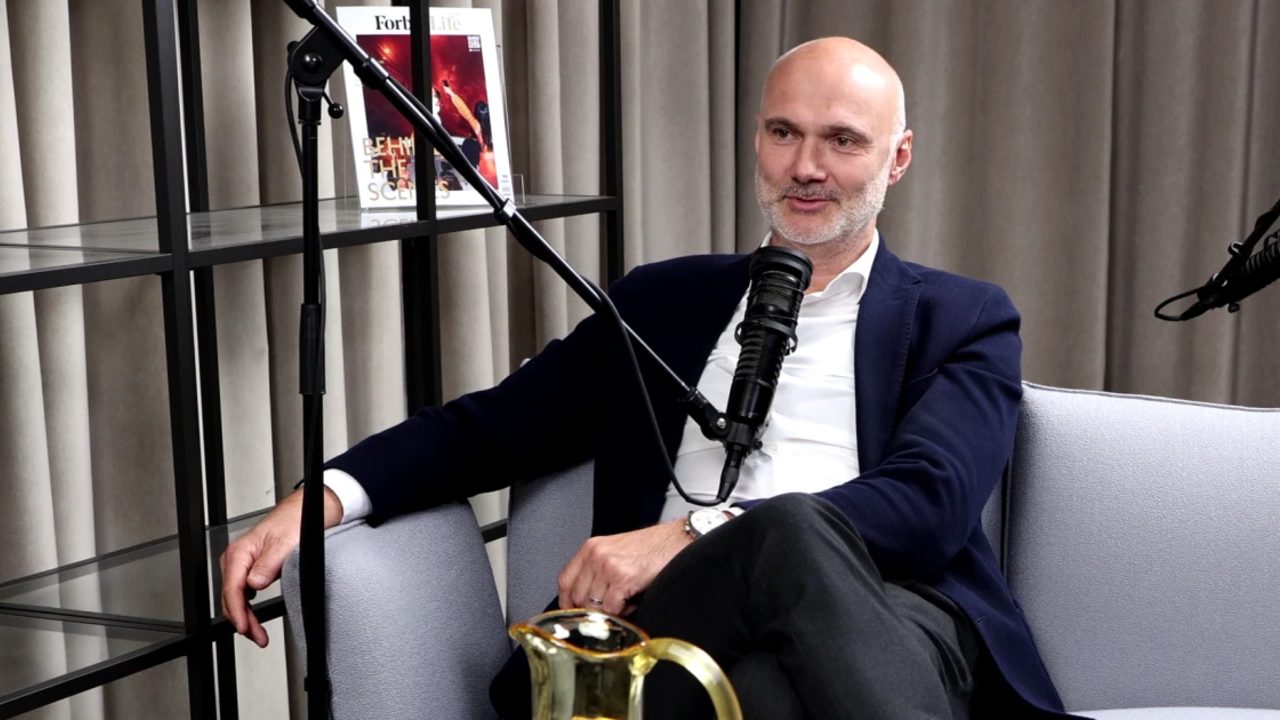
David Hour, often called billionaire Michal Strnad’s right-hand man, is in charge of public communications at arms giant CSG. On The Forbes Show podcast, he explained why European governments aren’t responding fast enough to the military threat, and addressed the drop in the company’s share price after its listing on the Amsterdam exchange.
In Hour’s view, Europe is preparing for a possible war only in small steps. “I think European officials have started to see war as a threat, as something that could theoretically happen. But if you look at the pace of rearmament, the rollout of new defense programs and orders, and support for the defense industry, I don’t think it’s being treated as a genuinely serious threat,” he says.
In his observation, for people in Europe’s westernmost countries, the war in Ukraine still feels very distant. Against this backdrop, Hour singles out Poland, where CSG will be supplying hundreds of chassis for multipurpose tactical vehicles. “Poland shifted to a four-percent defense budget almost instantly and immediately started rolling out orders for tanks and other heavy equipment worth billions of dollars. I think, compared to other governments, Poland is leading the way, and we should learn from it,” he adds.
CSG, a company from Czechia — a country of just ten million people — is trying to compete in the top league of the defense industry with giants like Rheinmetall, KNDS and BAE Systems, and, across the Atlantic, Lockheed Martin and Northrop Grumman. Hour acknowledges there are natural limits: “There are products we won’t develop, or that simply don’t make economic sense. Let’s be honest — developing a new tank requires the backing of a large, strong government that can guarantee the billions invested will pay off, at the very least through steady orders for its own army.”
A separate topic is CSG’s share price since it listed on the Amsterdam exchange in January this year. A triumphant start was followed by a sharp drop, and the recovery only began in August. “We’re bearing the brunt of a broader sobering-up among investors that has hit the whole market. Look at how Rheinmetall’s shares have fallen — it’s the biggest European benchmark that every defense company gets compared to,” Hour explains. The German giant’s shares soared to €1,900 after the war began, and in July this year were holding above €900.
Hour describes his role at CSG with humor: he handles the parts of running the company that don’t interest its main owner, Michal Strnad. His position was created four years ago on the logic that the person who speaks for CSG most often would take on areas that Strnad didn’t necessarily need to handle himself. “I also joke that I’m a kind of catch-all bin. Whatever can’t be assigned to other managers at headquarters or in the divisions sometimes lands on my desk,” Hour jokes.