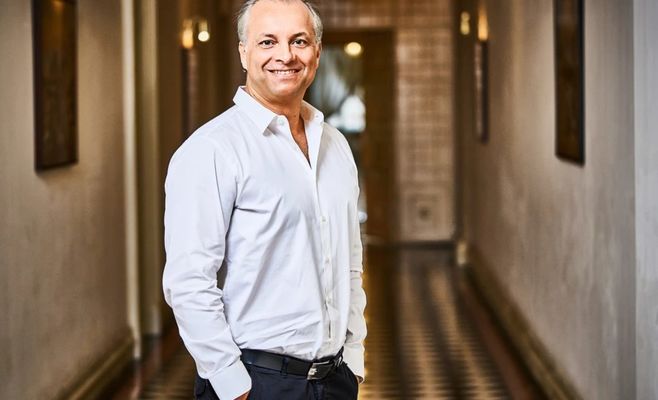
Dušan Šenkypl and Groupon: shares plunge 23% after forecast cut
USD 21,91
Popular
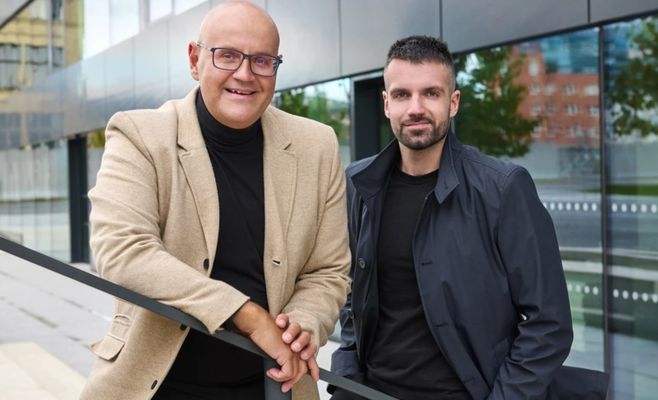
Groupon, the American discount coupon giant that Czech billionaires Dušan Šenkypl and Jan Barta are working to rescue, has fallen short of investors' expectations. Weak quarterly results and a lowered full-year forecast sent its shares down more than 23 percent on Tuesday. Costly restructuring continues, while management is betting ever more heavily on artificial intelligence.
What happened on the stock market
On the Nasdaq, Groupon shares lost 23.02 percent on the day and closed at $12.51. Investors were disappointed by third-quarter results published Monday after the market closed, but mainly by the sharp cut to the full-year forecast.
Groupon's revenue rose 2 percent year over year to $125.45 million, while analysts had expected about $129.4 million. Adjusted operating profit (EBITDA) fell from $17.5 million to $14.7 million. The company's free cash flow was negative, at minus $45.8 million.
Groupon now expects full-year revenue of $500–503 million instead of the previous $513–523 million. The adjusted EBITDA forecast was lowered from $75–80 million to $60–65 million, and expected free cash flow for the year was cut by a third, from at least $60 million to $40 million.
According to management, the results were hit mainly by higher marketing costs, whose return proved lower than expected, as well as large refunds to dissatisfied customers and a shift in sales toward services with lower margins.
A fourth year of restructuring
Groupon is one of the most ambitious foreign investments of the Czech group Pale Fire Capital, which is backed by Dušan Šenkypl, Jan Barta and David Holý. They began investing in the American pioneer of coupon services in 2021, and when the company fell into a deep financial crisis, Šenkypl took over as its head in the spring of 2023.
Large-scale layoffs, office closures and a rebuilt business model followed, modeled on the Czech Slevomat. The company began scaling back the sale of goods and focused on local services, travel and experiences. Costs were cut significantly, and Groupon gradually returned to a positive adjusted operating profit.
This year brought a new round of restructuring: in May the company announced plans to cut up to 400 jobs, almost a quarter of its staff at the time. Most of the cuts have already taken place, and management expects annual savings of $20–25 million from them.
According to the latest report available to U.S. regulators, Czech investors control about 32 percent of Groupon's shares through Pale Fire Capital and Šenkypl's own direct stake. That makes them among the largest shareholders, so Tuesday's drop noticeably hit the value of their investments.
A bet on artificial intelligence
Šenkypl is now pushing another transformation of Groupon with the help of AI. The Foundry project is meant to gradually automate internal processes, software development and customer support. According to a November letter to shareholders, in the third quarter AI independently resolved 84 percent of customer requests, versus 42 percent in January. Revenue per employee rose by roughly half over the year.
Even so, Groupon still struggles to grow its core business. The number of active customers is stagnating at about 16.2 million, and the number of coupons and services sold fell 2 percent over the year to nine million. The travel segment is doing well: sales there grew 36 percent.
There is also a curious contradiction in capital policy: from the start of the year to early November, Groupon bought back about 3.5 million of its own shares for $43 million, with some of the purchases made at prices well above those to which the stock fell after the report. Management also acknowledges that the recovery of local services supply in North America is slower than planned.
By the Around Prague newsroom