From nuclear subs to Deutsche Bank: Mason Parker's football bet
USD 21,59
Popular
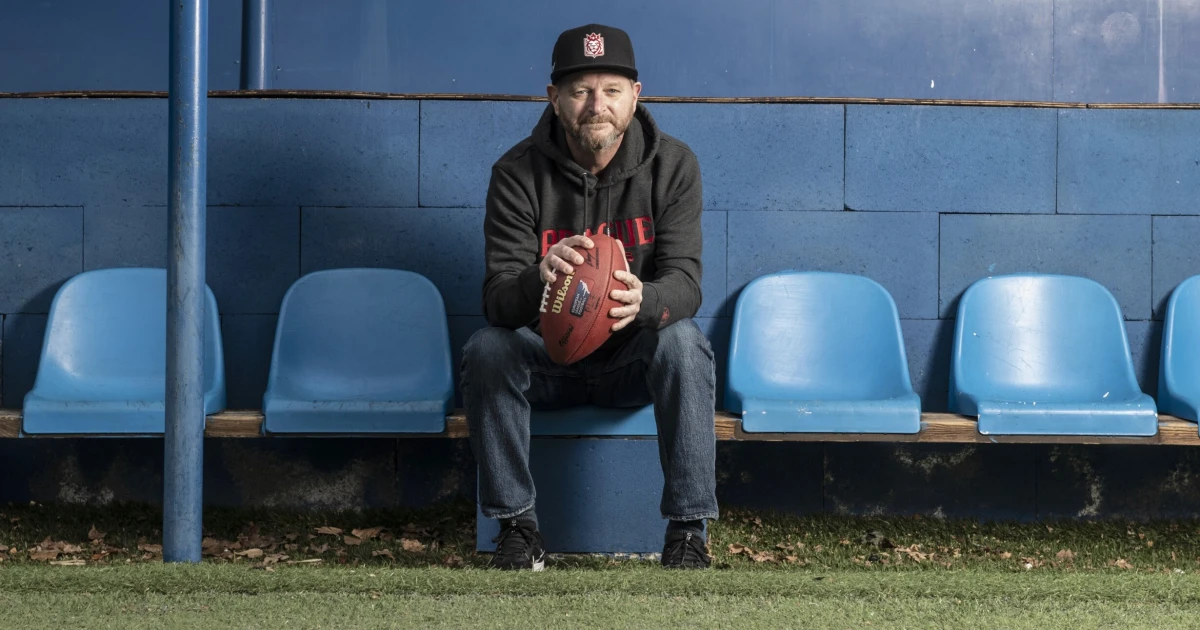
Texas-born Mason Parker once worked as an engineer on nuclear submarines and spent twenty years as an investment banker at Deutsche Bank; today he owns the Prague Lions American football club and is helping build a new European league, the EFA. His faith in the project's business success is unshakeable — despite the skepticism of many who see investing in American football in Czechia as an economic gamble.
Parker bought the Prague Lions several years ago in dismal shape, and the club is now aiming for the top of the EFA standings. The team, which has roughly a hundred people on staff, operates on an annual budget of 50 to 60 million crowns — about the standard for the league's other six teams as well. The money goes toward salaries, equipment, field rental and away games.
Parker is not the club's only investor. Former NFL stars Maurice Jones-Drew and DeVante Parker have put money into the Lions, as has Mötley Crüe frontman Vince Neil. Sponsors include the visa consulting service VisaForce.
“I firmly believe American football has a future in Europe. Interest in NFL games is enormous, and in some key European markets it's already the second most-watched sport on television. The potential market the EFA is targeting covers the entire European Union and the UK — that's more than 520 million people,” Parker calculates.
The growing European business of American football is attracting new investors. Starting next year, two more teams are set to join the EFA — one in London, backed by Fubo founder David Gandler, and one in Milan, led by former NFL player Justin Pugh. According to Parker, a new wave of expansion lies ahead.
“We need to add new teams, but to keep the quality of the competition high, we'll expand deliberately and with low risk. That way, demand to join the league will outstrip supply, and the cost of entry will keep rising,” Parker plans.
The businessman's own biography is striking in its own right: for five years he served as a nuclear submarine propulsion engineer in the US Navy, before changing careers and earning a finance and accounting degree at the prestigious University of Chicago. Twenty years at Deutsche Bank followed, where he worked on major deals, mergers and acquisitions, and for the last four years he headed financing for sustainable-development projects tied to circular carbon economy technologies.
“I grew uncomfortable with it — especially once the whole topic turned purely political around the Green Deal. That's exactly why I like sport. Building a team and a league is, fundamentally, no different from financing any other investment project — it's also about understanding risk and doing solid probabilistic analysis. Finance is a science like any other,” Parker adds.
The EFA is structured as a joint venture of all the clubs that play in it: any future profit — though there isn't any yet — will be split equally among the owners. “It's the same business model as the NFL. The league is owned by its clubs. Together we pitch it to global partners, broadcasters and investors. We cover its costs, but we also share the profit,” Parker says, describing how the EFA works.