Czech trading firm FTMO posts record revenue but profit falls 60%
USD 21,52
Popular
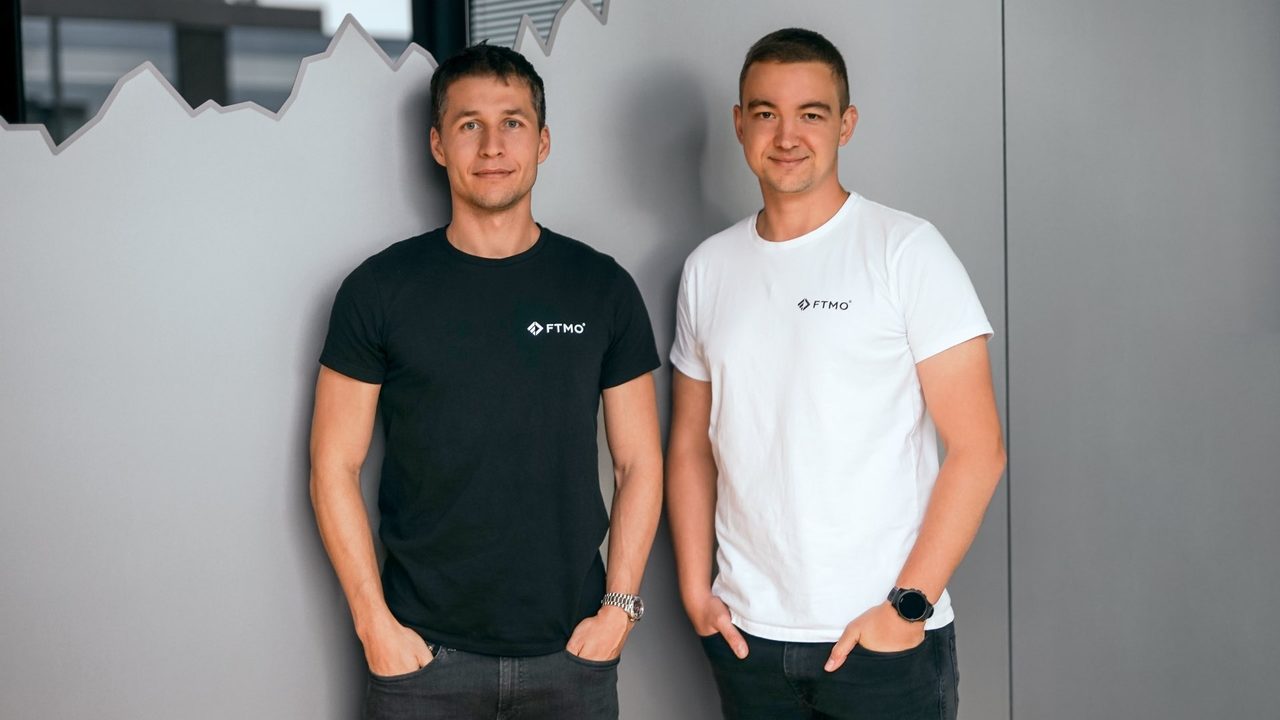
Czech trading company FTMO, founded by entrepreneurs Marek Vašíček and Otakar Šuffner, has reported record revenue of 8.8 billion crowns for the past year, up 31%. Yet net profit collapsed by 59% to 782 million crowns, and the company has for the first time officially disclosed the size of the largest deal in its history — the acquisition of global broker Oanda, which cost exactly the same 8.8 billion crowns.
FTMO was founded in 2015 and built its business around the modern proprietary-trading model: clients trade on demo accounts with simulated capital, pay to enter the evaluation process, and the most successful among them are paid based on their results. Revenue has climbed steadily ever since — from 1.1 billion crowns in 2020 to 6.7 billion in 2024. The figures refer to the Czech legal entity FTMO s.r.o., the group's flagship, which generates the bulk of the whole holding's revenue and profit.
This year, however, rising revenue did not translate into rising profit. Operating profit fell 42% to 1.22 billion crowns, while net margin, which exceeded 55% in 2021, collapsed to 8.9%. “2025 has probably been the toughest test for modern proprietary trading in recent years,” says co-founder and chief technology officer Marek Vašíček, pointing to tariff shocks from the United States and heightened demand for safe-haven assets, both of which squeezed margins across the industry.
“It has been a difficult year, and we don't hide that, but we've learned a great deal, and this experience will help us better handle the swings that are inherent to modern proprietary trading,” adds the 33-year-old Vašíček.
According to the published annual report, the main reason for the profit decline is payouts to clients. At the end of 2024, the company had set aside a reserve of 523 million crowns for future payouts, but the actual rewards tied to 2024 revenue came to around 955 million — 82% above the forecast. Because traders on the platform earned more than the company had budgeted for, the reserve had to be increased to a billion crowns, with the 479-million-crown difference booked as an operating expense.
That was not the end of the cost increases. Advertising spending on Facebook, X and other social networks rose 85% to 735.8 million crowns — about 8.4% of revenue. On top of that came foreign-exchange losses of 319 million crowns, which last year outweighed exchange-rate gains of 125 million crowns (a year earlier the balance had run the other way). Bank fees alone on the loan taken out to buy Oanda came to 72 million crowns.
The Oanda acquisition is the largest deal in FTMO's history. Before that, the company had bought the trading technology platform Quantlane from Wood & Company, acquired the marketing agency eVisions, and last year took a stake in the American crypto firm Zerohash. The group signed the agreement for the global forex broker Oanda on 30 January and closed the deal on 1 December. Neither side commented on the price at the time.
Now the consolidated financial statements of the FTMO parent holding reveal the exact figure: the acquisition of a 100% stake in Plutus Investment Holdings, the vehicle through which the group owns Oanda, cost just under 8.8 billion crowns. The fair value of the net assets acquired was estimated at 2.74 billion crowns, with the remaining 6.06 billion attributed to goodwill and intangible assets from the deal.