How a 20-year-old Czech built an 11-million-crown nasal-strip firm
USD 21,66
Popular
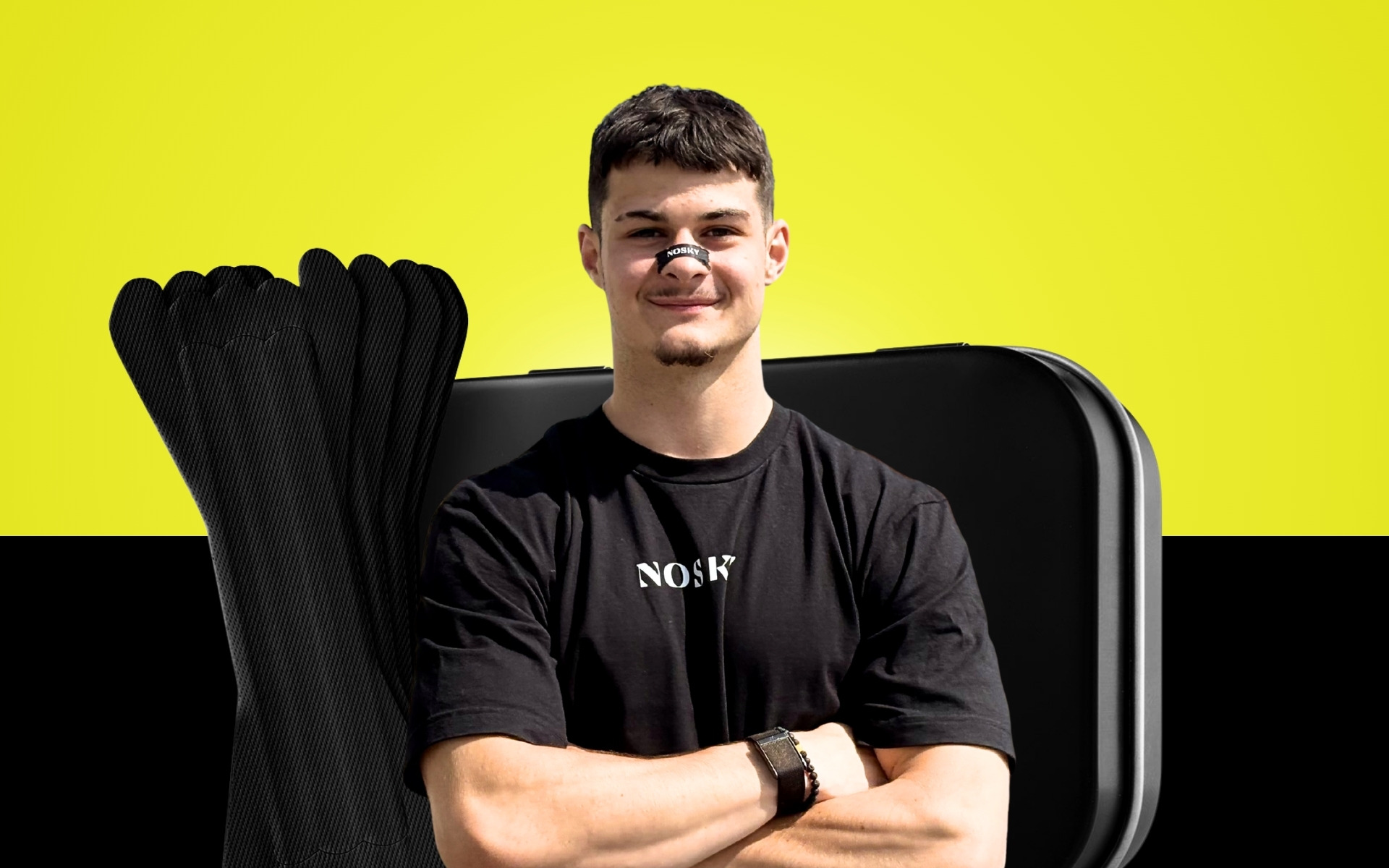
Jakub Cacha is only twenty, but he’s already running the Nosky brand, which makes and sells sports nasal strips designed to ease breathing. The company launched less than two years ago, and in its very first year of operation revenue already topped 11 million crowns.
The road to success began with personal disappointment. At 17, Cacha was looking for a way to recover better after workouts and came across nasal strips marketed for improving sleep. He didn’t feel any effect at the time and figured he’d just thrown his money away. But when he tried strips while boxing, the difference was noticeable — breathing became easier, and his athletic performance improved.
The problem was that this kind of product couldn’t be bought on any Czech, Slovak, or indeed European website — the first sellers back then operated only in the US. So Cacha decided to start selling the strips in Czechia himself.
His starting capital was about as modest as it gets: he put in all his savings — 48,000 crowns — borrowed another 2,000 from a friend, and used the money to buy his first batch of a thousand units, the minimum order from his supplier. “That was everything I had — I put it all on one card,” the entrepreneur recalls.
Before that, Cacha had tried plenty of side jobs: working at a plant nursery in 35-degree heat, running social media accounts, cold-calling clients for a real estate company. “I basically tried every classic way to get rich quick,” he admits.
In 2024, the Nosky brand effectively became the generic name in Czechia for the entire product category — a level of success very few brands achieve, alongside names like “botasky” (sneakers) or “toitojky” (portable toilets). Cacha personally talked to athletes right at races, gathered feedback, and used it to refine his prototypes. Today the strips are used not only by runners but by swimmers, cyclists, and even equestrians. The brand’s ambassadors include one of the fastest Czech marathoners, Patrik Vébr, and sixteen-time endurance running champion Jiří Homoláč.
The way the strips work is simple: small spring-like inserts inside the strip, once applied to the nose, pull the nostrils open and widen the airway. “It’s a mechanical effect that opens up the nasal passages — it’s definitely not a placebo,” Cacha explains, adding that the strips shouldn’t be worn for more than 12 hours a day, since otherwise the nasal muscles can weaken, just like any other muscle without training.
Despite the rapid growth, the business’s first year ended in a loss — the founder himself calls it “rookie mistakes” he’s learning from. The company also has to invest in educating its audience: many customers admit they don’t feel any effect simply because they barely breathe through their nose as a habit.