Sudetenland: History, Munich 1938 and the Expulsion of Germans
Popular
The Sudetenland (Czech: Sudety) is the former German-speaking border region of Bohemia, Moravia and Czech Silesia. Before the Second World War about three million Germans lived in Czechoslovakia, nearly a quarter of the population, most of them in the borderlands. The 1938 Munich Agreement handed the region to Nazi Germany, and in 1945–1946 almost all its Germans were expelled. Today it is part of Czechia: the Krkonoše and Jizera Mountains, Šumava, Liberec, Cheb and Ústí nad Labem. Around Prague checked the dates and figures against the 1997 Czech-German Declaration, the decree texts, Radio Prague International and the Czech Military History Institute on 30 October 2026.
Where is the Sudetenland, and where does the name come from?
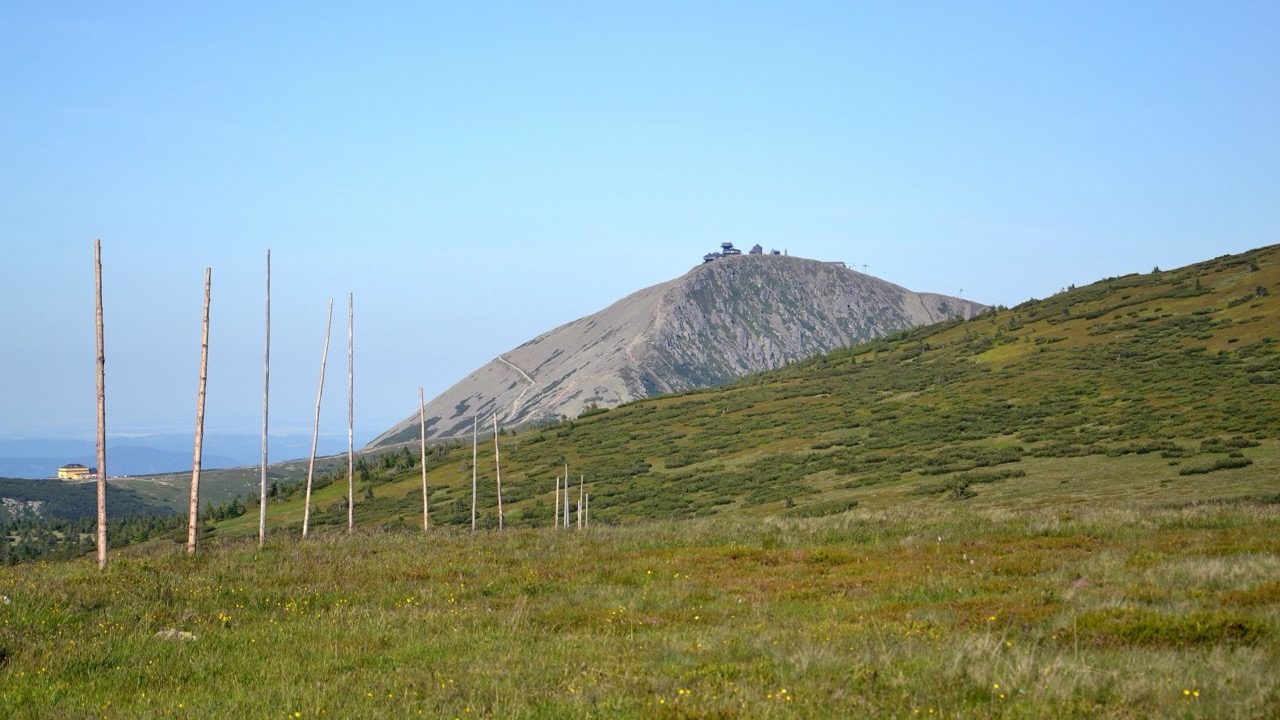
The Sudetes are first of all a mountain range, about 310 km long, along Czechia's northern border: the Jizera Mountains, the Krkonoše (Giant Mountains) with Sněžka, the Orlické hory and the Jeseníky. The term "Sudeten Germans" was coined in 1902 by the writer Franz Jesser, who called every German-settled area of Bohemia and Moravia-Silesia "Sudetenland", including places far from the mountains such as Šumava. After 1918 the word became political, and because of Nazi propaganda the Czech words Sudety and sudetský still sound negative.
Timeline
| When | What happened |
|---|---|
| 1902 | Franz Jesser coins the term "Sudeten Germans" |
| 1918 | Czechoslovakia is founded; 22.3% of its people speak German |
| 1 October 1933 | Konrad Henlein founds his movement in Cheb, from 1935 the Sudeten German Party |
| May 1935 | Henlein's party wins 44 seats, second-largest in parliament |
| 30 September 1938 | Munich Agreement signed |
| 15 March 1939 | Germany occupies the rest of Bohemia and Moravia |
| 1945 | "Wild" expulsions |
| 1946 | Organised transfer to the American and Soviet zones |
| 21 January 1997 | Czech-German Declaration |
| May 2026 | Fund for the Future extended to 2037; Sudeten German Day held in Czechia for the first time |
From Czechoslovakia to Munich
The border region held Czechoslovakia's main defences against Germany. In the 1930s Henlein's party became the strongest German party, and Nazi Germany pushed to annex the region. Hitler, Mussolini, Chamberlain and Daladier signed the Munich Agreement shortly after midnight on 30 September 1938; Czechoslovakia was not invited. German troops moved in between 1 and 10 October. With the land taken by Poland and Hungary that autumn, the country lost 29.6% of its territory (41,596 km²) and 4,879,000 inhabitants. Czechs, Jews, German Social Democrats and anti-fascists fled inland: by 1 March 1939 there were almost 150,000 refugees. Henlein became Gauleiter of the Reichsgau Sudetenland, and on 15 March 1939 Germany occupied the rest of Bohemia and Moravia.
Expulsion or transfer? 1945–1947
The so-called "wild" expulsions came first, in 1945: historian Jan Křen estimated that 700,000–800,000 Germans were driven out. At Potsdam the Allies accepted the transfer of Germans from Poland, Czechoslovakia and Hungary and asked for it to be orderly and humane. In 1946 about 1.3 million people were sent to the American zone and about 800,000 to the Soviet zone. Overall estimates range from 2.8 to about 3 million; around 250,000 Germans stayed. Death toll estimates differ; Radio Prague cites 25,000–30,000. Even the name is disputed:
- Odsun ("removal") has been the official Czech term since 1945, in English "transfer". Sudeten German groups see it as a euphemism.
- Vyhnání / Vertreibung / expulsion is the term usually used in Germany; Czech historians use it above all for the violent phase of 1945.
- The 1997 Declaration speaks of "forcible expulsion and forced resettlement".
The Beneš decrees
President Edvard Beneš issued 143 decrees in 1940–1945, first in exile in London, then after liberation. Several became the legal basis for taking property and citizenship from Germans:
- No. 12/1945 of 21 June 1945: confiscation without compensation of farmland owned by Germans, Hungarians and people deemed traitors and enemies of the state.
- No. 33/1945 of 2 August 1945: loss of citizenship for people of German and Hungarian nationality, except those who proved loyal and resisted or suffered under Nazi terror.
- No. 108/1945 of 25 October 1945: confiscation of property classed as enemy property.
The decrees have never been formally repealed. When Austria and expellee groups called for their annulment in 2002, mainstream Czech politicians called that unrealistic, and the European Parliament debated the issue before Czechia joined the EU.
The 1997 Declaration and the Fund for the Future
On 21 January 1997 Helmut Kohl, Klaus Kinkel, Václav Klaus and Josef Zieleniec signed the Czech-German Declaration in Prague. Germany acknowledged its responsibility for its role in the developments that led to Munich, the expulsion of people from the border area and the occupation of Czechoslovakia, and regretted Nazi crimes against Czechs. The Czech side regretted the suffering that expulsion, forced resettlement, expropriation and loss of citizenship caused innocent people, partly through collective guilt, and the excesses that Law No. 115 of 8 May 1946 left unpunished. Both sides agreed not to burden relations with the past, while each keeps its own legal position.
The Declaration created the Czech-German Fund for the Future, founded on 29 December 1997. Since 1998 it has given CZK 2.43 billion (about EUR 88.7 million) to joint projects, 776 of them in 2025. On 8 May 2026 the foreign ministers agreed to extend it until 2037.
The Sudetenland today and what to visit
New settlers moved in after the war: by May 1947 they made up almost two-thirds of the region's 2.2 million people. Many villages emptied, and in Šumava's 1950s border zone some, such as Bučina, Knížecí Pláně and Stodůlky, were demolished. Charles University geographers speak of a "phantom border": the former Sudetenland still has lower average education and fewer preventive check-ups. In 2005 a plaque to the victims of violence on 31 July 1945 was unveiled on the Elbe bridge in Ústí nad Labem. In May 2026 the Sudeten German Day was held in Brno, the first time in Czechia, amid protests and a vote against it in the Chamber of Deputies.
- Krkonoše: the highest part of the Sudetes and the Pančava Waterfall.
- Jizera Mountains and Liberec: the Ještěd tower, see day trips from Prague.
- Šumava and Bohemian Switzerland: national parks.
- Cheb: a historic town on the Bavarian border.
- Karlovy Vary and Loket: in our beautiful towns list.
Frequently asked questions (FAQ)
What was the Sudetenland?
The border regions of Bohemia, Moravia and Czech Silesia where most people spoke German until 1945, named after the Sudetes mountains.
Where is the Sudetenland today?
In Czechia, along the borders with Germany, Poland and Austria, from the Krkonoše to Cheb and Šumava.
Why did Germany get the Sudetenland in 1938?
Nazi Germany demanded the German-majority areas, and Britain, France and Italy agreed at Munich without Czechoslovakia at the table.
How many Germans were expelled from the Sudetenland?
Estimates range from 2.8 to about 3 million in 1945–1946. Around 250,000 stayed.
What are the Beneš decrees?
143 decrees of President Beneš from 1940–1945. Some stripped Germans and Hungarians of citizenship and property. They were never formally repealed.
Is the Sudetenland part of Germany?
No. Czechoslovakia was restored within its pre-war borders after 1945, and since 1993 the region has been part of Czechia.
Sources: Czech-German Declaration 1997, Munich Agreement text, Military History Institute, Holocaust Encyclopedia, decrees 12/1945, 33/1945, 108/1945, Radio Prague International: expulsion, resettlement, 1938 refugees, University of Passau on terms, Fund for the Future, ČTK, ČT24, ZDF. Checked on 30 October 2026.
See also: 9 spots in Czechia's national parks, Pančava Waterfall, Day trips from Prague: 17 ideas, 8 most beautiful towns in Czechia.
Photo: Sněžka in the Krkonoše mountains. Pudelek, Wikimedia Commons, CC BY-SA 4.0.
Comments (0)
Please be polite. Spam and insults will be removed.