Science & Space By

A Black Hole Smaller Than an Atom Could Blow a Star Apart From Inside
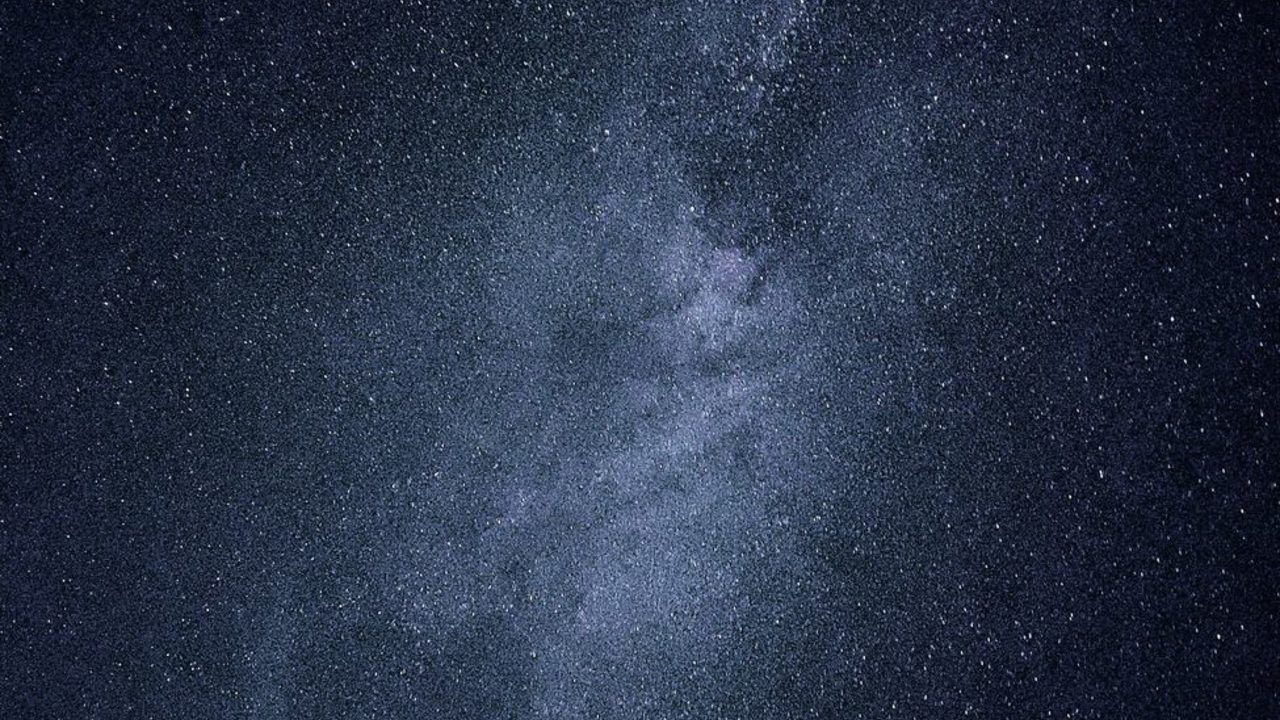
A black hole no bigger than an atom could destroy an entire star from the inside, and the resulting flash might be bright enough for today's telescopes to spot, according to a new study by physicists at MIT and other institutions. The finding, MIT News reported, suggests a possible way to test whether so-called primordial black holes exist and whether they make up part of dark matter.

The work appears in the Astrophysical Journal. It rests on theoretical calculations and three-dimensional simulations rather than on any observation of such an event.

What primordial black holes are and why anyone looks for them

Scientists have long hypothesized that in the fraction of a second after the Big Bang, tiny dense pockets of matter collapsed under their own gravity and formed minute black holes. If found, these objects could account for a significant share of dark matter, the invisible substance that makes up most of the universe's matter.

The smallest and lightest of them would have evaporated by now through Hawking radiation, a quantum effect proposed by physicist Stephen Hawking in which black holes slowly shrink as they radiate energy. Heavier ones should still be around. According to MIT News, these relics would be about the size of an atom and as massive as an asteroid, or roughly a millionth of the mass of the Earth.

How a star could catch one

The team, led by MIT assistant professor of physics Ore Gottlieb, asked how such an object might interact with stars today. Their calculations showed that the gravity of a single star is not enough to trap a passing primordial black hole. A companion, such as a second star or a planet, changes that. In that three-body setup, the black hole loses energy through friction each time it passes through the star's material, and its orbit gradually shrinks. Over thousands to millions of years, which is nearly instantaneous on cosmic timescales, it sinks into the star's center.

Once inside, the black hole begins to feed. The researchers found that most of the energy is carried into the black hole instead of heating the surrounding gas, so it grows faster than earlier work had assumed. Within several million years it would have consumed about 1 percent of the star's mass.

From disk to explosion

If the star spins fast enough at that point, gas can no longer fall straight in. It piles up in a rotating disk around a black hole that, at that stage, is only a few meters across. Gottlieb said that once a disk forms, the star is doomed.

The spinning black hole twists the disk's magnetic field, which powers strong electromagnetic jets from the black hole's poles. According to the simulations, those jets break out through the star and make it explode within a few dozen seconds.

The team also estimated what astronomers would see. The explosion should produce a flash of blue and ultraviolet light along with gamma rays and X-rays. Gottlieb said detectors would first pick up X-rays and gamma rays, followed over time by optical and infrared emissions and later by radio emissions.

Why it matters for the search for dark matter

Dark matter has never been detected directly, so any new way to look for candidates is of interest to astronomers. The study's co-authors are Matteo Cantiello of the Flatiron Institute, Cameron Norton and Matthew Kleban of New York University, and Ken Van Tilburg of Stanford University.

Gottlieb said the flash should be visible with current telescopes and that the explosion could occur many galaxies away, not only in our own neighborhood. The idea is that a star exploding in this way would give astronomers a concrete signal to search for.

The researchers caution that other astrophysical events can produce a similar flash. A detection would have to be combined with other clues before anyone could say a primordial black hole was responsible. One example Gottlieb gave is a star of a mass that is not supposed to explode, which would point to something consuming it from within.

Whether such explosions happen at all remains unknown. The study describes what should occur if asteroid-mass primordial black holes exist, and it gives astronomers something specific to look for.

Around Prague, based on reporting by MIT News
Share: Telegram WhatsApp

More science news

Potatoes Grown in Fake Moon Soil Match Earth Yields With Worm Compost
Scientists on a NASA-backed project have grown potatoes in simulated moon soil, and with enough added compost the harvest matched what the same plants produced in ordinary Earth soil, according to a s
AI Data Centers Linked to 650 U.S. Deaths From Pollution Far Away
The rapid growth of data centers built for artificial intelligence harms air quality and health in regions far from the buildings themselves, according to a new study by MIT researchers. The team esti
Thanksgiving Dinner for 10 Costs $58.63 as Turkey Prices Jump 10%
A traditional Thanksgiving dinner for 10 people will cost an average of $58.63 this year, about 6% more than in 2025, according to the American Farm Bureau Federation's annual survey, released Wednesd
Scientists Flooded Los Santos From Grand Theft Auto to Show Rising Seas’ Toll
Researchers in Germany have put a virtual version of Los Angeles underwater to make a point about climate change. Timed to the launch week of Grand Theft Auto VI, the study simulates coastal flooding
Early Dinner, Early Breakfast: Study Ties Longer Overnight Fast to Lower BMI
People who ate dinner earlier, ate breakfast earlier and did not snack in between tended to have lower body mass index five years later, according to a Spanish study of 7,074 adults. The findings do n
Atmospheric River Breaks 76-Year Rain Record in San Francisco, Floods Bay Area
An atmospheric river drenched Northern California on Wednesday, setting rainfall records in downtown San Francisco and causing flooding and power outages around the Bay Area, The Guardian reported. Th

Related news

Scientists on a NASA-backed project have grown potatoes in simulated moon soil, and with enough added compost the harvest matched what the same plants produced in ordinary Earth soil, according to a study in the journal npj Microgravity. Th
The rapid growth of data centers built for artificial intelligence harms air quality and health in regions far from the buildings themselves, according to a new study by MIT researchers. The team estimates that extra air pollution from the
A traditional Thanksgiving dinner for 10 people will cost an average of $58.63 this year, about 6% more than in 2025, according to the American Farm Bureau Federation's annual survey, released Wednesday. It is the first yearly increase sinc
Researchers in Germany have put a virtual version of Los Angeles underwater to make a point about climate change. Timed to the launch week of Grand Theft Auto VI, the study simulates coastal flooding in Los Santos, the fictional city from G
People who ate dinner earlier, ate breakfast earlier and did not snack in between tended to have lower body mass index five years later, according to a Spanish study of 7,074 adults. The findings do not prove cause and effect, but they add
An atmospheric river drenched Northern California on Wednesday, setting rainfall records in downtown San Francisco and causing flooding and power outages around the Bay Area, The Guardian reported. The storm was expected to reach Southern C
When people want to convince others that a statistic is big or small, they tend to describe it in words instead of just stating it, according to a new study. Audiences find those word-based descriptions persuasive even when they are told th
A rare greater one-horned rhinoceros calf was born at Chester Zoo in England on the evening of Oct. 11, and security cameras recorded the birth, Popular Science reported. The footage shows the mother, Asha, giving birth and the calf taking
Across the world, sedimentary rock from the Cambrian period, around 540 million years ago, sits directly on far older granite and other crystalline rock, with the layers in between missing. A new study in the journal Nature suggests the cau
Researchers in Hong Kong have built a floss-shaped device that collects the fluid between teeth and reads sugar and uric acid levels from it. In a small early test, its glucose and uric acid readings closely tracked those from blood tests,
Uranus and Neptune have long been called “ice giants,” but a new paper proposes a way to test whether they hide large amounts of rock beneath their thick atmospheres. The idea hinges on a noble gas, argon, according to Universe Today, which
A Cygnus XL cargo spacecraft carrying about 11,000 pounds of science, supplies and equipment is targeted to launch to the International Space Station no earlier than 10:47 a.m. EST on Sunday, Nov. 29, NASA announced. The agency, Northrop Gr