Brent Crude Hits $112 as Gulf Attacks Raise Fears for Oil Supply
USD 21,65
Popular
Oil prices climbed to their highest level in five months on Thursday after attacks in Saudi Arabia and strikes on tankers near the strait of Hormuz raised fears of fresh disruption to global crude supplies. Brent crude, the international benchmark, rose 3% to $112 a barrel, its highest since May 18, according to The Guardian.
The jump fed into stock markets and corporate forecasts. Shares fell across Asia, Europe and Wall Street, and American Airlines said high fuel costs would push it to a loss this year.
What happened on Wednesday and Thursday
The Guardian reported that Yemen's Houthis, who are aligned with Iran, hit several targets in Saudi Arabia on Wednesday. Two people were killed and eight wounded at a civilian airport in Dammam, and two more died in a drone attack on a Saudi oilfield.
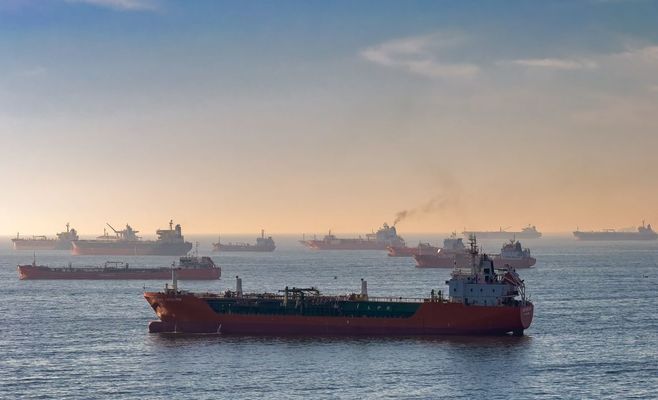
Separately, Iran's Islamic Revolutionary Guard Corps said four vessels it described as involved in illegal oil transfers in the northern Gulf were hit and caught fire after its forces tracked them. It said three more vessels struck mines west of the strait of Hormuz. The Guard Corps also warned the United States that continued provocations could bring a wider response against American bases in the region.
According to Reuters, as cited by The Guardian, the U.S. has ordered some diplomats and family members to leave their missions in Saudi Arabia and plans to pull family members from several other Middle East missions. Reuters also reported that Saudi Aramco told staff to evacuate its headquarters in Dhahran and work remotely.
How oil got here: the price path since spring
- Early weeks of the conflict: After the U.S.-Israeli attacks on Iran, oil rose past $100 a barrel as flows through Hormuz stopped. Some market observers predicted prices of up to $150.
- April: Oil peaked at $126 a barrel during the fighting.
- May 18: This was the last time Brent stood at $112 before Thursday.
- Late May: Prices fell back below $100.
- Start of July: Oil hit lows of $71 amid hopes of a ceasefire.
- Since then: Prices began rising again after a memorandum of understanding between the U.S. and Iran fell apart and new hostilities broke out in the Gulf.
- Thursday: Brent reached $112 after the latest attacks.
Supply is not as constrained as the price suggests
The Guardian noted that data from Kpler show oil exports from the Persian Gulf have risen above prewar levels. The firm attributes part of the increase to more oil moving overland through pipelines to the Red Sea and the Gulf of Oman. The latest price rise reflects concern about escalation rather than a confirmed new loss of supply, though the sources do not quantify any damage to output.
Why it matters: inflation, borrowing costs and airlines
Higher oil prices tend to raise costs across the economy, and markets reacted accordingly. The Guardian said global stocks wobbled on expectations of higher inflation and borrowing costs. Share Talk reported that rising energy prices intensified inflation concerns and could complicate the Federal Reserve's interest rate outlook, while raising costs for businesses and consumers.
Stock moves on Thursday, as reported by the two outlets:
- Europe's Stoxx 600 fell 1%, and the UK's FTSE 100 fell 0.7%.
- In Asia, Japan's Nikkei 225 dropped 2.7%, South Korea's Kospi fell 3.5% and Hong Kong's Hang Seng shed 3%.
- On Wall Street, Share Talk reported the Nasdaq Composite fell 1.7% to 26,247, the S&P 500 fell 0.9% to 7,688, and the Dow fell 0.3% to 52,711. It said investor worries about spending on artificial intelligence also weighed on technology shares.
For travelers and the airline industry, the clearest sign came from American Airlines. The company dropped its earlier forecast that it might make a profit this year, citing "historic fuel cost pressure," The Guardian reported. Its shares fell almost 4% in pre-market trading.
What to watch next
Share Talk said investors will be watching developments in Middle Eastern energy supplies, along with more corporate earnings and Federal Reserve commentary, to judge whether the market volatility continues. The Guard Corps' warning about U.S. regional bases and the American moves to reduce diplomatic staff point to continuing tension in the Gulf, though the sources do not report any scheduled talks or decisions.
Around Prague, based on reporting by The Guardian, Share Talk