Economy By

France's government bond yield sees its biggest jump in 17 years
France rattles markets as its bond yield jumps to highest since 2002

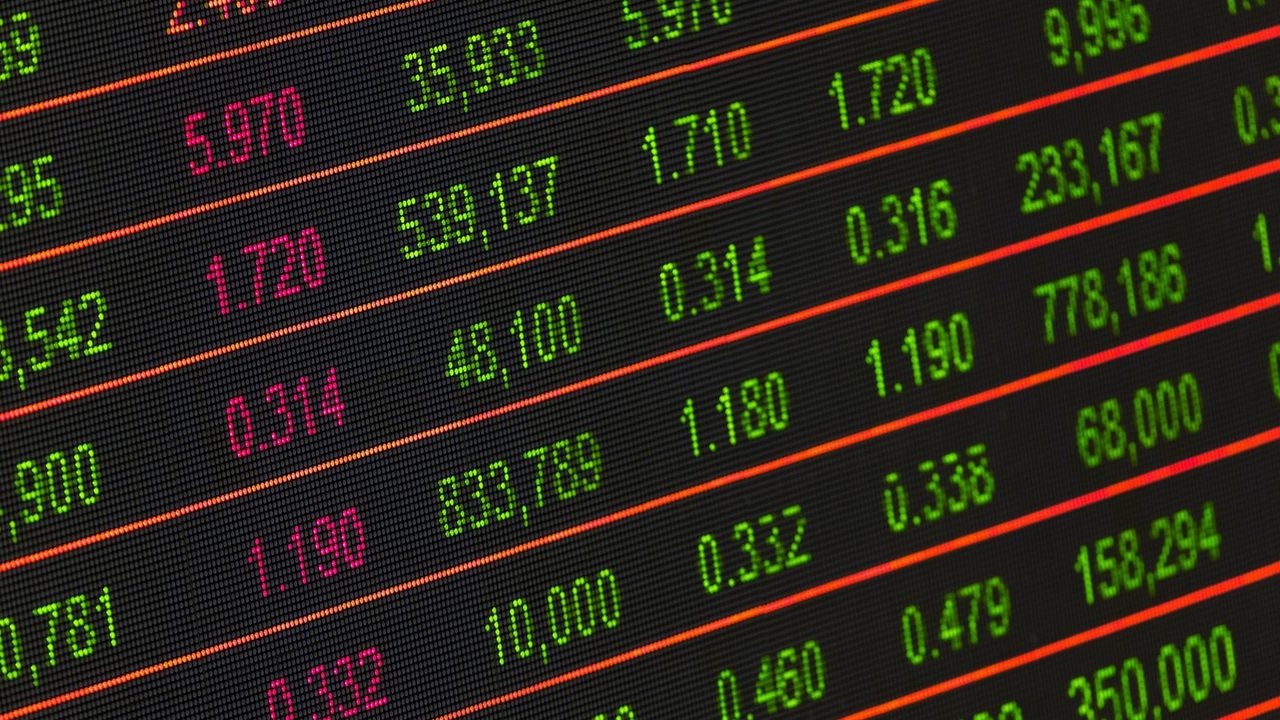
On Monday, the yield on France's ten-year government bonds briefly topped 5% a year — the highest level since 2002. Investors see French debt as markedly riskier than German debt, and over the past week the yield gap between the two widened more sharply than at any point in the last 17 years.

Markets fear a domino effect

Traders are increasingly worried that France's troubles could spill over into other eurozone countries, although some analysts still see the problems as mainly a French domestic affair. According to Brent Donnelly of the US financial analysis firm Spectra Markets, many expected the current situation to emerge only closer to winter. “It's not entirely clear what could fix this right now. The budget promises of the current French government aren't very convincing if political power could soon change hands,” Reuters quoted him as saying.

The dollar is the main winner from the jitters

This uncertainty is strengthening the dollar, which investors traditionally regard as a safer asset. Its appeal is further fueled by rising yields on US government bonds, which are also edging toward record levels: the yield on ten-year US Treasuries is holding near 5.26%, below the 24-year high reached last week that rattled financial markets, CNBC notes. “The dollar is the biggest winner right now. Rising yields on US government bonds are boosting the appeal of US assets, while the simultaneous bond sell-off in global markets is pushing investors toward the dollar as a safe haven,” explained Matthew Ryan, chief market strategist at the trading platform Ebury. On Monday the dollar strengthened against a basket of major world currencies by about 0.5%.

Cheap flights from Prague
One search across every airline and travel agency.
Find tickets
Sponsored

The Czech koruna caught between the dollar and the euro

The moves in the dollar and the euro are also showing up in the Czech koruna's exchange rate. Since the start of the year it has weakened by 5% against the dollar and by 1.4% against the euro. The dollar currently trades at around 21.58 koruna, and the euro at around 24.44 koruna. “If the situation around France's public finances keeps deteriorating, it could put additional pressure on the euro. For the koruna, that could actually bring some relief, since its weakening against the euro won't necessarily continue at the same pace,” said Jan Kořínek, an economist at Artesa. He noted that in the coming months the exchange rate will be shaped not only by Czech National Bank policy but also by investor confidence in the European economy and the eurozone's stability. At the same time, the koruna has weakened only slightly against the euro, while its decline against the dollar is far more pronounced. “That shows part of this move isn't really a koruna story at all — it's primarily about the strength of the US dollar,” noted Bohumil Žitný, a strategist at the Czech investment and financial advisory firm Žitný a partneři.

Read also: How to learn Czech: courses, apps and tutors in 2026

Source: novinky.cz
Share: Telegram WhatsApp

Related news

The Czech Ministry of Finance set a price cap for the weekend of 45.97 crowns a litre for petrol and 48.54 crowns a litre for diesel. In practice, fuel at the pumps was even cheaper — petrol almost 70 hellers and diesel more than 50 hellers
Czechia is piling up debt at a record pace: over the past year, ordinary people, companies and the state itself have all been borrowing more. Household debt rose 16% to 4.4 trillion koruna in the first half of the year, according to the Cze
US President Donald Trump said on his social media platform that European countries have agreed to release part of their diesel fuel reserves in order to bring down global fuel prices. The US administration had earlier urged Germany and Fra
The European Commission has pushed back against the Trump administration's threat to ban diesel fuel exports, saying such a move would benefit no one and would undermine trust in the United States as a reliable partner. A European Commissio
Since the start of 2026, several sugar factories across Europe have announced they are halting production: sugar prices have fallen so low they no longer cover costs. Czechia’s largest sugar group, Tereos TTD, has sharply cut investment thi
Since October 1, a government price cap on fuel has been in effect in Czechia, and according to a forecast by Finlord analyst Boris Tomčák, by the end of next week petrol could get cheaper by another 30 hellers per liter, while diesel could
The Czech National Bank (ČNB) has launched a new savings account for municipalities and regions, offering better terms than commercial banks with no restrictions on withdrawing funds. The initiative has the backing of Prime Minister Andrej
The administration of US President Donald Trump is demanding that European Union countries, Germany and France above all, release oil from their strategic reserves. According to Reuters, Washington is asking the entire EU to release 120 mil
Europe has launched a new payment network, the European Network for Payments — an alliance of major banks and local payment services from several EU countries meant to reduce the continent's dependence on the American systems Visa and Maste
Carmaker Škoda Auto this week scaled back electric car production at the M13 workshop of its Mladá Boleslav plant — employees have stopped working night shifts. The reason, according to reports, is a shortage of cable components made in Ukr
Czechia has the lowest unemployment rate in the European Union, according to figures calculated by the European statistics agency Eurostat. Second place is shared by Slovenia and Malta, where unemployment stands at 3.4 percent in both count
Czech automaker Škoda Auto reportedly cut electric-vehicle production this week at its main plant in Mladá Boleslav: according to local employees, night shifts have disappeared and pay has been cut to four-fifths of normal. The cause cited