Black Holes 10 Times the Sun's Mass May Come From Stars That Never Exploded
USD 22,18
Popular
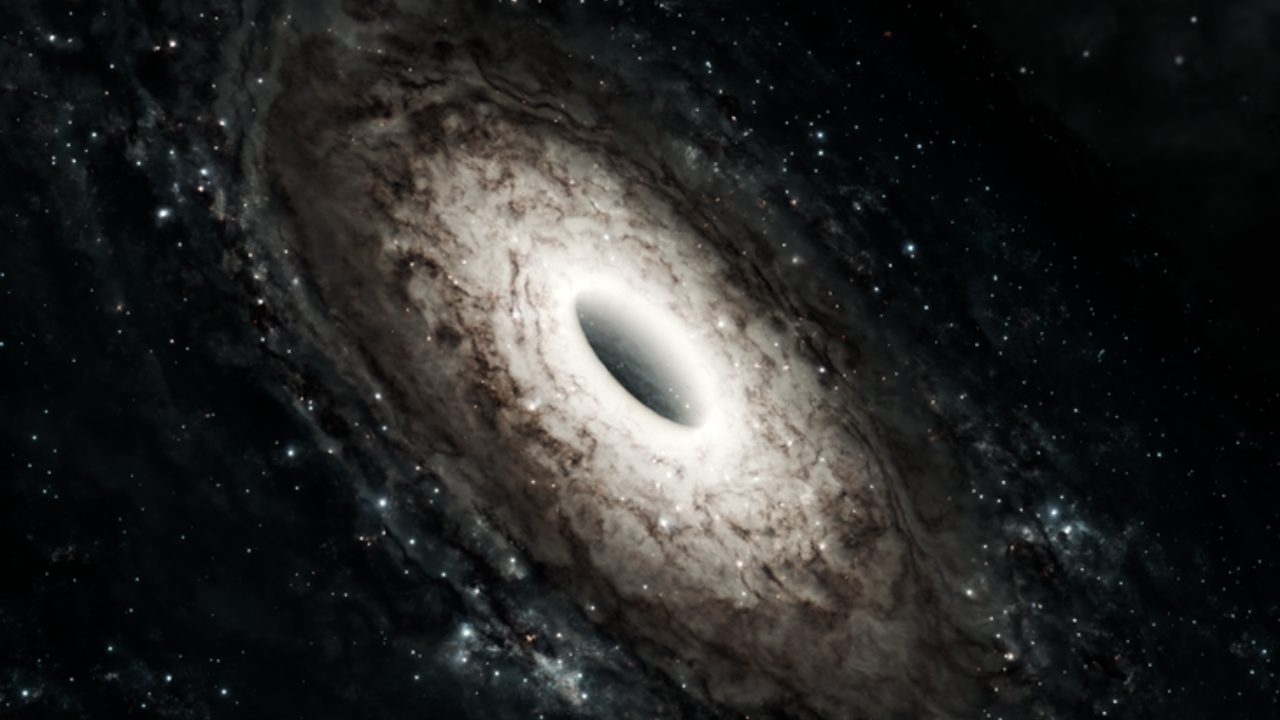
Many of the black holes that crash into each other across the universe may have been born when massive stars collapsed without exploding, according to a new analysis of gravitational-wave data, Space.com reported. The researchers say the evidence is consistent with this idea but is not proof, and that more research is needed.
The work was published Nov. 10 in the journal Physical Review D. It was led by Katerina Chatziioannou of the California Institute of Technology (Caltech), a member of the LIGO team.
What is a failed supernova?
The textbook story goes like this: a massive star runs out of fuel for nuclear fusion, and its core collapses. Shockwaves from the collapse hit the star's outer layers and trigger a supernova explosion, leaving a black hole behind.
A failed supernova skips the explosion. The star implodes and its core collapses straight into a black hole. Space.com reports that there is currently no hard evidence of such events, though theory supports them well, and scientists think there may be a vast population of massive stars that imploded instead of exploding.
What did the researchers look at?
The detectors LIGO, Virgo and KAGRA have spotted more than 300 black hole collisions since they first picked up ripples in space from such events in 2015. The team examined the masses of 257 black hole mergers detected over the past 10 years.
They found a clear peak: black holes of about 10 times the mass of the sun made up 75% of the sample. The team also found something that theory had not predicted, a shortage of black holes with 12 to 16 times the sun's mass.
Why is the gap in the data important?
Isaac Legred of the University of Illinois Urbana-Champaign, a member of the team, said 10-solar-mass black holes merge all the time, while those around 14 solar masses are rare. He said the gap suggests a “special cocktail of internal physics” may be at work in forming so many black holes of the smaller size.
The researchers also studied how fast the black holes spin, which is a clue to how they formed. The 10-solar-mass black holes appeared to share a distinct range of spin speeds, which points to a common origin. One candidate is the implosion of a massive star without a supernova.
What do the scientists say?
In a statement, Chatziioannou said that most merging black holes in the universe are about 10 times the mass of the sun and that the data suggest this group may be a distinct subpopulation that “failed to go supernova.” She described the results as a connection between gravitational-wave data and the astrophysics the team is trying to extract.
Legred said that looking for historical records of stars that failed to explode is difficult, because they vanish and leave only a dark patch of sky. He said the gravitational-wave data are consistent with most binary black holes forming through a very special kind of failed supernova, but that more research is needed.
Why does it matter?
For readers, this is a story about how scientists are learning to read the history of dying stars from signals that reach Earth as faint ripples in space. If the idea holds up, it would mean the familiar explosion is not the only way a massive star can end, and that gravitational waves can reveal how black holes are made, not just that they exist. For now it remains a hypothesis supported by the data, not a confirmed discovery. Legred said that understanding how black holes form is an exciting prospect, since they are born in some of the most extreme environments in the universe.
Around Prague, based on reporting by Space.com