Hundreds of thousands fill Letná in Prague to defend public media
USD 22,10
Popular
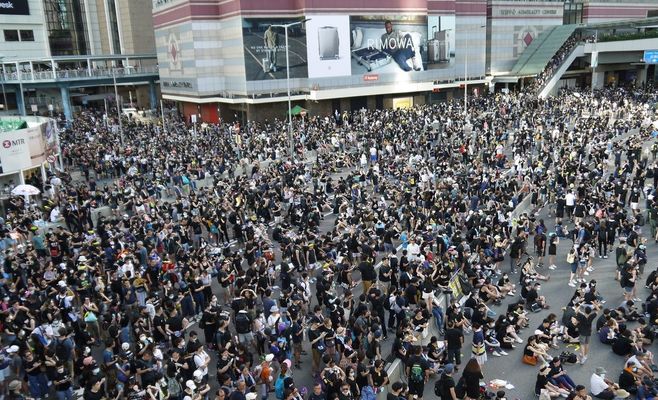
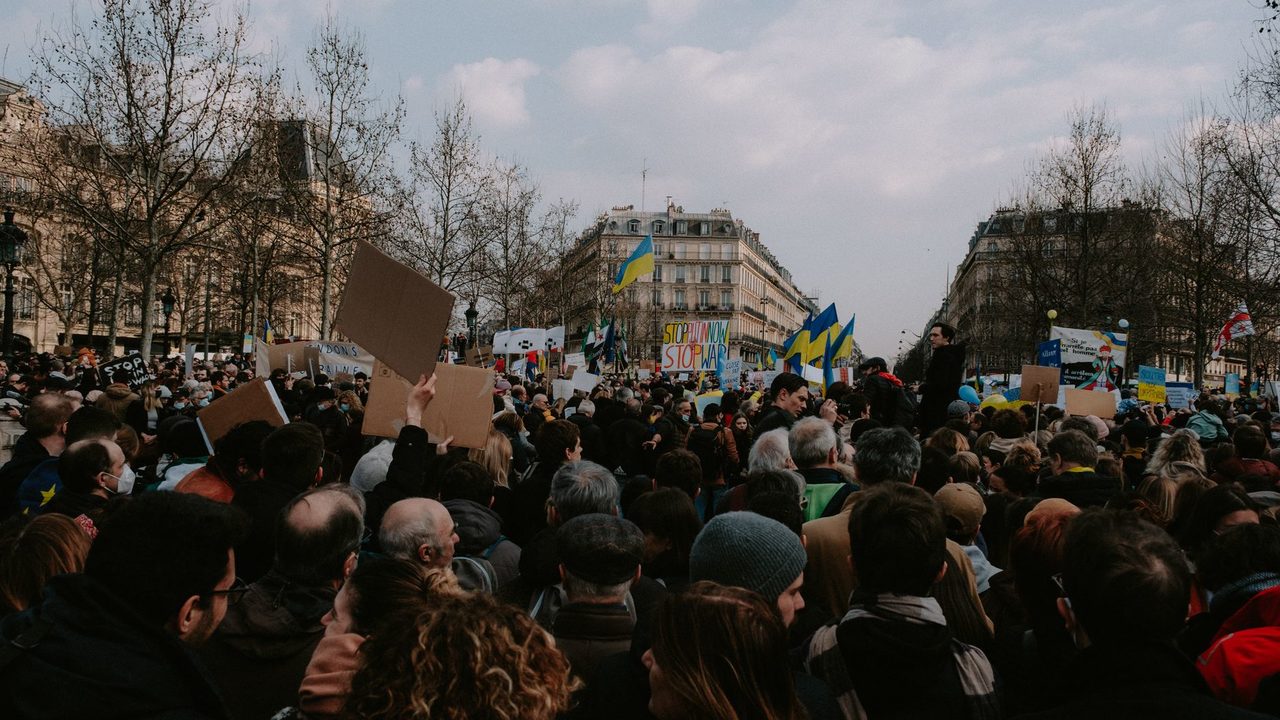
Hundreds of thousands of people, unhappy with the plans of Andrej Babiš’s (ANO) government to bring public-service media under state control, filled Prague’s Letná plain on Sunday afternoon. According to Mikuláš Minář, chairman of the Million Moments for Democracy association, between 350,000 and 450,000 people came. “This is the biggest Letná since 1989, in the past 37 years,” he said.
A rally against “4:36”
The organizers called the event “Letná against 4:36.” That is the time the governing coalition set for the vote on a contested bill that abolishes the fees for Czech Television and Czech Radio.
The first demonstrators arrived several hours before the start. Jan Hudec of Prague, a witness of August 1968, took a spot right by the stage. “When someone tells me the opposition is driving me into the streets, it really makes me angry. You can see the comrades learned nothing from November 1989,” he says.
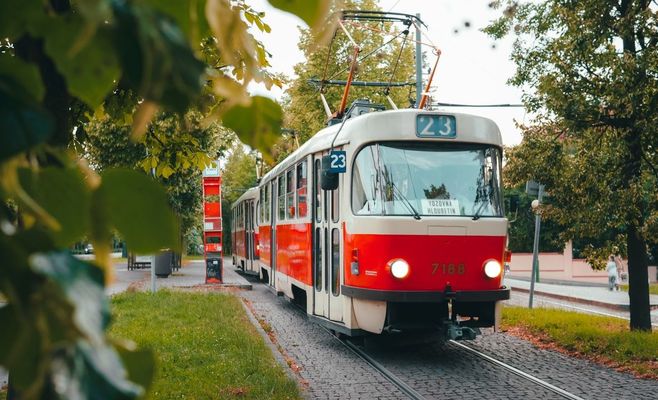
Dozens of police officers, paramedics and members of an anti-conflict team kept watch. There were no serious complications, but transport ran with delays. The Prague transport company boosted service in advance, yet trams heading to Letná were packed hours before the start. Hundreds of demonstrators walked from the Hradčanská and Vltavská metro stations, among them Berenika and Petr, who came in traditional folk costumes from the Podještědí area. “We are here in costumes to show that it is not only Prague that wants to protect free media,” Berenika explained.
People came from across the country
Banners also confirmed that people from across the republic had come to express their discontent: references to Tábor, Prostějov and Chrudim could be seen in the crowd. A group of six women arrived by train from Ostrava as early as Saturday. “We felt a need to come so that everyone in Prague could see that we in Ostrava also have our heads on straight. We went to demonstrations in Ostrava too. There are many decent people there who see things differently, they just don’t shout as loudly on social media,” one of them, Bohdana Miketová, explained.
The sunny but cold weather did not deter families with small children either: a separate zone was set up for them at Letná. The space set aside for the demonstration filled up within the first hour, and others stood in the neighboring Letná gardens. The song “Slunečný hrob” by Blue Effect rang out over the plain, and the Prášek family from Brodek u Konice could not hide their emotion. “We are full of emotions, but first of all let my daughter speak,” said the mother, Ivana. Young Kateřina proudly pulled a plush sheep, familiar from Czech Television, out of her pocket: “There are people here who are like us. It is wonderful.” The family got up at 4:36 a.m. to arrive on time, and says it will come again if there is another such event.
Speeches and demands
The program, which lasted almost three hours, featured speakers from environmental organizations, churches, the deaf community and theaters, as well as athletes, entrepreneurs and artists. All objected to the government’s intention to fund Czech Radio and Czech Television from the state budget: according to opponents of the reform, both media face a loss of independence. Prime Minister Babiš and other coalition politicians reject these concerns.
After 4 p.m., actor and director Zdeněk Svěrák spoke. He talked figuratively about the third siege of Czech Radio: “We old-timers remember the German siege and the Russian one, and the radio withstood both. It will withstand the Czech-Slovak-Japanese one, too. Hold on tooth and nail.” With that he alluded to the origins of Babiš and Okamura. Minář called on the government to withdraw the law abolishing the fees for public media, demanded dialogue, the resignation of Okamura (SPD) as speaker of the Chamber of Deputies, and the removal of the defense ministry from SPD. Demonstrators backed his words by chanting “Resign!”.
Radek Vondráček, deputy chairman of ANO, said before the event began that the demonstration lacks real substance, and on CNN Prima News he called the organizers “agitators and professional organizers of demonstrations.”
What the dispute is about
Government deputies opened the debate on reforming the funding of Czech Television and Czech Radio at a Chamber of Deputies session on Friday, Oct. 24: on a proposal by SPD deputy chairman Radim Fiala, they put the abolition of television and radio fees on the agenda as a priority. At the same time, the coalition secured a fixed time for the first-reading vote on the bill: 4:36 a.m. on Saturday.
The government’s draft currently calls for cutting the budgets of both media by roughly 1.4 billion crowns. Once the law takes effect, Czech Television would have 5.74 billion and Czech Radio 2.06 billion. Prime Minister Babiš has repeated several times that the law does not threaten the independence of the media: their income from the state budget will be mandatory, that is, set by law, and it will not be possible to change it each year when the budget is approved.
Around Prague guide on this topic: Zličín in Prague: Metropole Zličín, IKEA, metro line B, airport bus and P+R — 2026 guide
Around Prague, based on reporting by seznamzpravy.cz