Man Sees His Cat's Face on Strangers After Brain Surgery, Study Reports
USD 22,10
Popular
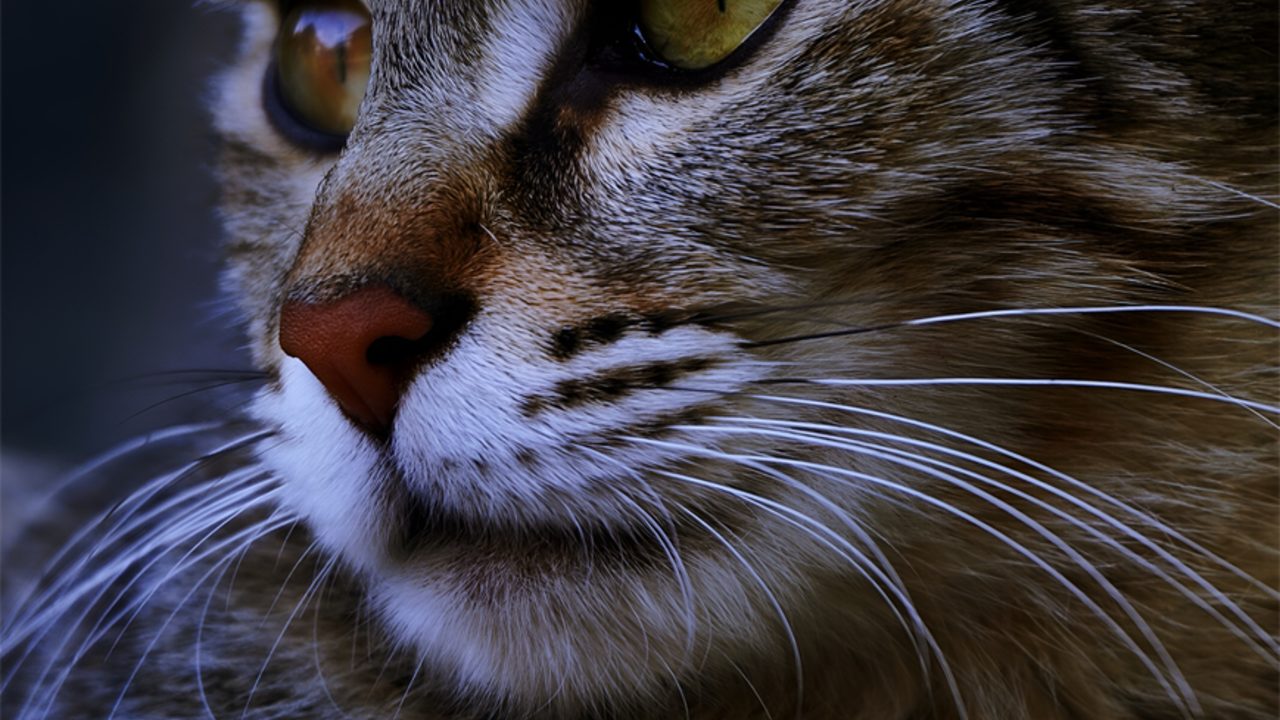
A 28-year-old man from the northeastern United States has spent two years seeing his pet cat's features in the faces of people he meets, according to ScienceAlert, which covered a case report in the journal Cortex. The episodes began after surgery on his brain, and the researchers say the case shows that stored memories can reshape what we see in the moment.
The patient, identified only as Karl, sometimes experiences the reverse as well. If the first face he sees in the morning belongs to a person, features from that face can show up on his cat, Luna, and on other people he meets later.
What Karl sees
Karl had an operation to remove a tangle of blood vessels that may have caused a brain bleed, a condition known as arteriovenous malformation. Part of the right temporal lobe was removed during the procedure, and face processing relies heavily on that region of the brain, ScienceAlert reported.
The report was written by researchers from Dartmouth College and Brigham and Women's Hospital. They describe episodes that often last several hours and sometimes the whole day. The resulting faces look entirely coherent, the authors write. The borrowed features blend into the face being viewed instead of appearing pasted on top, and they shift naturally as Karl's viewpoint or distance changes.
A known phenomenon, with a rare twist
Doctors have a name for something seen reappearing or lingering later: palinopsia. Karl's case falls into a related category called prosopometamorphopsia, in which faces appear distorted.
It has happened before. ScienceAlert noted a 1986 case, also reported in Cortex, involving a 58-year-old woman on a bus. After she looked at a fellow passenger's poodle, the other passengers all seemed to have the dog's face. Her brain damage came from a stroke, which also left her struggling to recognize people she knew and even her own apartment.
Why it matters
For most people the case is a reminder that vision is not a simple camera feed. Dartmouth psychologist and brain scientist Brad Duchaine said it shows individual features can be pulled from memory and influence ongoing perception.
Both the cat and the poodle cases point to faces being handled differently from other visual input. The animal features appeared only on faces, not on trees or furniture, ScienceAlert reported. That fits the idea that the brain blends incoming signals with other stored information at the same time.
The finding also bears on how doctors may understand and manage such disorders. Duchaine said that knowing what a person is experiencing makes it much easier to study the condition and look for ways to control it.
How AI helped researchers see what Karl sees
Duchaine and Karl worked together to produce an AI-generated image that represented the distortion. According to the researchers, the newest AI tools could be a major step forward for studying these conditions, because images can be made in seconds from a few words and then refined until they match what appears in a patient's mind's eye.
Duchaine said AI lets researchers create more accurate visualizations of distorted perception, and that patients can now take part in making them. The authors wrote that they expect photorealistic images to become an increasingly valuable way to document such experiences.
What comes next
The work to understand exactly what is going on continues. ScienceAlert reported that digging deeper will require more case studies and quite possibly more AI. As a single case report, it describes one patient's experience and does not on its own establish how common the effect is or what causes it in every case.
Around Prague, based on reporting by ScienceAlert