Petřvald: Czechia's biggest communist-run town near Ostrava
USD 21,86
Popular
Petřvald, a town between Ostrava and Orlová with 7,500 residents, is the largest independent municipality in Czechia still led by communists. But Mayor Jiří Lukša (KSČM), who is leaving politics after the approaching municipal elections, says they will not be able to win again.
A red star over the town hall
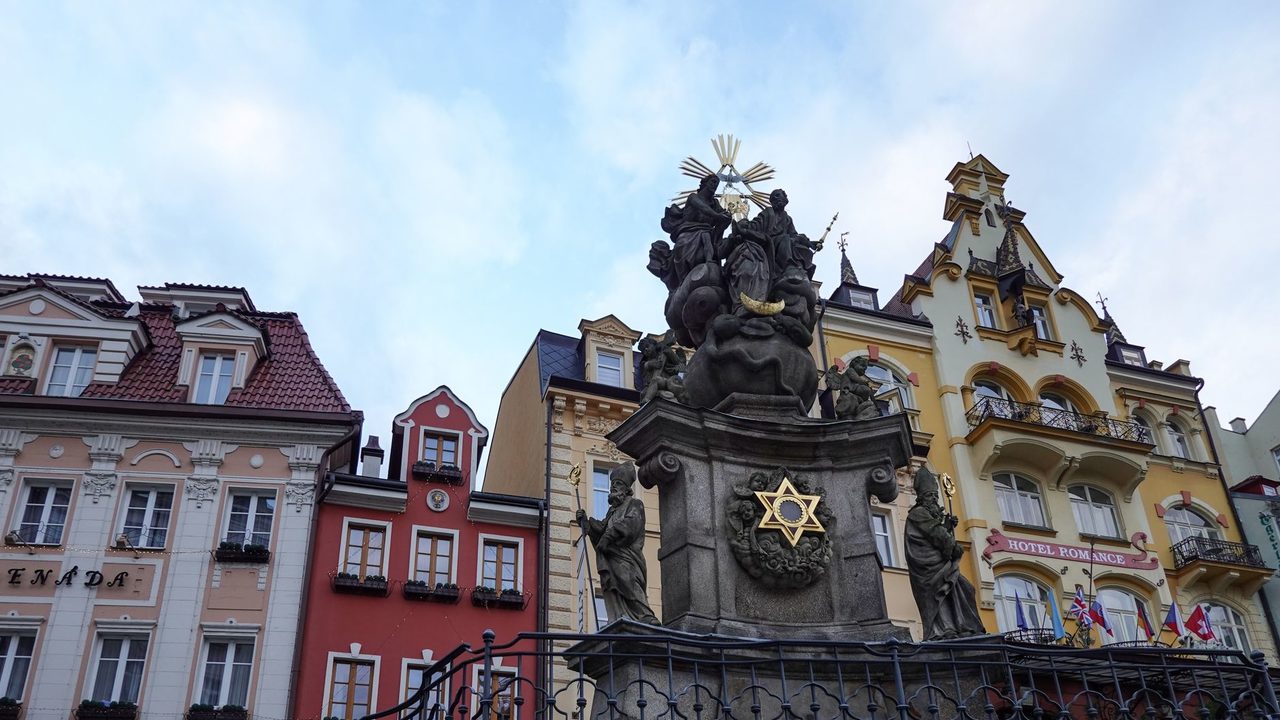
“To the Red Army liberators. Local National Committee of Petřvald, 1947,” reads the inscription on a monument in the town centre, topped by a gleaming red star. Reminders of the Soviet army can be found in many places in Czechia, but here the legacy of the red star also rules in the town hall.
In 2016, a KSČM representative led, for example, Havířov, a city of seventy thousand, but today communists head towns and municipalities only rarely. In recent years they ran Teplá in the Cheb district, with 3,000 residents, and Horní Stropnice in South Bohemia, with 1,500, but this year they are no longer standing there under the KSČM label. In Petřvald they are, even though their rule may be coming to an end. “I don't think it will work out any more,” says Lukša, who is not running again for personal reasons.
Petřvald resembles a large village more than a town: the buildings on both sides of the busy Ostrava–Orlová road are long rows of private houses and a few apartment blocks. The town was founded in the 13th century, and its development, like that of many places in the Ostrava and Karviná regions, is tied to coal mining, which began in the first half of the 19th century and continued until 1998. Even two poems from Petr Bezruč's “Silesian Songs” refer to the mining past. Traces of mining are still visible today: right across from the town hall, in the park, stands a fenced-off outlet of a backfilled ventilation shaft with a sign warning of escaping gases.
“It has taken root”
The popularity of the KSČM is linked precisely to the mining past. That is the view of Roman Reiss, who headed the ODS list this year: “Every second family used to be a mining family. Anyone who wanted to get ahead had to join the Communist Party. And it somehow gets passed down from generation to generation. It has taken root.”
Four years ago the KSČM came first here with more than 31% of the vote, and eight years ago its result was another four percentage points higher. The communists won the mayor's seat then after several terms in which the Social Democrats and the Civic Democrats had won.
Even those who do not vote for the communists speak warmly of the time before 1989. “We had certain guarantees: healthcare, a job. Now there are no guarantees. Will they throw us out of our flat? Will anyone take care of us if we fall ill?” says Iva, a resident of an apartment block. She has never voted for Lukša, but considers him a “super person.” She usually votes for ANO, but is unhappy with the movement's role in government and is still undecided. Another resident, Kateřina, is satisfied with the current leadership and would have considered voting for the mayor had he continued; as it is, she will back the Social Democrats: “People choose the person rather than the party.”
Residents like the greenery and the mix of village quiet and urban conveniences. What bothers them is the heavy traffic on the road that cuts through Petřvald, and a feeling that the town is “a bit stuck.”
What the town lives on and why the communists are losing votes
Reiss is convinced that the town has had no serious problems in recent decades. At the national level the ODS and the communists hold opposing views, but in Petřvald they have cooperated for the past four years: the ODS became the “swing vote” and preferred a coalition with Lukša to less experienced politicians, for example from the SPD. “People are satisfied if the lights are on at night, the snow is cleared in winter and the rubbish is collected. Nobody here is planning a water park or a winter stadium,” he says, explaining the lasting support for the KSČM.
The town did recently have one dispute to resolve: the mayor fell out with residents of fifteen houses on Okrajová Street. Lukša claims their gardens extend onto a town-owned plot that includes a garden; the discrepancy dates back up to seventy years, when all the plots belonged to OKD and the fences were put up “by eye.” He now demands that the residents buy the land or move their fences. Some disagree and want to go to court.
This week 52-year-old Miroslava Kršáková, who is herself running from sixth place, intends to give her vote to the communists. But she is pessimistic: “There are so many newcomers here who are not drawn to the communists. Municipal elections are not about parties but about people, but young people don't see it that way.”
Lukša notes the same. The big cities around — Ostrava, Karviná, Bohumín, Orlová — are losing residents, while the small municipalities between them are growing because of their location, quiet and affordable housing. “Deurbanisation is under way: people are moving from big cities to small ones. One reason is expensive housing, so it is better to build a little house and pay off the mortgage,” he says. That is why, in his view, his successors will not bring the communists any new victories: “The people on the lists are little known, so they will vote according to the results of national elections.”
Among young people, support for the communists is generally negligible. “Because they are constantly lied to. They are told that things were bad in the past, but not that they were good,” Lukša believes. He adds that the party is “partly to blame itself,” but does not want to be more specific.
Source: seznamzpravy.cz