Science & Space By

Simulation Shows Two Neutron Stars Merging Into a Magnetar in Milliseconds
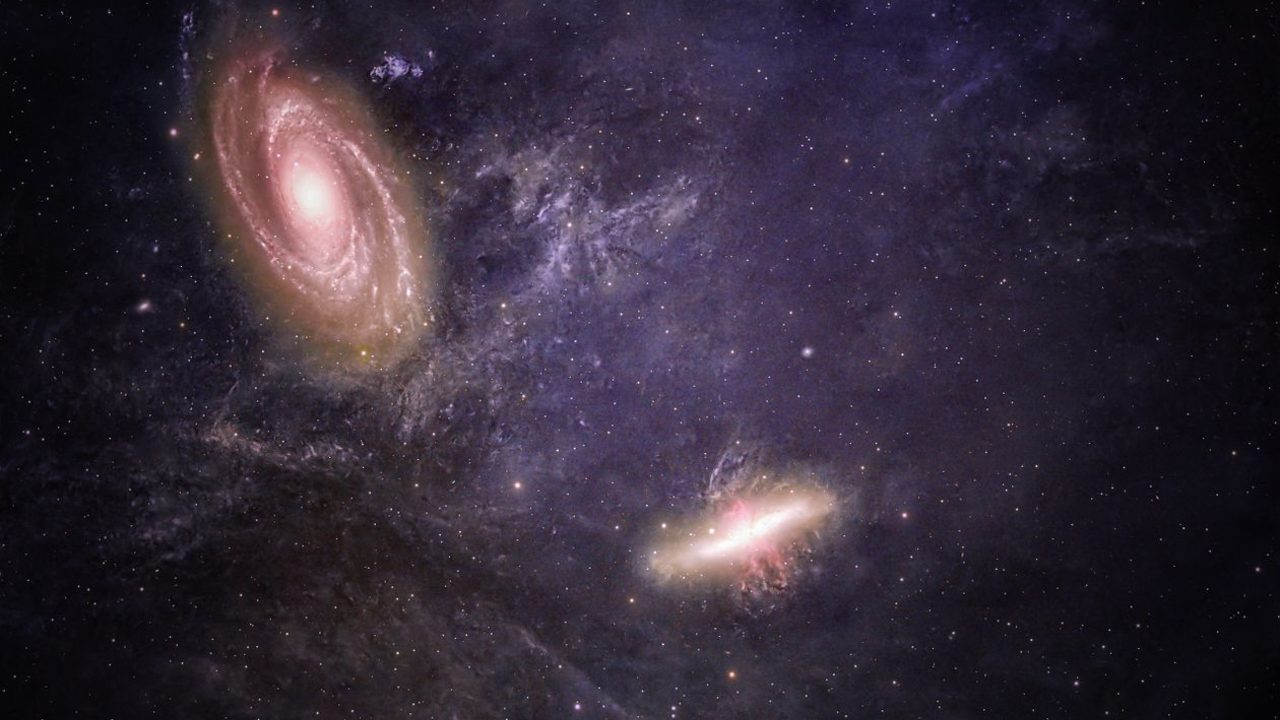
A computer simulation suggests that when two lighter-than-usual neutron stars collide, the fluid at the contact point becomes turbulent and can boost the magnetic field more than 300 times, Universe Today reported. The result points to a way that magnetars, the most strongly magnetized stars known, may be born.

The work is a simulation study posted as a preprint on arXiv by Kenta Kiuchi and colleagues. It shows that such a merger can produce a magnetar, and it shows how fast the field grows. It does not describe an observed event.

What magnetars are and why their origin is a puzzle

Every neutron star has an intense magnetic field. According to Universe Today, a typical one is about 100,000 times stronger than the strongest fields people can create on Earth. About 1% of neutron stars go further. These magnetars can have fields 1,000 times stronger than a regular neutron star field.

Magnetars are considered a likely source of powerful short-lived events, including soft gamma-ray repeaters and fast radio bursts. How they form has been an open question, and the new study tests one route.

Why most neutron star mergers do not end this way

When two neutron stars collide, the usual result is a black hole. Universe Today explained that this happens when their combined mass exceeds a threshold known as the Tolman-Oppenheimer-Volkoff limit, which is around 2.6 solar masses.

Some neutron stars are lighter than most. If a pair together falls below that limit, they can merge into a single neutron star instead of collapsing. The team focused on that case.

What the simulation showed

The researchers used the Japanese supercomputer Fugaku to run high-resolution simulations of low-mass neutron star pairs. To keep the problem manageable, they gave both stars identical masses and otherwise typical properties. They set each star's magnetic field at around 3 trillion Gauss, which is toward the upper end for typical neutron stars. The simulations covered the period from just before the stars touch to just after.

Within milliseconds of contact, the neutron fluid in the contact region develops what physicists call a Kelvin-Helmholtz instability. In plain terms, a smooth flow turns chaotic and swirling, much like the rising stream of smoke from a candle that has just been blown out.

In the simulations, this turbulence mixed the neutron material thoroughly and quickly. It dragged the magnetic field along with it as the mixing spread through the rest of the merged object. The resulting field was more than 300 times stronger than the starting fields. Universe Today noted that further turbulence might strengthen it even more, but that lies beyond what this simulation can capture.

Why it matters

For general readers, this is a story about how some of the most extreme objects in the universe come to exist. The finding does not affect daily life, but it ties together several things astronomers observe. Magnetars are linked to bursts of gamma rays and radio waves, and a merger route gives researchers a concrete process to look for.

The speed of the effect is also notable. According to Universe Today, the field amplification spread through the stars in about a millisecond. That suggests it could influence how the merger itself unfolds and shape the structure of the neutron star that results.

What remains unknown

This is one set of simulations built on simplifying assumptions, including equal-mass stars and a single starting field strength. It is a preprint, so it is a single result and not a settled conclusion. Universe Today said more study is needed to learn exactly how the process plays out, though it described the finding as clear evidence that magnetars can form through mergers of this kind.

Around Prague, based on reporting by Universe Today

Share: Telegram WhatsApp

More science news

What Prestin, the Inner Ear's Molecular Motor, Does and What's Unknown
Prestin, a protein inside the inner ear, is drawing attention from two research groups asking different questions. At UConn Health, researchers are testing whether blood levels of prestin can signal t
Perseverance Rover Finds Ruby-Like Mineral Glowing Red on Mars
NASA’s Perseverance rover has detected corundum on Mars, the mineral structure that makes up rubies when it contains chromium. According to a NASA blog post by Roger C. Wiens, the principal investigat
Curiosity Rover Drills Rock Packed With Possible Crystals on Mars
NASA’s Curiosity rover has drilled its 49th hole in Martian rock, a target named Nazca. According to a NASA mission blog written by planetary mineralogist Susanne P. Schwenzer of The Open University i
Fossil Fuel Emissions Fall 0.4% as Iran War Squeezes Oil Use
Global carbon dioxide emissions from burning oil, gas and coal are projected to fall 0.4% this year, according to the 2026 Global Carbon Budget report. Live Science reported it is the first annual dro
A Hidden Gut-to-Brain Dopamine Signal May Explain Why We Learn to Love Bitter Coffee
The first sip of black coffee is often a shock, yet millions of people end up looking forward to it every morning. Scientists at the University of California, San Francisco, say they have found part o
From Wright Wing-Warping to X-70: What NASA's New X-Plane Builds On
NASA's new X-70 Fractal is a crewed research aircraft meant to test flight-control technology that the agency says will let it explore maneuverability "in ways never before demonstrated in crewed flig

Related news

Prestin, a protein inside the inner ear, is drawing attention from two research groups asking different questions. At UConn Health, researchers are testing whether blood levels of prestin can signal tinnitus. At Yale School of Medicine, a n
NASA’s Perseverance rover has detected corundum on Mars, the mineral structure that makes up rubies when it contains chromium. According to a NASA blog post by Roger C. Wiens, the principal investigator for the rover’s SuperCam instrument,
NASA’s Curiosity rover has drilled its 49th hole in Martian rock, a target named Nazca. According to a NASA mission blog written by planetary mineralogist Susanne P. Schwenzer of The Open University in the United Kingdom, the team picked th
Global carbon dioxide emissions from burning oil, gas and coal are projected to fall 0.4% this year, according to the 2026 Global Carbon Budget report. Live Science reported it is the first annual drop in fossil fuel CO2 since the coronavir
The first sip of black coffee is often a shock, yet millions of people end up looking forward to it every morning. Scientists at the University of California, San Francisco, say they have found part of the reason: a slow-acting dopamine pat
NASA's new X-70 Fractal is a crewed research aircraft meant to test flight-control technology that the agency says will let it explore maneuverability "in ways never before demonstrated in crewed flight." The idea of reshaping an aircraft i
Martian dust looks less likely to chew through spacesuits than the sharp grit on the Moon, but it carries toxic chemicals and sticks stubbornly to surfaces, according to a new study based on NASA's Perseverance rover. Universe Today reporte
Astronomers have identified the youngest white dwarf ever found orbiting a millisecond pulsar, catching the pair at an early and rare stage of their shared evolution, according to Universe Today. The pulsar, called NGC 362D, sits in the glo
Mars is widely seen as a volcanically dead planet, but a new study suggests its interior may not be fully quiet. Researchers report that an orbiter has picked up traces of hydrochloric acid gas high above one of the planet's largest volcano
Astronomers have found what is behind a giant star's repeated, supernova-like flare-ups: a hidden companion that is either a black hole or a neutron star. According to NASA, the companion pulls material off the massive star every 113 days a
NASA has opened a $1 million competition that asks U.S. students to help design the future Moon Base. Administrator Jared Isaacman announced the Moon Base Student Challenge on Sunday, Nov. 8, at NASA's Kennedy Space Center Visitor Complex i
Men who ate relatively more animal protein than plant protein had lower testosterone levels, according to a new study of 2,546 men aged 42 to 60. The finding runs against the popular claim that a meat-heavy diet boosts the hormone, ScienceA