Science & Space By

Astronomers Catch a Star-Forming Cloud Shedding Its Magnetic Brakes
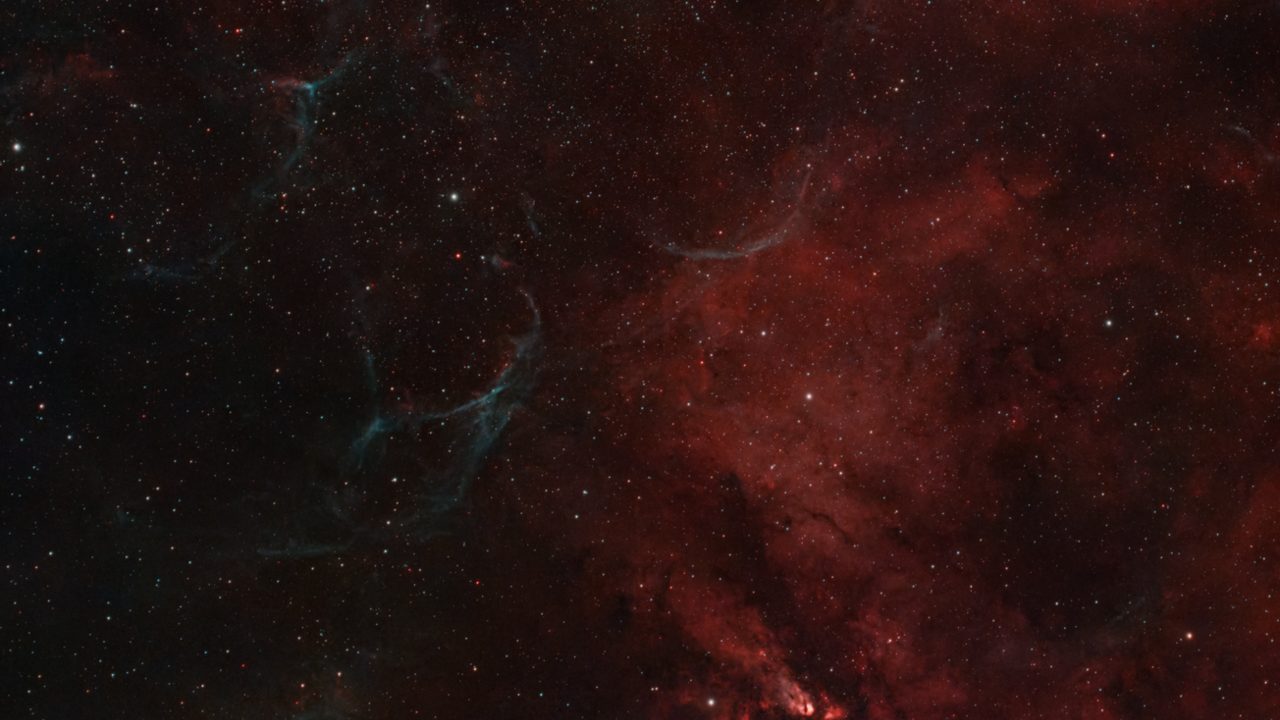
Astronomers say they have detected a long-sought process that lets a cold cloud of gas and dust loosen its magnetic grip and begin collapsing into a star. Universe Today reported that researchers measured a velocity difference of about 0.05 km/second between two kinds of molecules in a prestellar core called L1544.

The team, from Kyushu University and the Max Planck Institute for Extraterrestrial Physics, interprets the gap as ion-neutral drift, a signature of a process called ambipolar diffusion. Lead researcher Doris Arzoumanian said observing it in a prestellar core had been a major challenge until now.

What is a prestellar core, and why do magnetic fields matter?

Stars form when clouds of gas and dust collapse into dense clumps known as prestellar cores. Much of that story is understood, but open questions remain, including the role of magnetic fields in the clouds where stars are born, according to Universe Today.

Arzoumanian explained that strong magnetic fields run through these cores. If a field is too strong, it can delay gravitational collapse and so delay star formation. Her team wanted to learn how the cores weaken their magnetic fields.

L1544 sits in the Taurus Molecular Complex, a region of the Milky Way about 140 parsecs away. Universe Today described it as one of the closest star-forming regions to Earth. Cores like it are dense and cold, between 10 and 30 degrees Kelvin, and host a lot of complex chemistry, Arzoumanian said. The cold lets molecules assemble into more complex ones, including precursors of prebiotic organic molecules.

How the team spotted ambipolar diffusion

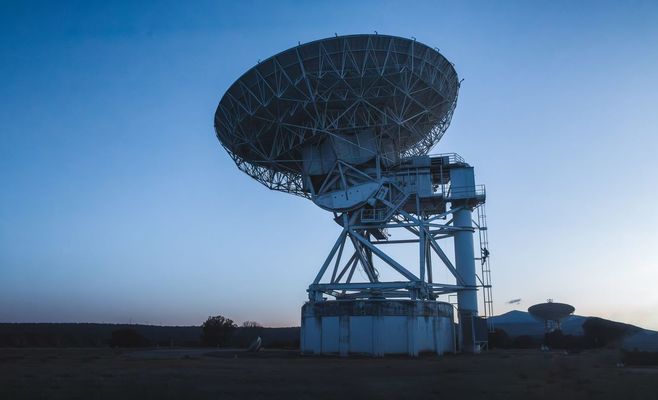
Cores are so cold that many molecules freeze onto dust grains, which hides them from study. The researchers therefore chose two tracers that tend to sit in similar dense regions: an ion called diazenylium-d1 (N2D+) and a neutral molecule, para-monodeuterated ammonia (para-NH2D). Silvia Spezzano, a group leader at the Max Planck Institute, said the team collected spectral data from the core with the IRAM radio telescope facility and modeled how fast each molecule was moving.

The neutral molecules moved faster toward the center than the ions did. The explanation, as Universe Today described it, is that ions are strongly tied to the magnetic field lines, while neutral molecules interact with the field only indirectly, through collisions. As the core grows denser, it is better shielded from radiation, which reduces ionization and weakens the coupling between the gas and the magnetic field. The neutral molecules then fall inward and speed up, while the ions stay attached to the field.

In the outer part of the core, both ions and neutrals remain attached to the field lines. Deeper inside, the neutrals break free, according to the researchers' description.

Why it matters: a missing step in how stars are born

Arzoumanian said that as ambipolar diffusion continues, the magnetic field weakens. Eventually gravity becomes the main force in the core, and it collapses into a protostar. That protostar can ultimately grow into a stellar system like our own Solar System, according to the researchers.

The finding does not change anything in daily life, but it fills in a step in the story of how stars, and the planetary systems around them, begin. Until now, the idea that cores shed their magnetic support this way had been difficult to see directly in a real object.

The result comes from a single core, and the team has not yet confirmed it in others.

What happens next

To confirm the finding, Arzoumanian said the team hopes to observe other prestellar cores using radio astronomy, along with dust physics and astrochemistry. A larger sample would let researchers study ion-neutral pairs in cores at different stages of evolution. Statistical studies could also show how the geometry of the magnetic field and the density structure of cores affect the process.

The researchers also suggest that future work could look at ion-neutral drift speeds in other structures in star-forming regions, such as dense filaments. Such observations should give new insight into the three-dimensional strength of magnetic fields in cores and into how the sizes of dust grains change as cores evolve, according to Universe Today.

Around Prague, based on reporting by Universe Today
Share: Telegram WhatsApp

More science news

Twelve Dust Grains From Beyond Neptune Point to a Hidden Reservoir of Heavy Water
Twelve microscopic dust grains collected by a high-altitude aircraft may help explain a long-standing puzzle about how the Solar System formed. According to Universe Today, a new paper in Science Adva
Timed Bursts of Pink Noise Boosted Brain Fluid Flow During Sleep in a Small Study
Short, carefully timed bursts of pink noise made the waves of fluid that wash through the brain during sleep larger in a small experiment with healthy adults, according to ScienceAlert's report on a s
Strange Radio Pulse Every 8 Minutes Traced to a White Dwarf and Sun-Like Star
A radio signal that switches on every 8 minutes comes from a rare pair of stars, not from an alien civilization, according to EarthSky. Astronomers say the system, called GPM J071507-114153, pairs a w
Nvidia Ends China Sales of Its Licensed AI Chips After $2.4 Billion Quarter
Nvidia has stopped shipping its licensed Hopper data center chips to China, interim CEO Colette Kress said on the company's earnings call on Tuesday, Nov. 17. The company had received U.S. government
Eagles in the Sahara Appear to Hunt Baboons as Heavy as Early Human Ancestors
Large eagles in the Sahara appear to be killing olive baboons that weigh about as much as some early human ancestors, according to new research reported by Popular Science. The finding challenges the
Macaulay Culkin Plays Grown-Up Kevin Alone in an Empty McDonald's
Macaulay Culkin has stepped back into the role of Kevin McCallister for a new McDonald's commercial, and the Home Alone-themed meal it promotes is due at participating U.S. restaurants on Dec. 1, acco

Related news

Twelve microscopic dust grains collected by a high-altitude aircraft may help explain a long-standing puzzle about how the Solar System formed. According to Universe Today, a new paper in Science Advances argues that the region beyond Neptu
Short, carefully timed bursts of pink noise made the waves of fluid that wash through the brain during sleep larger in a small experiment with healthy adults, according to ScienceAlert's report on a study in Science Translational Medicine.
A radio signal that switches on every 8 minutes comes from a rare pair of stars, not from an alien civilization, according to EarthSky. Astronomers say the system, called GPM J071507-114153, pairs a white dwarf with a star similar to our su
Nvidia has stopped shipping its licensed Hopper data center chips to China, interim CEO Colette Kress said on the company's earnings call on Tuesday, Nov. 17. The company had received U.S. government approval last year to sell a version of
Large eagles in the Sahara appear to be killing olive baboons that weigh about as much as some early human ancestors, according to new research reported by Popular Science. The finding challenges the long-held view that primates above a cer
Macaulay Culkin has stepped back into the role of Kevin McCallister for a new McDonald's commercial, and the Home Alone-themed meal it promotes is due at participating U.S. restaurants on Dec. 1, according to Variety, Consequence of Sound a
Governments are rushing to restrict children's social media use, but there is little hard evidence on whether the bans help. A new research program in Britain aims to change that. Led by the health charity Wellcome, it will follow more than
NASA is asking scientists to build a computer model of how an individual astronaut’s bone marrow and immune system react to spaceflight. The agency’s BPS Digital AVATAR Challenge offers $150,000 in total prizes, with a submission deadline o
NASA has released a new album of “baby star” sounds, four pieces of audio built from real telescope data on places where stars are being born. The project comes from the agency’s Chandra X-ray Observatory, which sees the energetic X-rays th
A British startup says a device weighing just 50 grams has passed its first test in orbit, returning thousands of laser pulses fired from the ground. The aim is to let operators keep tracking satellites long after they stop working, a growi
On Nov. 18, NASA's Voyager 1 will be so far from Earth that a signal takes a full light-day, or 24 hours, to reach it, according to Space.com. The spacecraft will be 16,094,799,096 miles (25,902,068,356 kilometers) away. Its twin, Voyager 2
U.S. prosecutors have charged an Irish man with breaking into and destroying a U.S. military transport plane at Shannon Airport in County Clare, Ireland, in an attack they say caused about $60 million in damage. Daithi O’Corrain, 48, has no