Society By

Czech Kindergartens Sweltering in the Heat: Teachers Demand a Clear Action Plan from the Education Ministry
Czech Kindergartens Sweltering in the Heat: Teachers Demand a Clear Action Plan from the Education Ministry

The Teachers' Platform — a professional association of Czech educators — has called on the state and school founders to develop a unified standard for how kindergartens and schools should operate during periods of extreme heat. According to the organisation, overheated classrooms, exhausted children and teachers improvising on the spot have long stopped being the exception and have become an annual summer headache for Czech education.

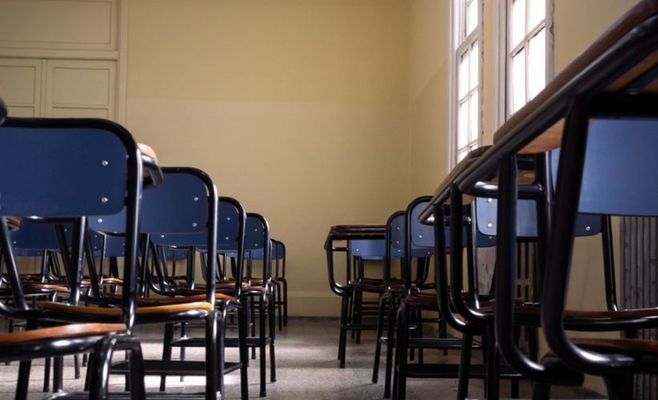
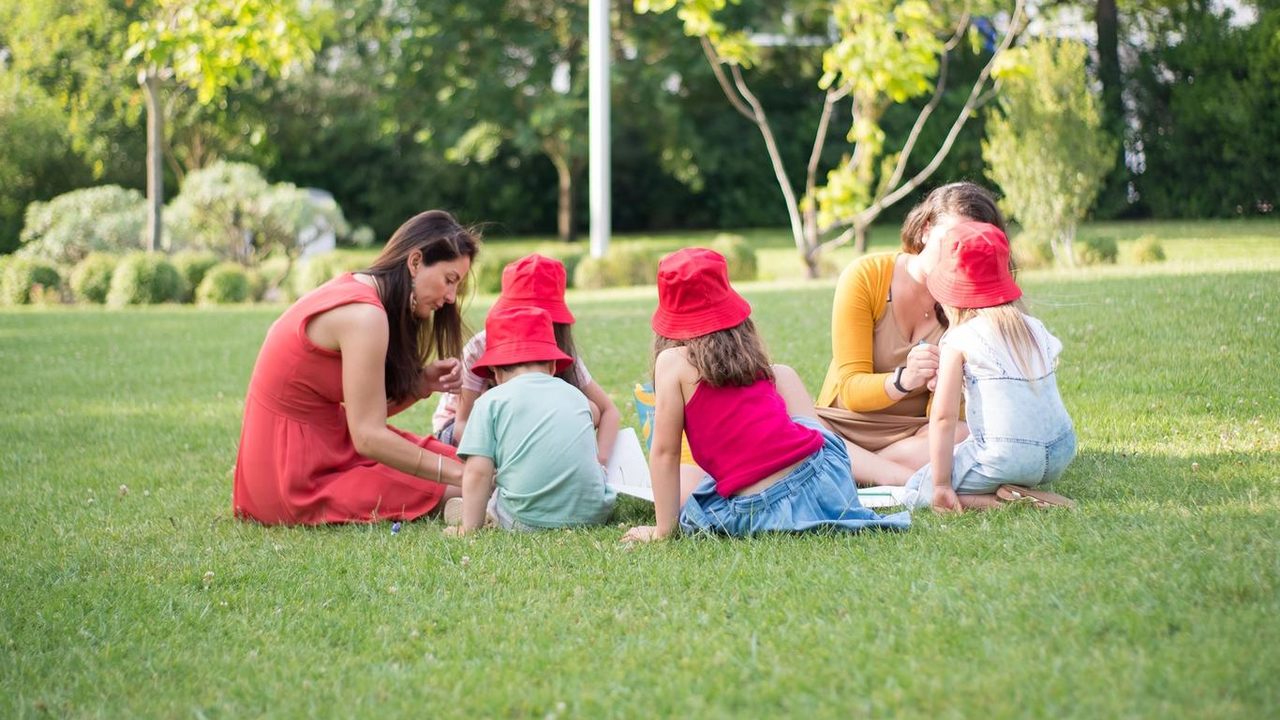
Unlike schools, kindergartens remain open throughout July and often until late evening — sometimes as late as 5 p.m., even on the hottest days. "When it's hot, I try to spend as much time outdoors with the children as possible. We take them out already for the morning snack and only come back inside around lunchtime," said Nikola, a kindergarten teacher. She noted that children constantly need to be reminded to drink water or rest in the shade on a blanket, while blinds in the classrooms are drawn from early morning — though it barely helps, since the rooms are fully glazed.

Teachers' Platform chairman Michal Kaderka told reporters that older kindergarten and school buildings simply weren't designed for today's climate. "Climate change is here, and the heat is getting worse. Yet we act as if nothing is happening. During heatwaves, old buildings become practically unfit for use and fail to meet the legal limit of 28 degrees," he stressed.

Kaderka pointed to what he sees as an inconsistency in the current approach: if a heating system or boiler breaks down in winter, schools declare the equivalent of the old "coal holidays" — yet when it comes to heat, no one dares to suspend or limit operations. He noted that many parents treat kindergarten as a kind of "storage room" for their child during working hours, leaving kids there even when staff warn that conditions inside are unbearable.

The Teachers' Platform is demanding that the Ministry of Education recognise extreme heat as a long-term issue rather than a one-off problem, and that it develop a clear protocol: what to do in buildings equipped with air conditioning and shading, and what to do in those without — including provisions to limit operations if temperatures exceed the legal threshold of 28 degrees. Ordinary schools are increasingly facing similar difficulties too, as heatwaves now arrive as early as late May, while the school year is still in full swing.

"This isn't about luxury — it's about basic conditions for safe and dignified work," said platform board member and school director in Žďár Josef Halama. He pointed out that overheated classrooms aren't just an issue for the learning process, but also a health and safety concern for staff who spend entire days working in such conditions.

According to guidelines from the regional hygiene station in Ústí nad Labem, institutions should measure both outdoor shade temperature and indoor temperature, reduce heat exposure for children, ensure access to cooler areas, and step up drinking water provisions. "Children cannot remain in rooms where the temperature exceeds 28 degrees," the hygiene authority emphasises.

Ministry of Education spokesman Ondřej Macura responded by saying that responsibility for school conditions and facilities lies with their founders — municipalities and city districts in the case of kindergartens and schools, and regional authorities for secondary institutions. It is these bodies that receive funding for equipment and take local circumstances into account when deciding on air conditioning or shading systems. The ministry, he said, has no authority over the technical condition of buildings or specific investment decisions — that falls under the founders' remit, while the ministry's role is limited to setting legislative and methodological frameworks.

At the same time, Macura stressed that a kindergarten cannot simply shut down because of the heat — according to the ministry's position, institutions are only required to adapt conditions so that classes can continue. During heatwaves, schools typically cut back on physical education, move lessons into shaded or cooler spaces, shorten outdoor walks, and increase water breaks.

Temperature limits for educational institutions are set out in Ministry of Health Decree No. 160/2024. The document establishes a maximum permissible classroom temperature of 28°C and stipulates that when outdoor shade temperatures exceed 30°C, institutions must reduce children's heat exposure — primarily by keeping them in cooler rooms and stepping up drinking water provisions.

Around Prague, based on reporting by denik.cz
Share: Telegram WhatsApp

More U.S. news

Why Is Nvidia Stock Down Today? Shares Fall 7.6% as Traders Take Profits After Monday's 31% Surge
Nvidia (NVDA) stock is down 7.6% on Tuesday, November 24, 2026, as investors take profits after Monday's historic rally and weigh fresh questions about governance and China scrutiny. Shares were tradi
Dell Earnings Tonight: What Investors Are Watching After HPE's Margin Warning
Dell Technologies is set to report fiscal 2027 third-quarter results after the U.S. market close Tuesday, and investors are looking past revenue to a harder question: whether a huge AI server backlog
Why Is Super Micro Stock Down Today? Shares Fall 8% as AI Server Stocks Give Back Monday's Rally
Super Micro Computer (SMCI) shares fell about 8% on Tuesday, November 24, 2026, as AI server stocks gave back part of Monday's big rally. The stock traded at $22.50 at 12:50 p.m. ET, down $2.04, or 8.
Why Is Dell Stock Down Today? Shares Fall 11% to $297.82 as HPE Slide Hits AI Server Names
Dell Technologies (DELL) stock fell about 11% on Tuesday, November 24, 2026, as AI server stocks gave back part of Monday's rally and rival HP Enterprise sold off despite a record quarter. Shares trad
Why Is Intel Stock Down Today? Shares Fall 8.1% to $54.83 as Chip Rally Cools After 16.3% Jump
Intel (INTC) stock is down 8.1% on Tuesday, November 24, 2026, as chip stocks give back part of Monday's sharp rally. Shares traded at $54.83 at 12:10 p.m. ET, down $4.83 from Monday's close of $59.66
Gold and Silver Slip Again as Wednesday Inflation Data Looms Over Fed Hike Bets
Gold and silver fell again in early U.S. trading Tuesday as a firm dollar and bets on more Federal Reserve rate hikes kept pressure on precious metals, according to Kitco. Gold failed to build on Mond

Related news

The weight-loss drug Wegovy in tablet form may appear in Czech pharmacies no earlier than the first quarter of next year. It was approved in Czechia back in July, so according to the State Institute for Drug Control, all that remains is sup
A private primary school, ScioŠkola, for 200 children will be built in Brandýs nad Labem–Stará Boleslav. The town council approved the project in early November. Tuition will cost CZK 130,000–150,000 per child per school year, and the first
Children, students and pensioners in Czechia will keep riding public transport at a 50% discount rather than 75%: Andrej Babiš's government is delaying the promised return of the former discount because the budget is short of money. Even fr
Open days at secondary schools in Prague and the surrounding area let prospective students see a school up close before the 2027 entrance exams. Applications are due from Feb. 1 to Feb. 20, so it is worth choosing a school now. What you can
The reopening of the Pisárek tunnels in Brno after repairs may be delayed: without the client’s knowledge, the contractor asked the regional authority to extend the closure by nine days. The work began in mid-October and was supposed to fin
On Tuesday, Nov. 17, large stores in Czechia will not close: hypermarkets, shopping centers and hobby markets will keep their regular hours. The Struggle for Freedom and Democracy Day holiday is not among the dates covered by the sales ban.
Since November, the mobile information centres of the Prague Integrated Transport system (PID) in the Central Bohemian Region have accepted cashless payments only. In return, people get longer opening hours and more visits, but rights advoc
From Nov. 1 to the end of March, drivers in Czechia need winter tires or all-season tires with the “Alpine symbol” — a mountain with three peaks and a snowflake on the sidewall. On-the-spot fines can reach 1,500 crowns, and after a serious
On the evening of Monday, 2 November, social service workers walked through Plzeň with candles from the main railway station to the spot where a homeless woman died two years ago. It was their way of drawing attention to the disastrous cons
The Czech Ministry of Labour and Social Affairs (MPSV) wants to scrap the child-rearing pension supplement (výchovné) entirely from 1 January 2027 and replace it with a notional income for the time spent caring for a child. MPs passed the c
The law on the so-called child certificate, due to take effect in Czechia in January 2027, has drawn criticism from lawyers. They support the underlying idea of better protecting children from people convicted of serious crimes, but argue t
On Tuesday, 3 November, traffic in central Prague will be severely restricted: student marches are due to start at around 2 p.m., and at 4:36 p.m. a rally in support of Czech Television and Czech Radio begins on Wenceslas Square. Police adv