What Denisovans looked like: appearance rebuilt from ancient proteins
USD 21,74
Popular
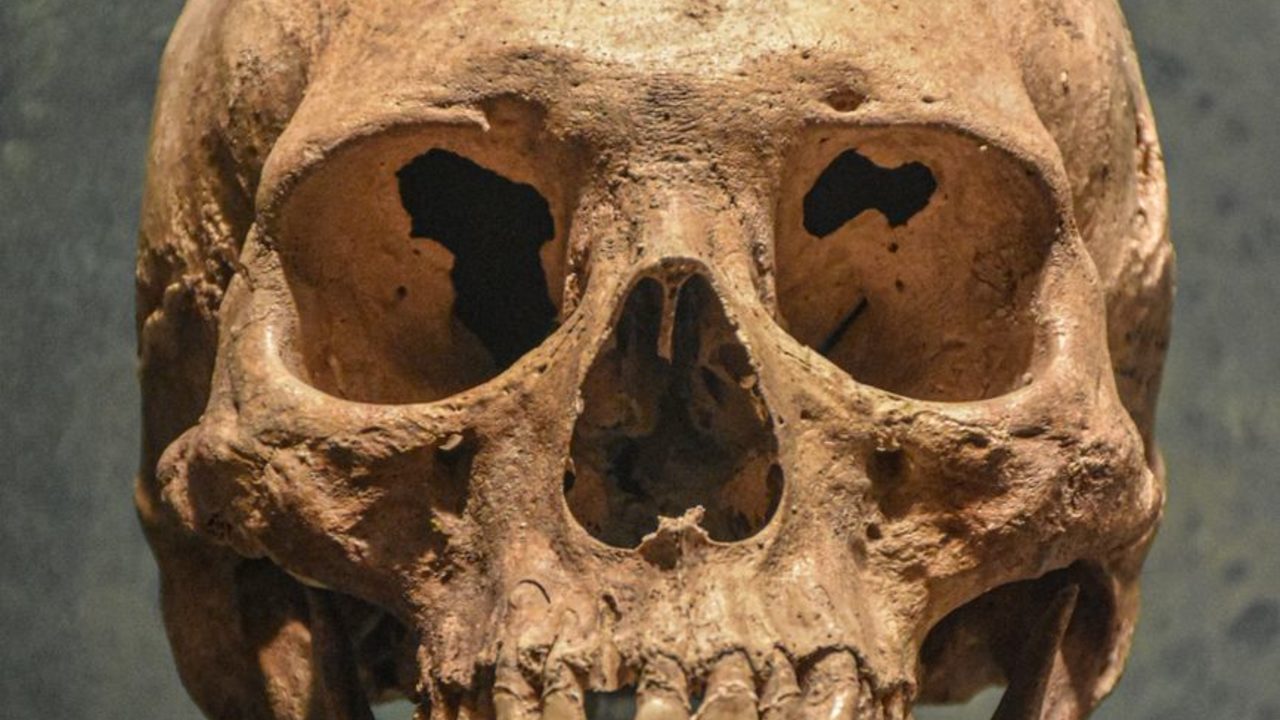
Scientists have for the first time reliably described the appearance of the Denisovans: they had a low, fairly flat skull with thick bones. An international team reached this conclusion in a study published on 21 October in the journal Nature.
“We are finally beginning to put a concrete face on the Denisovans,” said palaeogeneticist Sally Wasef of the Queensland University of Technology in Brisbane, Australia, according to Nature.
The Denisovans were scientifically described in 2010: analysis of DNA from a finger bone found two years earlier in Denisova Cave in Siberia showed that it belonged neither to a modern human nor to a Neanderthal. Because of the shortage of fossil finds, this species long remained a mystery. Later, researchers also began identifying Denisovan remains from ancient proteins. Among the important finds is a nearly complete skull discovered near Harbin in China.
The new study sheds light on the Denisovans’ appearance and on the territory where they lived. According to available data, they inhabited Asia from at least 300,000 to 45,000 years ago and were close relatives of the Neanderthals.
Proteins from finds made half a century ago
Researchers led by Fu Qiaomei of the Chinese Academy of Sciences analysed a skull fragment and a jaw fragment found in 1976–1979 at the Xujiayao archaeological site in northern China. They extracted proteins from both remains and identified 18 ancient proteins, then compared their sequences with data from other ancient hominids and modern humans.
The key clue was a special variant of collagen, COL1A2-996K. It was found in Denisovans, but not in Neanderthals or modern humans. “Molecular phylogeny and shared morphological features place the Xujiayao finds, originally assigned to different lineages, with the Denisovans,” the authors wrote, as quoted by the science portal Phys.org.
How scientists reconstructed the shape of the bones
The researchers then measured the fragments, built three-dimensional computer models of the reconstructed skull and jaw bones, and compared their shape with fossil remains of Neanderthals, modern humans and other ancient hominids.
The results showed that Denisovans had low, comparatively flat skulls with thick bones, pronounced brow ridges and flattened facial features. Their anatomy probably combined traits of hominid ancestors with features shared with Neanderthals and later human species.
Around Prague, based on reporting by novinky.cz