Why Dolls Give Us the Creeps: Scientists Point to the Uncanny Valley
USD 21,78
Popular
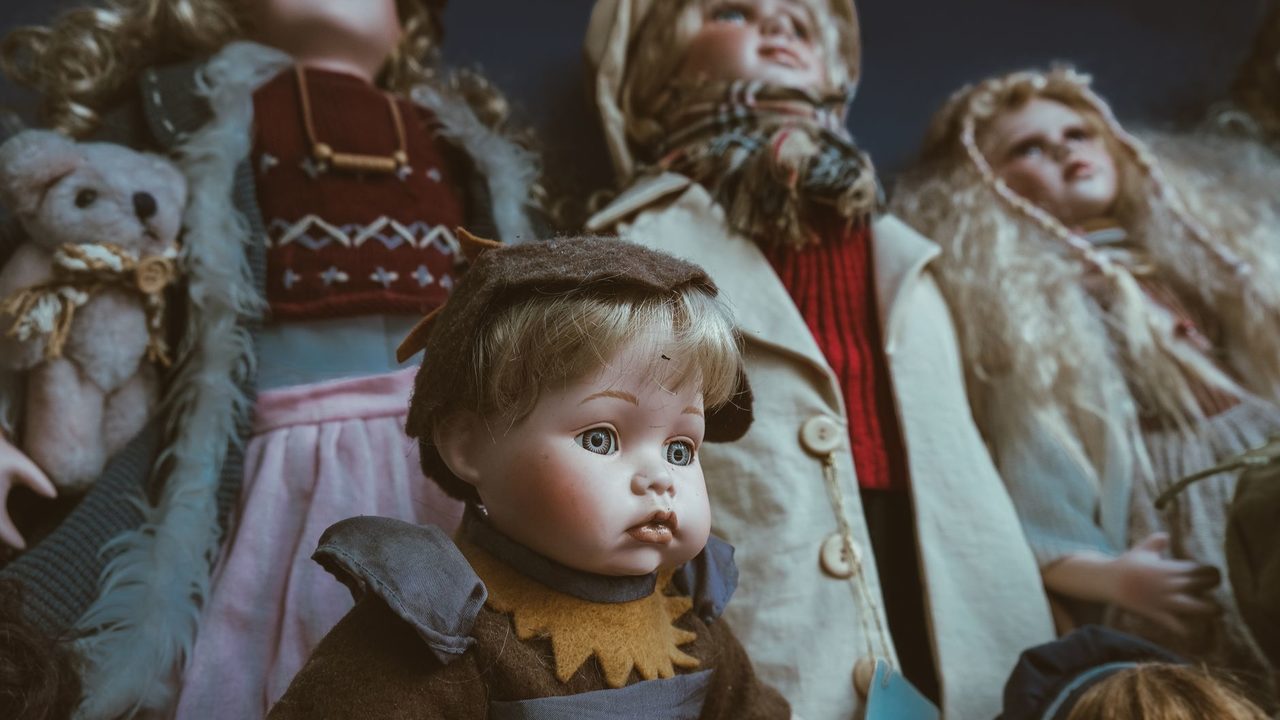
Many adults feel uneasy around dolls, and researchers at Northeastern University say a long-studied quirk of human perception may be behind it. According to EarthSky, which reported on the scientists' comments, the reaction is known as the uncanny valley effect, and it tends to show up when something looks nearly human but not quite.
The explanation arrives just as dolls turn up in stores, yards and Halloween displays, which can make a fear of dolls, known as pediophobia, hard to avoid this time of year.
What the uncanny valley is
The idea goes back to the 1970s, when scientist Masahiro Mori used the term to describe the eerie feeling of meeting a humanlike robot. EarthSky reported that lifelike robots were becoming popular in movies and television at the time.
Christie Rizzo, a professor of applied psychology at Northeastern, said people responded warmly to machines that looked clearly like robots and thought they were cool. As robots grew more humanlike, though, there came a narrow point where viewers were put off. That narrow stretch, where a figure is sort of human-looking but something is off, is the valley.
What may be happening in the brain
Mathew Yarossi, who studies biomechanics and movement neuroscience at Northeastern, said something that looks almost human can strike people as repulsive or simply strange. He also pointed to a brain area devoted to recognizing human faces, and said the way it fires is different for things in the uncanny valley.
Part of the unease may come from broken expectations. Leanne Chukoskie, director of the Playful Mind Lab at Northeastern, said people place a high priority on predicting and categorizing what comes next. A doll can fool us for a moment into thinking we see a person, and then we realize the mistake.
Why children may be spared
EarthSky reported that research shows children under age 9 do not experience the uncanny valley effect, so younger kids tend not to feel uneasy around dolls. Adults are more likely to have pediophobia.
That delay may be partly the work of scary movies. Chucky and the possessed doll Annabelle are examples of films that feature dolls. Rizzo said that watching a movie like that at the right moment can lead to an ongoing fear of such things.
Why it matters for Halloween
For readers who find dolls unsettling, the research offers a reason the feeling is so common and so easy to trigger: it is tied to how our brains read faces and make predictions, not to anything unusual about the person who feels it. It may also explain why dolls make effective decorations in seasonal displays.
EarthSky reported that dolls are showing up more often in Halloween decor, possibly because aging Baby Boomers, who grew up surrounded by dolls, are now clearing out their homes. That makes dolls a common and inexpensive find at thrift stores, and some people turn them into creepy scenes, such as a parade of dolls disposing of a body wrapped in a garbage bag.
A link to the fear of death
Ajay Satpute, an associate professor of psychology and director of the Affective and Brain Sciences Lab at Northeastern, offered a deeper reading. He said some researchers have argued that the uncanny valley is really about recognizing our own humanness, which could stir a sense of mortality and a fear of death.
That fits with a broader point EarthSky made about the holiday: part of the fun of Halloween is learning to laugh at the things that frighten us, and the fear of death is among the most basic human fears.
The Northeastern scientists made their comments on Oct. 7, 2025. The explanations they describe are ideas from researchers about why the reaction happens, and the sources do not present them as a finished answer.
Around Prague, based on reporting by EarthSky