Poland's Government Moves to Prosecute Top Judges as Police Guard Court

USD 21,81
Popular
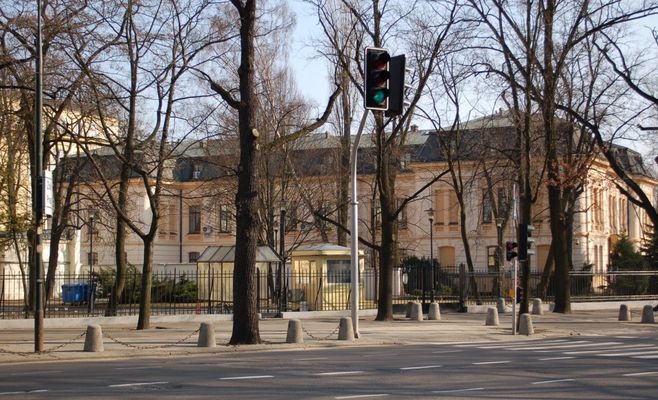
Riot police were deployed to Poland's Constitutional Court in Warsaw on Friday after the government moved to strip the court's president of his immunity, escalating a long fight over who controls the country's top judicial body. BBC News and Al Jazeera reported that supporters of the opposition Law and Justice party (PiS) gathered outside in protest.
Justice Minister Waldemar Zurek told reporters he had asked for the immunity of court President Bogdan Swieczkowski and his deputy to be lifted so they could face criminal charges, according to both outlets. The court said Swieczkowski had been suspended, but it also declared that both men remained its legally appointed senior justices.
What set off the stand-off
Zurek's accusation is that the two judges failed to do their duties by preventing other judges from working. Al Jazeera reported that over the past six months Swieczkowski used his authority as head of the court to keep judges chosen by the current parliamentary majority from taking up their seats. That dispute has effectively paralyzed the court, the outlet said.
Police said they entered the court's premises after incidents outside, including objects thrown at officers, and Al Jazeera reported that three people were detained. According to BBC News, the riot police were there to keep demonstrators from entering the building. The court posted online that everyone taking part in the actions was committing the crime of a coup d'etat.
Judge Anna Korwin-Piotrowska has now been placed in temporary charge of the court. She is one of the judges whom President Karol Nawrocki, who is backed by PiS, declined to swear in, citing alleged flaws in how she was selected. Nawrocki also ordered his plane to turn back to Warsaw while he was traveling to Senegal for the Summer Youth Olympic Games.
How the court became a political prize
The fight dates to 2015, when a PiS-led government took office and moved quickly to appoint judges to the court, which can rule on whether legislation is legal. BBC News reported that the European Court of Human Rights and the Court of Justice of the European Union later found that three of the judges had been chosen improperly, because they occupied positions already validly filled by the previous parliament. Tusk's government has used those rulings as grounds to stop publishing the tribunal's decisions, the BBC said.
PiS led the country from 2015 to 2023. Prime Minister Donald Tusk, leader of the Civic Coalition party, has promised to depoliticize the judiciary. His attempts to undo the changes have been blocked by vetoes from Nawrocki and his predecessor, Andrzej Duda, according to both outlets. Reports differ on the number of judges Nawrocki has refused to swear in: the BBC said five elected since March, while Al Jazeera said three of six nominated since his election.
What each side says
Tusk defended the move on social media, saying that restoring the rule of law is the government's duty and that after years of PiS lawlessness the process is painful. “There is no other way,” he wrote.
PiS politicians criticized the step. Former Justice Minister Zbigniew Ziobro called it a criminal attack on the constitutional order, Al Jazeera reported.
Some voices that oppose PiS's judicial changes also objected. BBC News reported that lawyer Marcin Matczak, a critic of those changes, said the suspension had no legal basis and warned that images of armed police would damage the cause of the rule of law for years. The Council of Europe's advisory body on constitutional matters, the Venice Commission, said earlier this month that Nawrocki should swear in the judges so they can sit on the bench, according to the BBC.
Why it matters beyond Warsaw
The court decides whether laws comply with Poland's constitution, so who runs it affects every future dispute over legislation. Right now the tribunal is paralyzed, and its leadership is claimed by two camps that each call the other illegitimate.
The timing adds pressure. Parliamentary elections are due next year, and BBC News reported that some see Tusk's move as an effort to win back supporters who accuse him of not acting decisively enough. Others say the use of police and a ministerial decree to remove a court president risks undermining the very principle the government says it is defending. How the immunity request is handled, and whether the presidential standoff over the unsworn judges ends, will shape what happens at the court next.
Around Prague, based on reporting by BBC News, Al Jazeera, The Guardian