Jameson Detwiler builds Chip, a talking robo-car for the city
USD 21,66
Popular
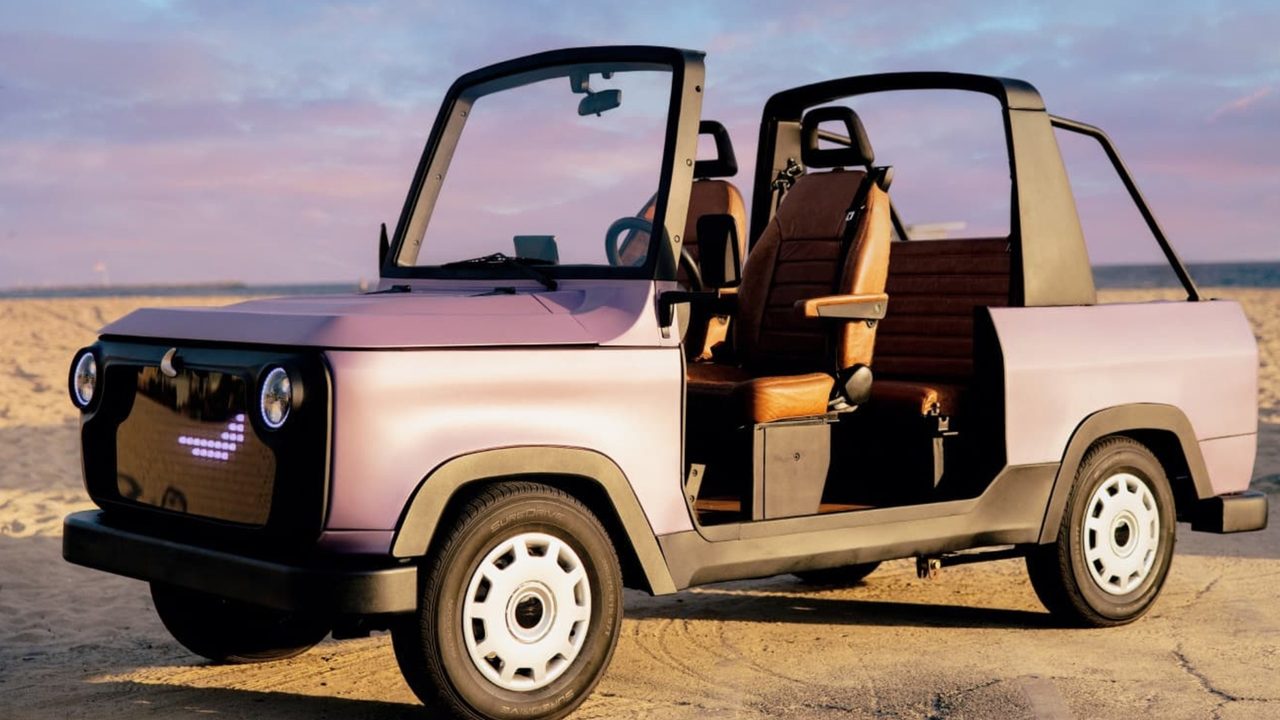
American entrepreneur Jameson Detwiler has unveiled an unusual electric vehicle called Chip — a cross between a golf cart and a robot, complete with a “face” made of an LED panel that can blink, smile and drive off to park itself. He had been nursing the idea for fifteen years, ever since his college days, but only decided to turn it into an actual product after building and selling two successful tech startups.
Under US law, Chip falls into the category of low-speed vehicles: it has no doors or rigid roof, but it does have a safety cage, seatbelts and a windshield. That makes it legal to drive in ordinary city traffic — though you’ll still need a standard driver’s license, insurance and a license plate.
The base four-seat version will start at $15,000 (about 316,000 crowns), while the extended six-seat model will cost $18,000 (nearly 380,000 crowns). The electric motors are tucked right into the wheels, top speed is 40 km/h, and thanks to the lightweight build, a single charge delivers a range of up to 160 kilometers.
The car’s main party trick is the Chip Go! service, which does away with the need to hunt for parking: the driver simply steps out, and the car drives off on its own. The technology isn’t fully autonomous yet, though — instead, the company relies on remote control: as soon as the cabin is empty, an operator at a control center takes over via a system of cameras and radars. They park the car, and when summoned through the app, bring it back. The startup takes on full legal liability for any accidents that occur while the vehicle is under remote control.
Behind the project is Jameson Detwiler, an entrepreneur who previously built and successfully sold the LaunchRock platform and the augmented-reality startup Fantasmo. The push to revisit his college-era dream came from the pandemic, when people across warmer US states swapped their regular cars for golf carts en masse. Detwiler decided to create a vehicle that would preserve that freedom of movement while packaging it into a legal, safe and technologically advanced form.
For now, Chip will only be sold in the US — the first buyers, in Florida, are set to receive their cars in 2027. A similar trend is gathering pace in Europe: in Portugal, the startup Amble — staffed by former Apple and Audi specialists along with Formula 1 engineers — has built the Amble One electric buggy, priced at almost half a million crowns. To dodge strict European regulations for conventional cars, the vehicle was classified as a heavy quad bike; the company has already signed contracts to supply hundreds of units to luxury hotels and plans to enter the European retail market starting in 2028.