Sé Cathedral in Évora: Portugal's largest medieval church
USD 21,59
Popular
In the Portuguese city of Évora stands the three-nave Sé Cathedral, consecrated in honor of the Assumption of the Virgin Mary. Construction began in 1186, the church itself was consecrated in 1204, and the work was fully completed by 1250. This Romanesque-Gothic church is considered the largest medieval cathedral in all of Portugal.
History and status of the cathedral
In the 13th century the building was almost entirely rebuilt, and in the 15th–16th centuries it underwent major changes — this is when the choir, pulpit, baptismal font and the Chapel of the Virgin Mary appeared. From the Baroque era the cathedral inherited gilded altarpieces and a new presbytery, where marble decoration combines with the building's strict Romanesque-Gothic character. Since 1907 the cathedral has held the status of a national cultural monument, and in 1930 it was given the title of minor basilica. In later decades the church was partly “re-Gothicized”: the 18th-century sacristies were demolished, which opened up the exterior façade and the rose windows of the cloister, and some of the Baroque altarpieces in the side naves were removed.
Architecture outside and inside
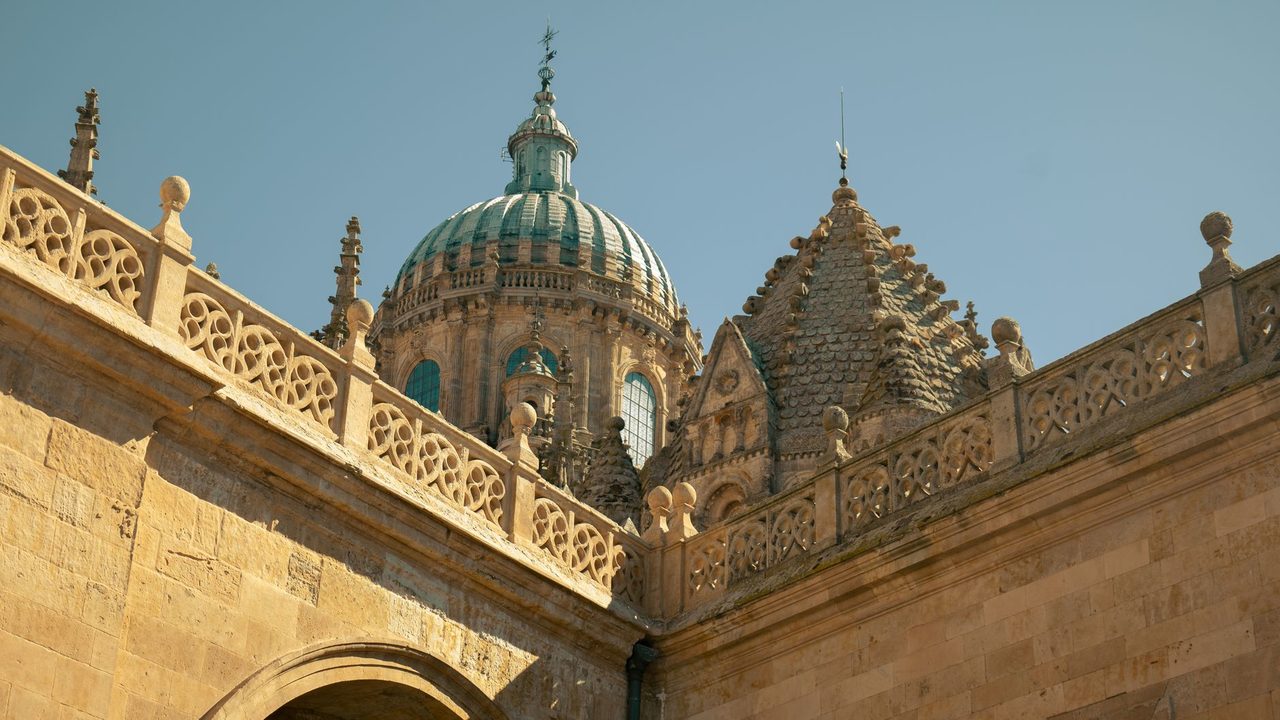
The cathedral's apse follows the layout of mendicant-order monasteries, and the design of three naves with a triforium above the side naves and a projecting transept is considered extremely ambitious for its time — partly reflecting the influence of Lisbon's cathedral. On the outside, the church stands out for its medieval dome surrounded by six small turrets — considered a solution unique to Portugal. The façade is flanked by two medieval towers, with the southern one serving as the city's bell tower. Besides the main portal from the 1530s with statues of the apostles by the sculptor Pero e Telo de Garcia, a native of Coimbra, the cathedral is entered through the southern Sun Gate with Gothic arches and the North Gate, rebuilt in Baroque style.
Inside, the basilica-style three-nave space stretches for about 80 meters. The central nave holds a Baroque altar of Our Lady of the Angels with Gothic statues of Mary and the Archangel Gabriel, a marble Renaissance pulpit, and an organ from the same period. The transept contains the old chapels of St. Lawrence and Jesus Christ, as well as the Chapel of the Holy Relics and the Blessed Sacrament. The left nave holds a baptismal font enclosed by Renaissance grilles, while the northern transept has the lavish Renaissance burial chapel of the Morgados do Esporão family. The choir stalls date to 1562.
The cloister, museum and curiosities
Adjoining the cathedral are the monastic buildings from 1317–1340, in the southern part of which stands a cloister from around 1325 — each of its corners holds a statue of one of the evangelists. The complex also includes a sacristy and a museum of sacred art, opened in 1983, which houses liturgical vestments and examples of sacred painting, sculpture and goldwork. The most prized exhibits are considered to be a 13th-century ivory statuette of the Virgin Mary and a 14th-century reliquary cross of the Holy Wood.
According to legend, it was here in 1497 that the flags of Vasco da Gama's fleet were blessed, and the first Japanese “embassy” in Europe was once based here too. Portugal's largest medieval cathedral resembles a fortress and combines several architectural styles at once: by the late 15th century it was a Romanesque-Gothic building with a marble portal and statues of the twelve apostles, later supplemented with a Baroque presbytery and furnishings. It also holds one of Europe's oldest Renaissance organs, and the cathedral runs a small museum of sacred art. But the biggest reward for visitors remains the view from the rooftop terrace, reached by climbing one of the bell towers.
Read also: 6 Prague cemeteries where history and art matter more than mourning: a guide to necropolis-museums
Source: turistika.cz