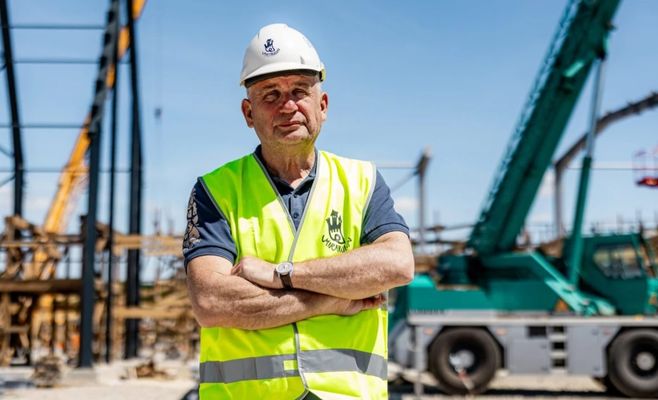
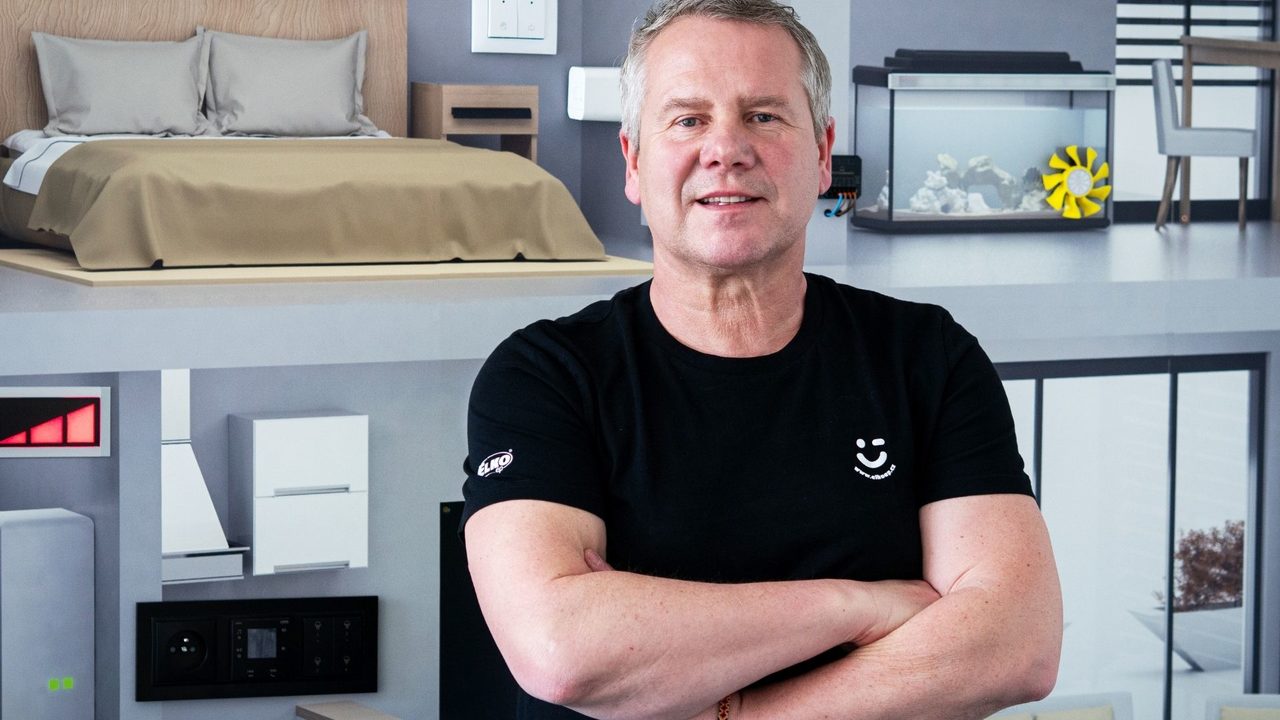
Jiří Konečný built Czech relay maker Elko EP into a billion-crown firm
USD 21,66
Popular
Jiří Konečný started out by taking apart pricey imported relays in his parents' garage; today he runs Elko EP, a company that earned 1.25 billion crowns last year and produced 20 million items, including six million relays.
The story began almost thirty years ago, when the young engineer, fresh out of the army, took a job at a central-heating systems company in Kroměříž. While preparing quotes for clients, he noticed just how expensive imported components were — an ordinary time-delay relay cost around two thousand crowns, roughly 20,000 in today's money. “I took it apart and realized there was no nuclear power plant inside,” Konečný recalls of the moment that launched his business.
Since childhood he had spent more time with a soldering iron than with ordinary toys, and later trained as an electronics engineer. Designing his own relay turned out to be the easy part — the real challenge was the plastic housing for DIN-rail mounting. To compete with Western manufacturers, the product had to look the part, so the housings were bought in Austria — and they ate up most of the costs.
Since the housing accounted for up to 80% of the product's cost, Konečný decided to buy an injection mould for 150,000 crowns, selling his Škoda Favorit to do it. “It was a big sacrifice. But within two years I'd bought a new car,” the entrepreneur recalls with a smile.
The first relays were assembled in his parents' garage — a true family workshop. His father, a firefighter, spent his days off delivering boxes of parts to neighbours for board soldering and collecting the finished products in the evening. Konečný himself tested, packaged and delivered everything to customers. “It never occurred to me that this would one day become a business,” he admits.
From the very start the company has grown without bank loans — a matter of principle for the founder, although he admits that borrowed capital might have let the business grow faster. Because of long delivery times from Asia, the company has to order components a year in advance, which ties up considerable funds.
Today the 53-year-old founder and sole head of Elko EP is forecasting growth of around six percent this year. Production remains entirely concentrated in Holešov near Kroměříž, where it all began almost thirty years ago. Konečný has repeatedly rejected moving production to cheaper countries: automation at the plant already reaches 80%, so relocating wouldn't bring significant savings. “Besides, a robot still can't replace skilled women's hands,” the entrepreneur jokes, referring to the manual assembly of plastic housings, which still requires dexterity.
The bet on European manufacturing is also backed by market trends: buyers are growing warier of goods from China, and rising wages there are making European production more competitive — even against giants like Siemens, Schneider Electric and ABB. “We consider ourselves the top team of the second league,” Konečný smiles. It's precisely these big players that Elko EP regularly competes against for contracts, for instance when fitting out hotels in the UAE.
Although his wife works at the company in controlling and his elder daughter heads software development, Konečný doesn't plan simply to hand the business over to his children. In his view, to keep competing with global players, the company will eventually need a strong strategic partner. The entrepreneur is also considering expanding production to Indonesia.