People By

Notino’s Jan Hanuš: digital twins will attend meetings for you
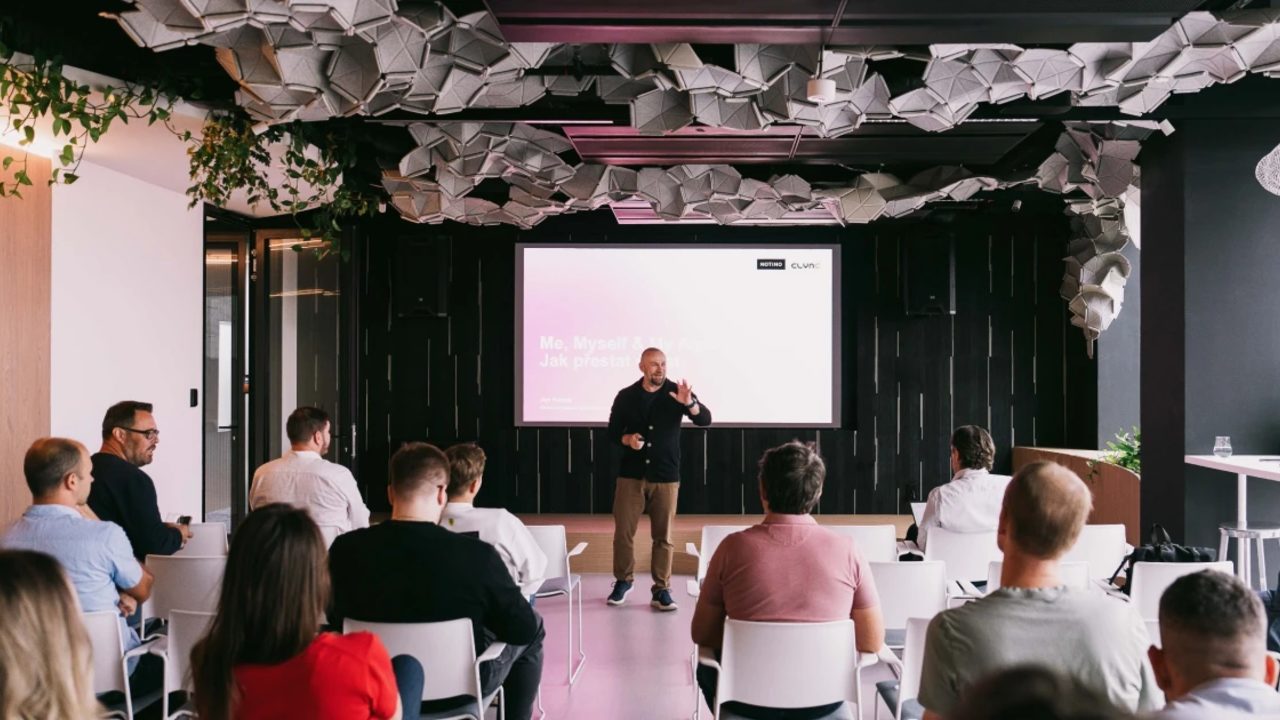
Jan Hanuš of Notino: digital twins will attend meetings for you

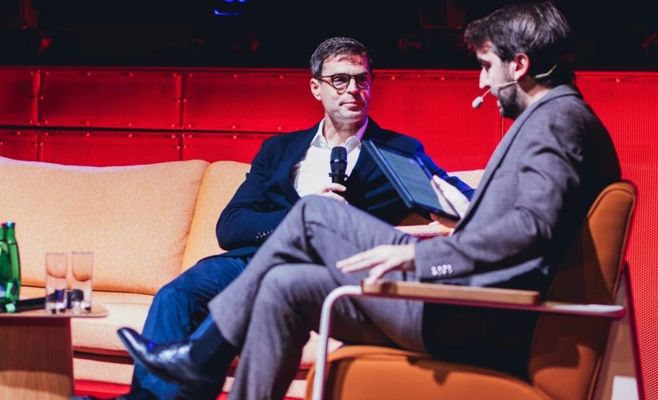
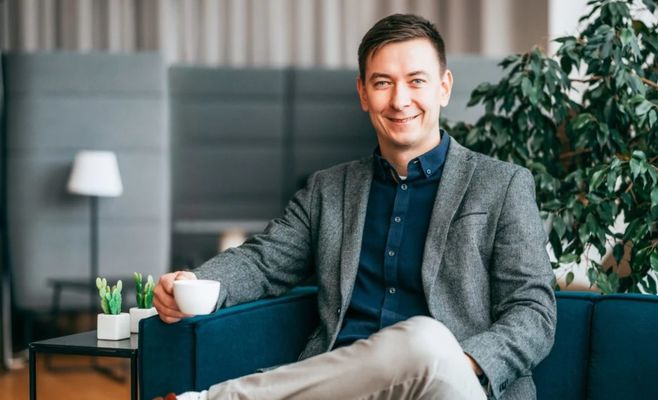
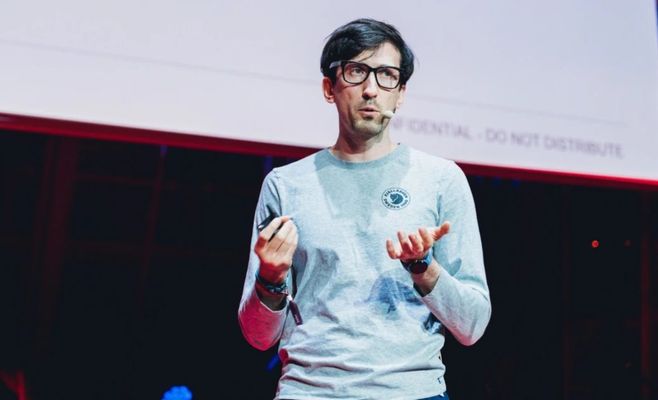
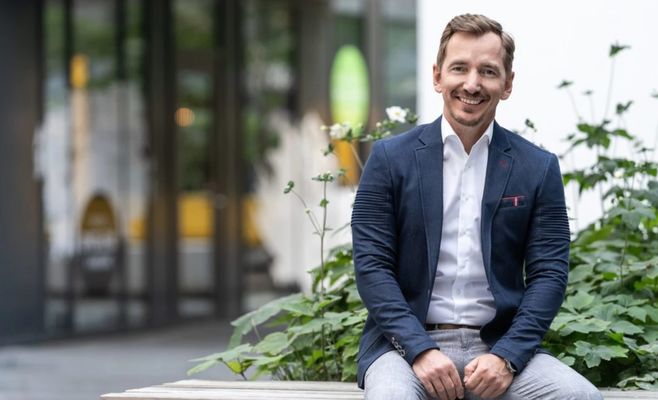
Jan Hanuš, who heads the Execution Excellence department at Notino, wants to cut the time it takes to make key decisions from six weeks to a few days. To do so, the online retailer has already deployed hundreds of AI agents and is now testing “digital twins” that will prepare decisions before a meeting even begins. He spoke about it at the Forbes Next Big Thing technology festival.

Hanuš spent a quarter of a century in company management, often at firms that were not in the best shape. For the past year and a half he has thrown himself into artificial intelligence, and his task at Notino sounds simple: speed the company up wherever it makes sense.

Notino overslept the start of AI and shifted into second gear

“The company slept for two years, and at the beginning of this year we decided we had to do something about it. The owner ordered us to shift into second gear,” Hanuš says. According to him, within half a year Notino became one of the leaders in Czechia in automating processes with AI.

Today the company runs hundreds of agents, and dozens of processes have already been mapped with the help of artificial intelligence. The effect is worth tens of millions of crowns. Hanuš sees the greatest value where part of a process can be sped up, scaled or automated.

At the same time, he rejects the idea of a company run mainly by algorithms. A well-trained model can make an average or above-average decision, but an outstanding one still relies on experience, judgment, empathy and a person’s willingness to take a risk. “If we were all, as they say, AI first and had similar models and agents, Notino would be half the size in five years. Companies are still made first and foremost by people,” he says.

From one day to six weeks

More than a thousand people work at Notino’s headquarters, and hundreds of meetings take place every day. In such an organisation, Hanuš says, nobody can any longer see what was decided during the day, whom it affects and where the next step awaits whom.

The result is lost time that has nothing to do with how complex the decision itself is. If all the managers needed sat in one room for two hours, the matter would be closed the same day. In reality, one lacks the materials, another is out of the office, a third needs to bring in one more colleague, and a fourth proposes another meeting at the end of the day. “A decision that could be made in a day or two sometimes drags on for six weeks. Just because people cannot coordinate,” Hanuš explains.

He considers reducing this delay one of the main opportunities of AI in large companies. In parallel, Notino is changing the way decisions are made: as much authority as possible is being pushed down the hierarchy to those who really understand the issue. Previously, too much of the agenda reached the board of directors, but as the company grew, that model became a brake. Artificial intelligence is meant to keep management informed, even if the decisions themselves are made several levels below.

AI training should become stricter

Notino has tested in practice what a purely voluntary approach leads to. Only some employees joined the AI education programme, and participation in the follow-up workshops was lower than the company expected. Some colleagues put AI to maximum use in their work, others did not join at all, and the teams diverged sharply in how fast they adopted the technology. “This voluntariness did not do us much good,” Hanuš sums up.

That is why Notino is considering a more consistent, mandatory approach to training. For different positions, the company wants to gradually define the required level of knowledge and build a system that makes it possible to measure and develop these skills. In Hanuš’s view, in a few years knowledge of AI in a number of professions will be as natural as working in Excel is today.

Digital twins arrive at Notino

Training people alone is not enough for Hanuš. He sees another problem in how quickly employees pass information to each other and coordinate work across the company. The idea of digital twins grew out of his experiments with his own AI tools: a twin is supposed to prepare a decision in advance, so that a meeting does not turn into a long collection of missing data.

Share: Telegram WhatsApp

More U.S. news

Texas Senate Race: Talarico Casts Himself as David as GOP-Aligned Money Pours In
Democrat James Talarico likened his U.S. Senate bid in Texas to the biblical David facing Goliath at a packed rally Thursday, as federal filings showed more than $158 million in outside spending by Re
What We Know About the Deadly Shooting at Silver Rail Elementary in Bend, Oregon
A teacher and three children were killed Thursday in a shooting at Silver Rail Elementary School in Bend, Oregon, according to NBC News. Two other people, a 7-year-old and another teacher, were critic
Katie Zacharia Says She Never Passed the Bar: What We Know About Her Credentials
White House press secretary Katie Zacharia acknowledged Thursday that she never passed the bar exam, after days of questions about whether she can call herself a lawyer. CBS News and ABC News both rep
What Tesla’s Flying Roadster Debut Means for Buyers and the Wait Ahead
Tesla unveiled its long-awaited Roadster on Thursday in a livestreamed event that included a midair flip. For people thinking about buying one, the key facts are that production is not expected to sta
Collins and Jackson End Maine Senate Debates Arguing Over Trump and Party Loyalty
Republican Sen. Susan Collins and Democratic challenger Troy Jackson wrapped up four debates in two weeks on Thursday, with their final face-off in Bangor centered on how much President Donald Trump w
Nine Fired FBI Employees Sue Patel and Blanche Over Trump Documents Case Work
Nine former FBI employees sued the bureau, the Justice Department, FBI Director Kash Patel and Attorney General Todd Blanche on Thursday, alleging they were unlawfully fired for their work on the inve

Related news

CPI, the property group of Czech billionaire Radovan Vítek, has put the Spire skyscraper in Warsaw up for sale. The expected price is around CZK 9 billion. It is another step in the strategy of reducing the debt burden of Vítek’s empire.The
Sewing machines from Boskovice in Czechia stitch shoes for Adidas, Puma and Mizuno, leather clothing and even items for Hermès and NASA. Behind them is Radek Toul, founder and co-owner of Anita B, the last purely European maker of professio
Rockaway Capital, the investment group of Czech entrepreneur Jakub Havrlant, is continuing its expansion in Europe: it is buying the British company Experience Education, which organises educational trips for almost 100,000 school and unive
Slavomír Beňa, who headed UniCredit’s Czech and Slovak markets, voluntarily left a large international group for J&T Banka. At the Forbes “Lepší Česko” conference, he explained why he swapped a “sure thing” for an entrepreneurial mission an
Jiří Adamus of LEAD HR is convinced that Czechia has enough people, and that the problem for manufacturers is an outdated hiring strategy. A single ad on a job portal is no longer enough.Unemployment is rising, and there are more than eight
Fear of failure and fear of risk are what keep Czechs from living better today. That was the verdict delivered not by seasoned businesspeople but by representatives of the younger generation at the Forbes Lepší Česko conference in Karlovy V
Martin Schmid and his partner Matej Moravcik turned an online poker algorithm into EquiLibre, a startup valued at half a billion dollars. Their AI trades on the market so actively that in a single week it handles sums comparable to the annu
Ondřej Sinovec, founder of the Czech startup Signi, expects to bring the company’s revenue to 60 million crowns this year. The story began with a small everyday problem: around 2016 he needed to sign an acceptance certificate with a cleaner
Czech billionaire Ondřej Vlček has announced that his startup Aisle will become part of the Canadian artificial intelligence lab Cohere. He made the news public at the “Better Czechia” (Lepší Česko) conference in Karlovy Vary.Exactly a year
Diana James, a manager at the development company Daramis responsible for new business opportunities, has talked about the company’s flagship project: the Bay 55 residential complex on the Smíchov embankment. By Daramis’s estimate, it will
Leon Jakimič, founder of the glass company Lasvit from Nový Bor, has added a new chapter to the brand's global expansion: the prestigious publisher Rizzoli, which works with the most luxurious brands on the planet, is releasing the book “La
Aleš Zavoral, founder and owner of the largest Czech online retailer Alza and the ninth richest person in Czechia, rarely appears in public, but this time he unexpectedly spoke up on the social network X. The occasion was a post by Czech Na