Czech studio's Crime Boss sold 1 million copies, made little

USD 21,50
Popular
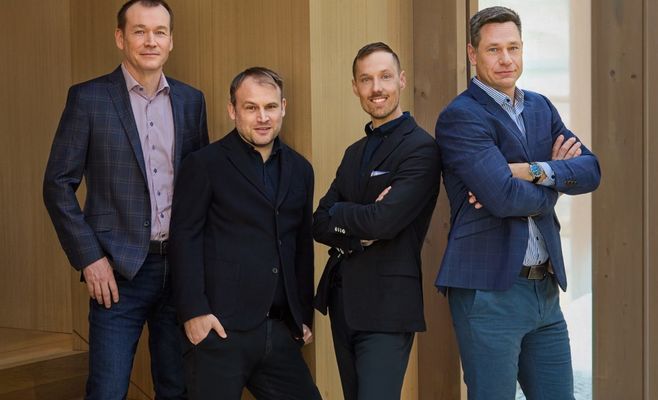
The founder and head of the Brno studio Ingame Studios, Jarek Kolář, known for his work on the cult classic Vietcong, has told the difficult story behind Crime Boss: Rockay City — a gangster action game featuring Hollywood names like Chuck Norris in the cast. The game recently passed the mark of a million copies sold, but according to Kolář, there’s not much to celebrate.
Crime Boss came out three years ago as an ambitious international project: it was launched by a Swedish company in cooperation with a Croatian studio and funded by an Italian investor, later joined by a Belarusian and a Spanish studio, dozens of outsourcing contractors, and finally Kolář’s Brno team. “The list of mistakes we made during development is long enough for its own article, maybe even a book,” he admits.
At launch the game was plagued by technical problems, weak marketing, and a gap between players’ expectations and the actual gameplay — all of which led to scathing reviews. The Czechs ended up with the leading role in development, but not access to the project’s overall budget, which was one of the reasons behind the flawed release.
The turning point came when Italy’s Digital Bros bought out the Swedish stake in the Czech studio and got rid of the other partners. “For us that was a vote of confidence and a chance to finish polishing the game. If the launch had gone off without a hitch, everything would have carried on as before — and we would most likely have fallen apart,” says Kolář.
Despite the difficulties, the game found its audience: besides a million copies sold, the company earned money on eleven expansions, another million people played it through a PlayStation Plus subscription (which brought in extra money from Sony), and the studio also received a payment from Epic Games for a limited launch exclusivity deal. “Revenue is actually pretty decent,” Kolář notes.
But that’s exactly where the less cheerful side of the story lies — both for this game and for the Czech gaming industry as a whole. Ingame Studios is a subsidiary of the Digital Bros group, so while the game itself is made and supported in Brno, sales are handled by sister company 505 Games. As a result, the game’s actual profit doesn’t show up in the Czech studio’s books — Brno only receives money to cover its costs.
“Other game corporations’ branches in Czechia work on exactly the same principle,” says Kolář, pointing to Hangar 13 (the studio behind Mafia), part of the 2K group. “From the point of view of the Czech gaming industry, this is a big loss: the profit from professional, innovative work done here goes to corporate headquarters instead of staying in Czechia. Luckily we still have enough successful local studios — I just hope they don’t move to Cyprus or Ireland,” he adds, hinting at popular tax havens.