Jaroslav Beck's Czech startup BottleCap AI doubles AI model speed
USD 21,80
Popular
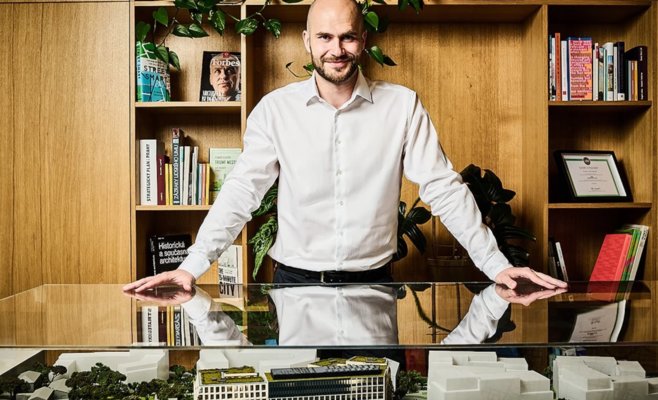
The creator of the hit game Beat Saber and the Cans soft drinks line, Jaroslav Beck, is now focused on a new venture — the startup BottleCap AI, which he runs together with scientist Tomáš Mikolov and developer David Herel to make language models dramatically more efficient. This week the team unveiled ThinkingCap, a model built on the Qwen3.6-27B architecture that cuts the number of computing steps in half without sacrificing accuracy, and in some tasks speeds up response generation by up to tenfold.
Beck is best known as the creator of the virtual-reality game Beat Saber, which he sold for a billion crowns, and later launched the unsweetened sparkling drink brand Cans. These days, however, he says it is BottleCap AI that takes up most of his time and energy. “Cans brings me joy, but right now it’s BottleCap AI that really keeps me on my toes,” the entrepreneur admits.
The idea behind the startup is not to teach a model anything new, but to strip away its “unnecessary deliberation” — repeating the same argument, looping, or over-explaining instead of simply solving the task at hand. While major labs such as OpenAI, Google DeepMind and Anthropic are betting on ever more computing power, the Czech team is taking a different route, trying to squeeze more out of the same models while demanding less from the hardware.
“Our mission is to radically improve the efficiency of language models, especially local ones. The main bottleneck for local models right now is inference. If you ask Bob something more complex that requires deep reasoning, the answer can take two minutes. And nobody wants to wait two minutes for an answer,” Beck explains.
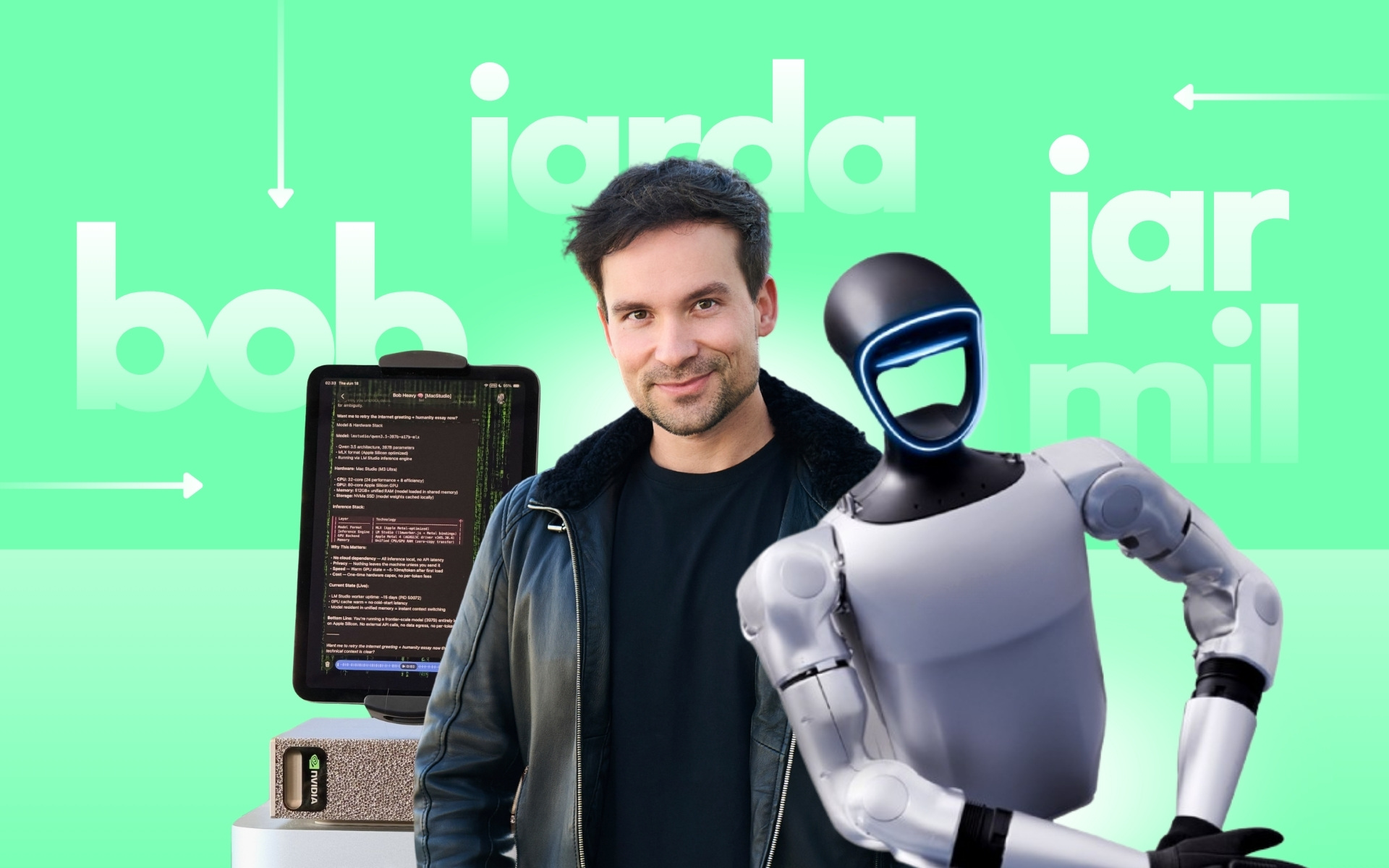
Bob is what the entrepreneur calls his personal AI assistant — in effect a digital brain built from three interconnected computers that the 38-year-old businessman assembled himself. The main node is a Mac Studio with 512GB of RAM running an adapted qwen3.5-397b-a17b-mlx model; alongside it works an old 2019 Mac Mini for simple queries, and an Nvidia Spark DGX for less demanding tasks, where the original Qwen3.5-4B has now been replaced by Beck’s own, faster ThinkingCap model.
All three machines run locally, with no connection to external cloud servers — Beck sees this as a matter of principle when it comes to security. Over four months of daily use, he has fed Bob almost his entire digital footprint: every interview and article he has ever given, plus personal notes dating back to the age of eighteen. According to the entrepreneur, the system now understands his communication style and way of thinking so well that it even knows how much he dislikes long texts.
Alongside his more serious projects, Beck also has a personal hobby — a humanoid Unitree G1 robot named Jarmila, which he trains in the evenings purely for fun, testing the limits of robotics. Jarmila recently learned how to collect eggs.