Lukáš Hartl: Czechs are rich on paper, but money is locked in flats

USD 21,80
Popular
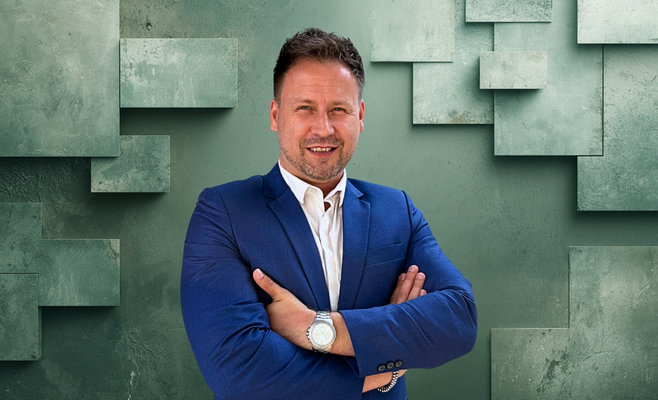
Co-owner of the investment platform CreditShare, Lukáš Hartl, explains why the traditional Czech strategy of “a lifetime for your own flat” is a textbook example of investment risk, and offers an alternative: investing in real estate not in millions, but in hundreds of crowns, through crowdfunding.
According to Eurostat, the net wealth of a typical Czech household reaches about CZK 3.5 million — comparable to Germany. But while German households spread their capital across stocks, bonds and funds, Czechs have around 80% of their total assets concentrated in a single asset — their own home. “From the standpoint of investment theory, this kind of concentration in a single property is a classic example of insufficient-diversification risk,” Hartl warns. If the neighbourhood where a family lives starts to decline, or a major local employer goes bankrupt, the value of almost all their assets falls — and there is no way to sell off a “slice” of the flat.
Buying a second, investment flat is becoming harder and harder for the middle class. According to Deloitte’s Property Index study, buying an average flat in Prague now requires fifteen years’ worth of gross salary. With mortgage rates settling above 5% this spring, the old advice no longer applies. “It used to make sense to buy a flat to rent out almost anywhere — the market forgave even a less-than-ideal purchase price. Today, Prague makes no economic sense for a private investor taking out a mortgage,” Hartl states, adding that under the mortgage conditions tightened since April for investment flats, a private owner would have to top up several million crowns from their own savings.
For larger capital, qualified investor funds (FKI) remain an alternative — well diversified and tax-advantaged, but with a minimum entry threshold of a million crowns and a long investment horizon. “A million crowns is a significant chunk of the middle class’s savings. Putting that sum into a fund makes sense as part of broad diversification, but the investor has to accept low liquidity,” says Hartl, who together with Jan Svoboda bought the crowdfunding platform CreditShare from the Creditas group earlier this year.
The idea behind crowdfunding is to split capital into pieces: “That same million can be divided among ten projects. You can invest from as little as 500 crowns, so a real property portfolio is within reach even for a student fresh out of university.” Returns on the platform’s premium loans run at 7–10% a year — comparable to the net yield from classic rental income, but without the hassle of repairs or non-paying tenants.
As an example, Hartl points to CreditShare’s current project — financing an aparthotel in the wine village of Perná, at the heart of the protected Pálava landscape area. Investors receive a fixed return of 8% a year, and the target loan amount is almost CZK 11 million, with a 19-month maturity. Construction is already 65% complete, and the investment is secured by the building itself.