How Czech defense giant CSG uses AI to fix planes, buy copper

USD 21,65
Popular
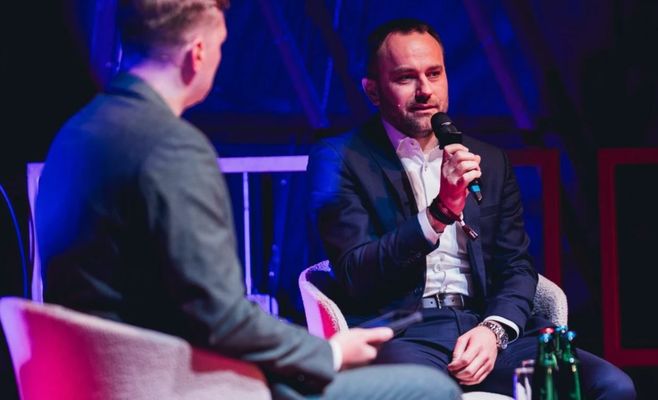
CS Soft chief operating officer Tomáš Richtr explains how a unit of the defense holding Czechoslovak Group (CSG) built its own AI system to optimize aircraft maintenance — and is now taking it to markets abroad, in North America and Australia.
It's a genuinely tricky problem: a single Boeing 737 Max has more than half a million parts, and servicing an aircraft isn't just a checklist — it's a complex task that depends on the specific plane's history, the availability of specialists and equipment, and the right sequence of work. That's exactly what CSG's in-house software house built a platform called JATISmro to solve — it analyses historical data on a specific aircraft and suggests the optimal maintenance sequence. The system now operates as a separate legal entity and, according to Richtr, is applicable in both the civilian and military sectors.
What started as an internal experiment has turned into a full-fledged product — a telling example of how the role of artificial intelligence is changing inside CSG. AI has also noticeably sped up the processing of technical documentation: taking part in complex tenders, for instance for supplying radars for air-traffic-control systems, requires going through hundreds of pages of technical manuals, sometimes scanned in barely legible form.
“Until recently we had to bring in senior architects to wade through the tender documents and get to the bottom of them. Today we can work out how compatible a client's requirements are with our capabilities in a few dozen minutes,” Richtr says.
Algorithms at CSG are also trusted with other decisions based on large data sets — for example, a tool for analysing currency and market data that helps pick the best moments to buy copper. Sometimes, though, things happen that historical data simply cannot predict. “That's where President Trump can wreck everything for us,” the CS Soft operations director admits.
He names cybersecurity as a key theme. In his words, attacks that used to be the stuff of B-movies have become a real threat today — one that can also hit the company's physical products. “We cannot allow a Pandur or an aircraft to be hacked. Not so long ago that scenario was just the plot of a low-budget film; today it's a real threat. And this is only the beginning,” Richtr warns.
At the same time, AI is also helping CSG with defense — by analysing vast volumes of data from routers, servers and other elements of the corporate infrastructure. “No human could manage that. With AI, we can not only process this information but also search it for context, spotting possible attempts at hostile intrusion from outside,” he explains. Richtr says he's amazed by what new technologies can do in the hands of people with good intentions. “Which makes it all the more frightening what they can do in the hands of people with bad intentions. As they say, that kind has always been a little ahead of the game,” Tomáš Richtr concludes.