Czech startup Zuri unveils cargo drone that can land anywhere
USD 21,66
Popular
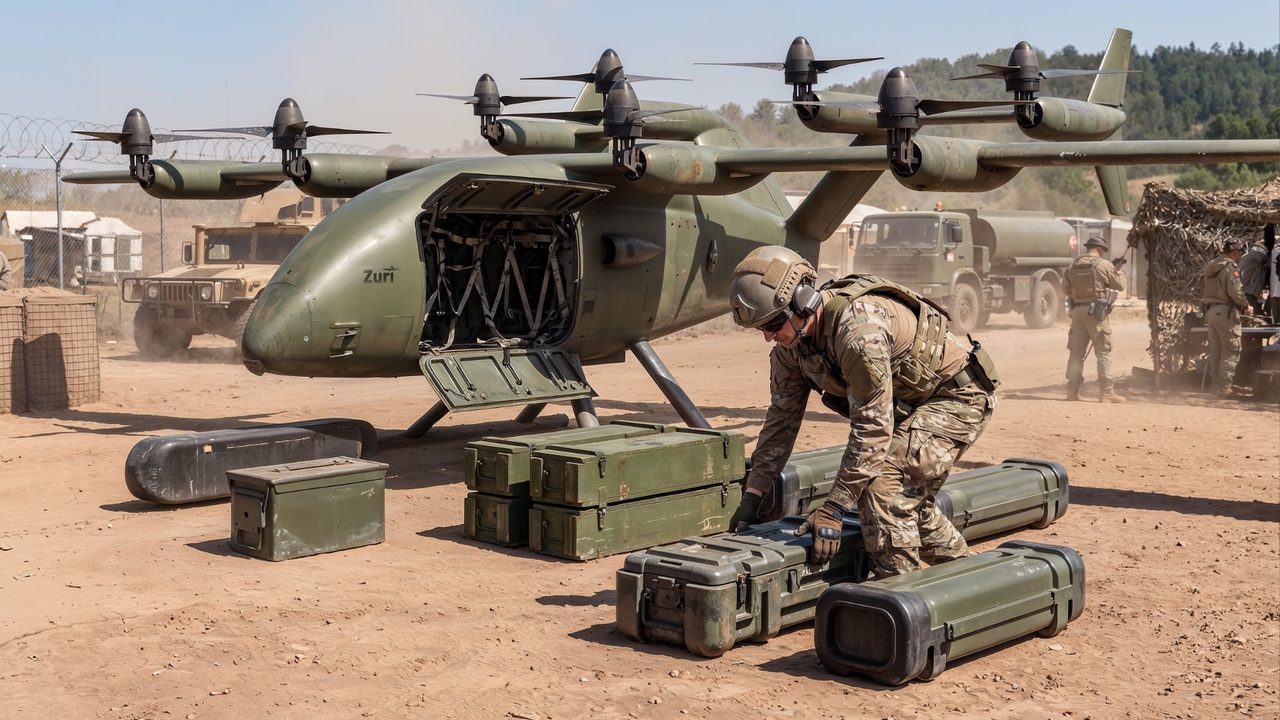
The Czech aviation startup Zuri, founded by entrepreneur Michal Illich, has unveiled its first finished product — an uncrewed, hybrid-electric cargo aircraft with vertical takeoff and landing. The aircraft is designed for both civilian and military customers, and investors are already channeling fresh money into the company to finish testing.
Illich originally conceived Zuri as a passenger flying-taxi project, but it's the cargo drone that will reach the market first — a decision driven both by an easier certification path and by a shift in investor preferences, who are now more willing to back dual-use technologies applicable in both civilian and military settings.
The new aircraft is built on the Technology Demonstrator 2.0 architecture and is currently undergoing ground tests in Prague. It can carry a payload of more than 100 kg over a distance of up to 679 km (or 569 km with a 30-minute fuel reserve), cruising at 220 km/h. The design's main advantage is combining an airplane's range with a helicopter's ability to land almost anywhere without a runway — on oil platforms, ship decks, or open terrain.
“We spent nine years and fifteen aircraft figuring out what this architecture is capable of. The uncrewed cargo VTOL is the first aircraft we're building for someone else to fly. This funding round will go toward the demonstrator and a full flight-test program,” Illich told CzechCrunch.
Illich founded the company in 2017, and over the years the project has attracted capital from well-known Czech investors, including Jan Barta of Pale Fire Capital, Jaroslav Bečka, Matěj Turek, Marek Rosa, Zdeněk Polach and the company Kiwi.com. Since 2018, Zuri says it has built and tested more than fifteen aircraft over hundreds of test flights, and achieved full hover capability back in 2021.
The passenger version of the aircraft, which Illich originally planned to bring to market first, is now being pushed back: according to the entrepreneur, the plan still stands, but this model will become the company's second product and won't arrive before 2030.
Technically, Zuri's flying cargo aircraft is remotely controlled by a single operator on the ground, while the flying itself is handled by automation. A distributed power system and a redundant fly-by-wire system keep the aircraft controllable even if one rotor fails, and if the generator fails, the aircraft can complete its landing on batteries.