Czech CSG invests in Canadian drone-killer missile startup NVD
USD 21,81
Popular
Czech billionaire Michal Strnad is making a new bet on defence technology: his industrial and technology group CSG has taken a stake in North Vector Dynamics (NVD), a startup from Calgary, Canada. The company is developing an inexpensive missile that shoots down drones for a fraction of the cost of traditional air defence.
The problem NVD is tackling is all too familiar from the war in Ukraine. According to the US think tank CSIS, the Shahed-136 attack drones that Russia uses en masse cost roughly 450,000 to 1 million crowns apiece. Defenders, meanwhile, have to respond with guided missiles: a single NASAMS missile costs more than 20 million crowns, and a Patriot missile between 85 and 110 million. For one interception, the defending side may pay a hundred times more than the attacker spent on the drone itself.
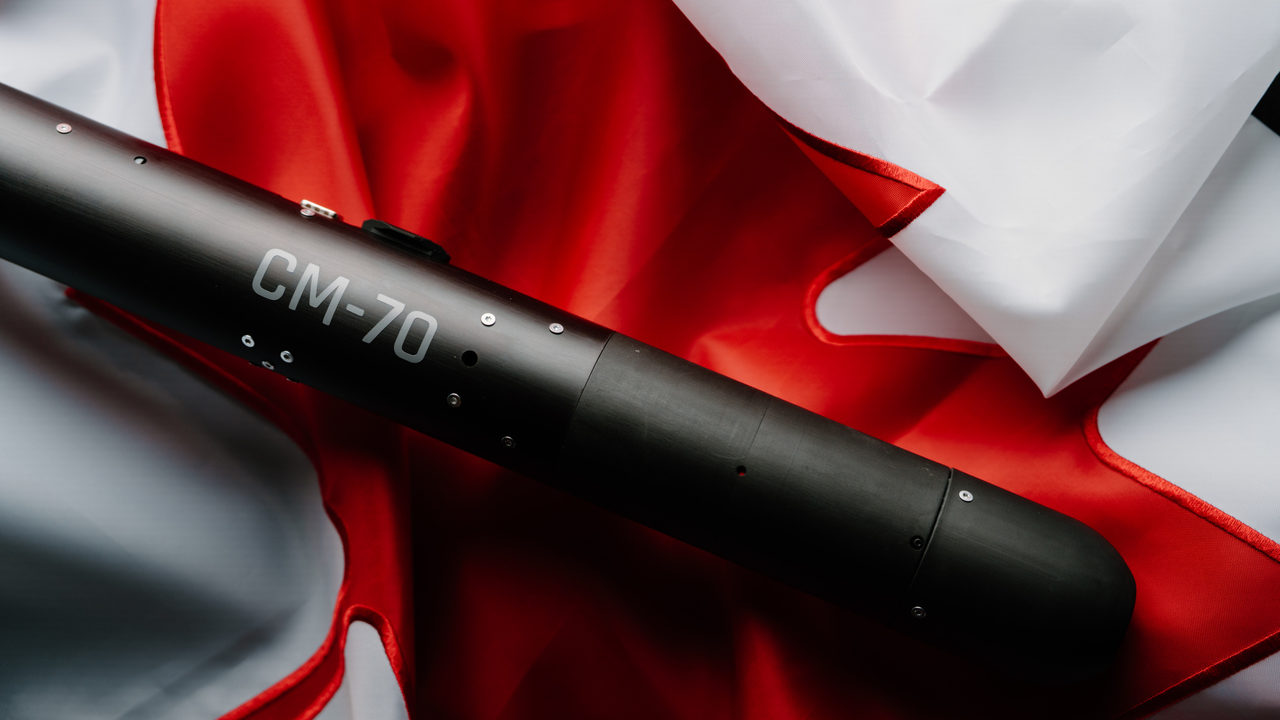
NVD’s CM-70 SPEAR system is meant to correct this imbalance. It is designed not only against drones but also against loitering munitions used in large numbers. CSG joined the startup in August as a strategic investor. The parties have not disclosed the size of the investment or the stake, but the Canadian company is already valued at more than 1.9 billion crowns.
“Today drones can destroy military equipment and strategic facilities, and defence must adapt to that. The price of the CM-70 matches what the missile is meant to counter. Shooting at cheap drones with weapons that are an order of magnitude more expensive is not sustainable in the long run,” says Miloš Šivara, head of CSG Advanced Systems, the new subdivision responsible for integrating NVD’s technology.
The investment fits into a puzzle that Strnad’s empire is rapidly expanding. The group now comprises more than a hundred companies. In January CSG listed in Amsterdam, and its share offering of up to €3.8 billion became the largest in the history of the defence industry. In the first half of the year, revenue rose 17% to roughly 80 billion crowns, while net profit grew almost 85% to 13 billion.
Beyond ammunition, military vehicles and ground systems, the group is strengthening its technology portfolio: radars, air defence, air traffic control, autonomous systems, and engines for missiles and drones. In June, at the Eurosatory show in Paris, CSG presented the multi-layered Trident air defence system, one of the key products of the new subdivision.
Trident also includes protection against drones. “Our ambition is to build a layered defence that covers the entire spectrum from the shortest to the longest range. For the lower tier we were looking for a kinetic effector capable of dealing with unmanned aircraft, and NVD gives us that,” explains Viktor Loužil, head of strategy at CSG Advanced Systems. According to him, the CM-70 can be integrated into air defence systems as an additional layer that raises overall defensive capability.
Michal Strnad himself stresses: “The nature of modern conflicts is changing fast. Autonomous systems, artificial intelligence, precision guidance and cost-effective air defence are becoming ever more important.” CSG, he says, does not want to be merely an investor but aims to become a long-term strategic partner: besides capital, the group offers the Canadian company production capacity, industrial experience and a sales network in Ukraine, NATO countries and among other partners worldwide.
As early as May, the Tech Horizons fund became NVD’s first European investor. It focuses on start-ups and young growing companies in the defence sector. The fund was created through a partnership between a team of venture professionals and CSG, which is its main investor. It is betting on defence technology, security technology and dual-use solutions, those with both civilian and military applications.