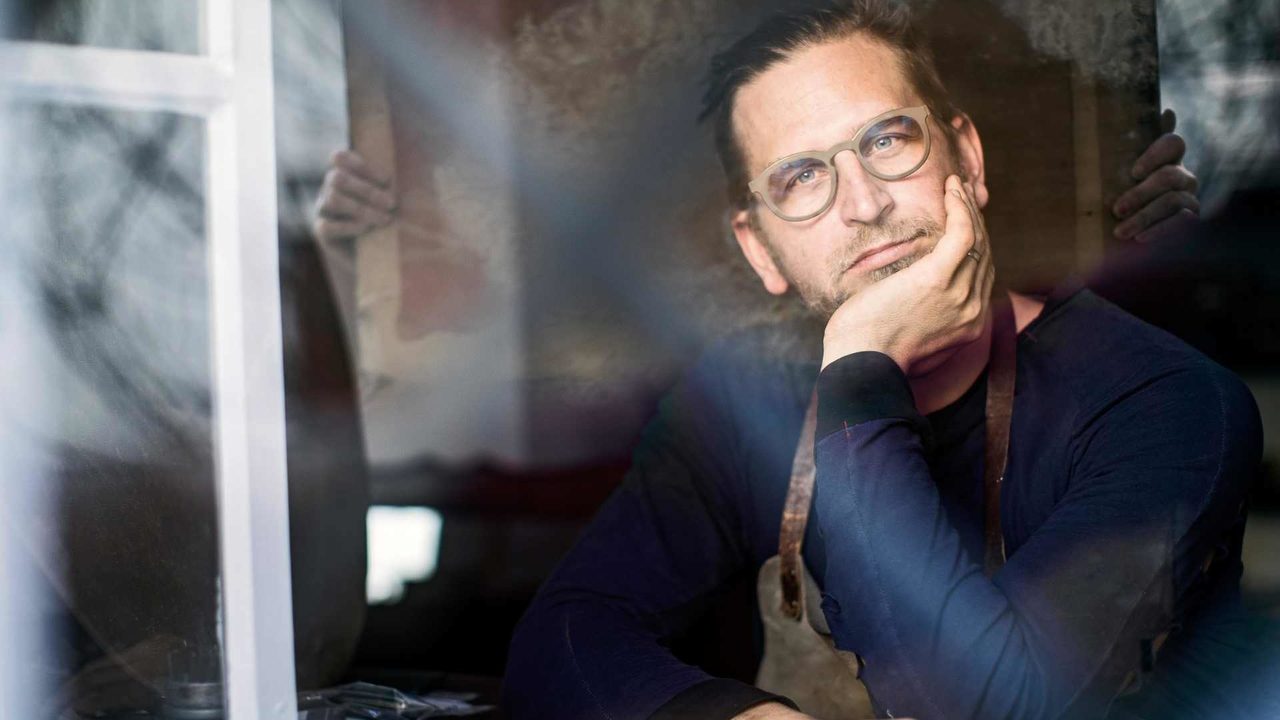
Hanuš Lamr: gardener turned jeweler for Madeleine Albright
USD 21,81
Popular
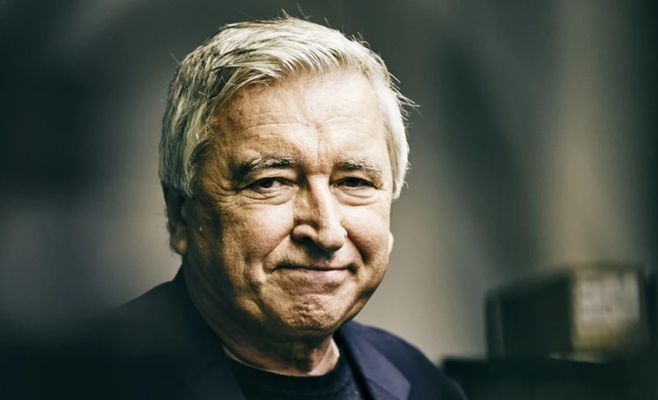
Czech jeweler Hanuš Lamr went from gardener and restorer to a master whose gold and silver jewelry was worn by Madeleine Albright and Eva Pavlová. His own work was able to support him only after roughly eight years of persistent effort.
Today Lamr creates jewelry and exhibits objects at the boundary between design and fine art. But the road there was long: while his work did not yet bring in enough, he worked as a gardener and restorer and also built sets for films. “It took, I think, about eight years, and it felt terribly long,” he recalls of the beginning.
Nature, around which almost all of his work revolves today, has been with him since childhood. He was born in 1976 into a family of artists: his father Aleš Lamr is a painter and graphic artist, his mother Blanka Lamrová is a textile artist, and his brother Jan is also an artist. But young Hanuš was far more interested in plants than in his father’s art: he attended a botany club and knew many plants by their Latin names. “While my father kept pushing Picasso on me, I admired the old masters more, van Eyck and Hieronymus Bosch,” he says. Gradually he distanced himself from his father’s style and returned to what he had loved since childhood.
It was his parents who nudged him toward jewelry. From childhood Lamr made small things, including simple pieces of jewelry for his mother, and work on a small scale seemed to them right for their son. He studied jewelry making at school and then continued at UMPRUM in Prague, although at the time he was much more drawn to sculpture. “Jewelry is, in essence, a small sculpture,” he says today.
After his studies his own work did not feed him. While still a student he restored the stalactite wall in the Wallenstein Garden, which led him into gardening, and at the same time he built sets for film crews. He was even offered a chance to devote himself entirely to gardening, but he declined and decided to try his hand as a jeweler. “As a gardener you work in any weather, and I didn’t like that very much,” Lamr recalls with a smile.
He made his first jewelry for friends and already then brought nature into it: he imprinted its structures, and worked with bark beetle galleries and plant stems. His early collections were bright and made mostly of plastic, but they did not sell in shops even at low prices. “You couldn’t live on it,” he admits.
Gradually the maker moved to silver, gold and finer jewelry, and that is what found buyers. He sold it through design shops such as DOX or Kubista in the House of the Black Madonna, and drew attention at exhibitions. Income grew, but according to Lamr it took about eight years before it became a real livelihood. “Besides, I already had children, and that is one of the drivers to earn a living,” he adds.
The turning point came from a short note in the magazine Respekt, from which Lamr learned about a Ministry of Foreign Affairs competition for gift items. He entered, won, and created 700 linden nutlets with little balls in the colors of the Czech tricolor. The cooperation did not end there.
In 2011 the ministry approached him with a new commission: to make a brooch for Madeleine Albright, who had come to the Czech Republic for the funeral of Václav Havel. Lamr did not know the former US Secretary of State personally and worked on the brooch relying only on his own idea of her. This is how “Feast” came about, with Czech nature motifs, fruit made of synthetic resin, and a beetle. “It was quite bold,” Lamr says of the brooch. The commission attracted media attention and then new clients. “It helped me with PR, and things have gone better since then.” Income, he says, grew gradually, and things became truly good only in the last ten years or so.